
Soup
Fine-tune and post-train LLMs in one command. No SSH, no config hell.
Website · Quick Start · Config · Docs · Commands · Models · Discord








Soup turns the pain of LLM fine-tuning into a simple workflow. One config, one command, done.
pip install "soup-cli[train]"   # add [train] to fine-tune; bare `soup-cli` is the light CLI
soup init --template chat
soup train
Fine-tune an 8B model on a 4 GB laptop GPU. Layer streaming keeps the frozen base out of
VRAM and feeds it to the GPU one decoder layer at a time. Measured on an RTX 3050 Laptop 4 GB:
Llama-3.1-8B-Instruct + NF4 at 119.6 tok/s, 3.32 GB peak — bit-exact against a normal
resident run. Opt-in (stream_layers: true) and still BETA —
how it works ·
all measurements · paper
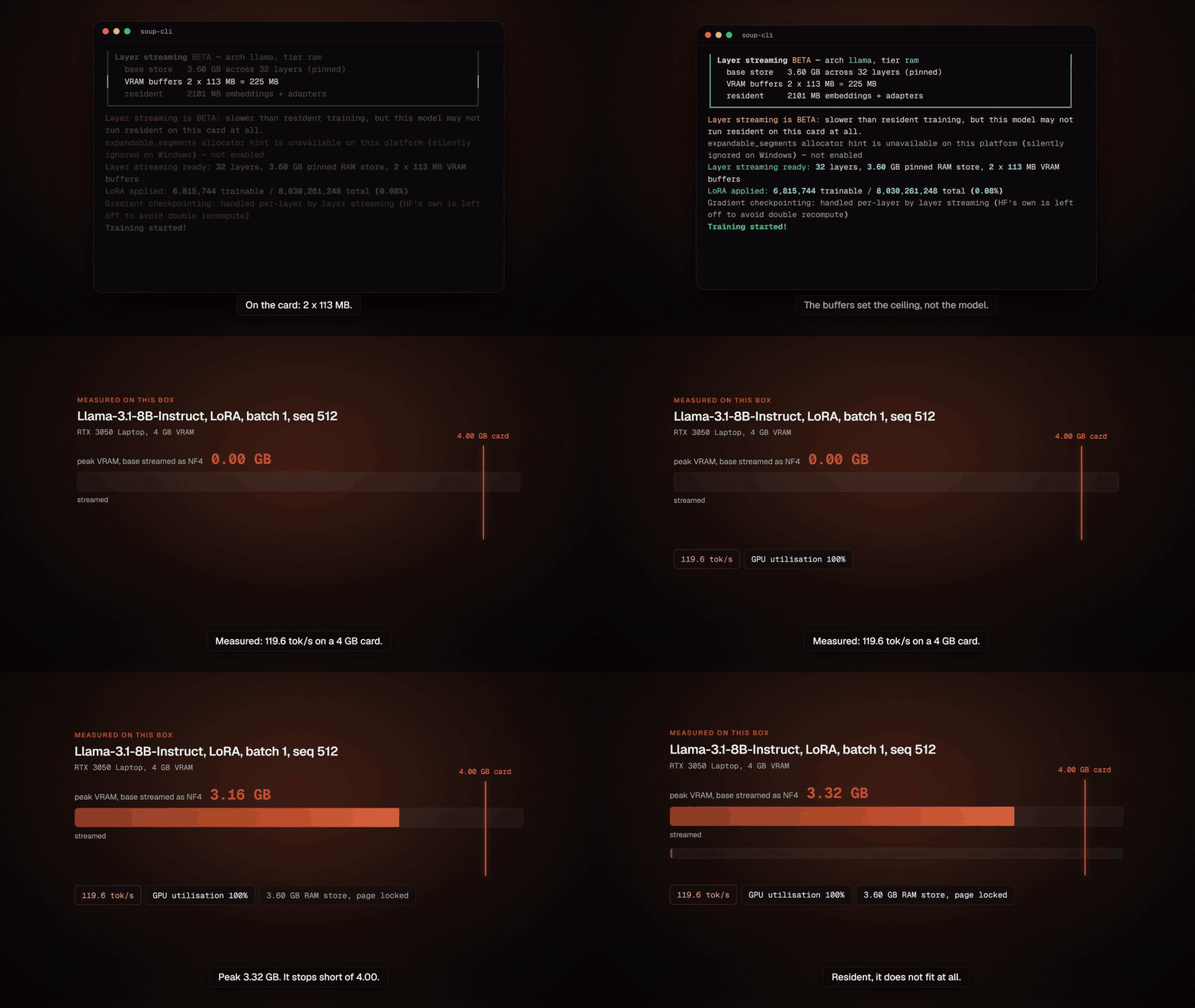
Llama-3.1-8B-Instruct + NF4, LoRA, batch 1, seq 512 on an RTX 3050 Laptop 4 GB — 3.32 GB peak, 119.6 tok/s. Full video (90s)
Why Soup?
Training LLMs is still painful. Even experienced teams spend 30-50% of their time fighting infrastructure instead of improving models. Soup fixes that.
- Zero SSH. Never SSH into a broken GPU box again.
- One config. A simple YAML file is all you need.
- Auto everything. Batch size, GPU detection, quantization — handled.
- Works locally. Train on your own GPU with QLoRA. No cloud required.
What's New
v0.72.4 — align on a laptop: DPO, ORPO, SimPO and KTO over layer streaming. Layer streaming keeps the frozen base out of VRAM and feeds it to the GPU one decoder layer at a time. It used to support supervised fine-tuning only; now it runs the preference losses too.
- DPO's reference model is free. DPO needs a reference to co