SkillForge v5.2
From Art to Engineering: A Manifesto for AI Skill Creation.
The Problem
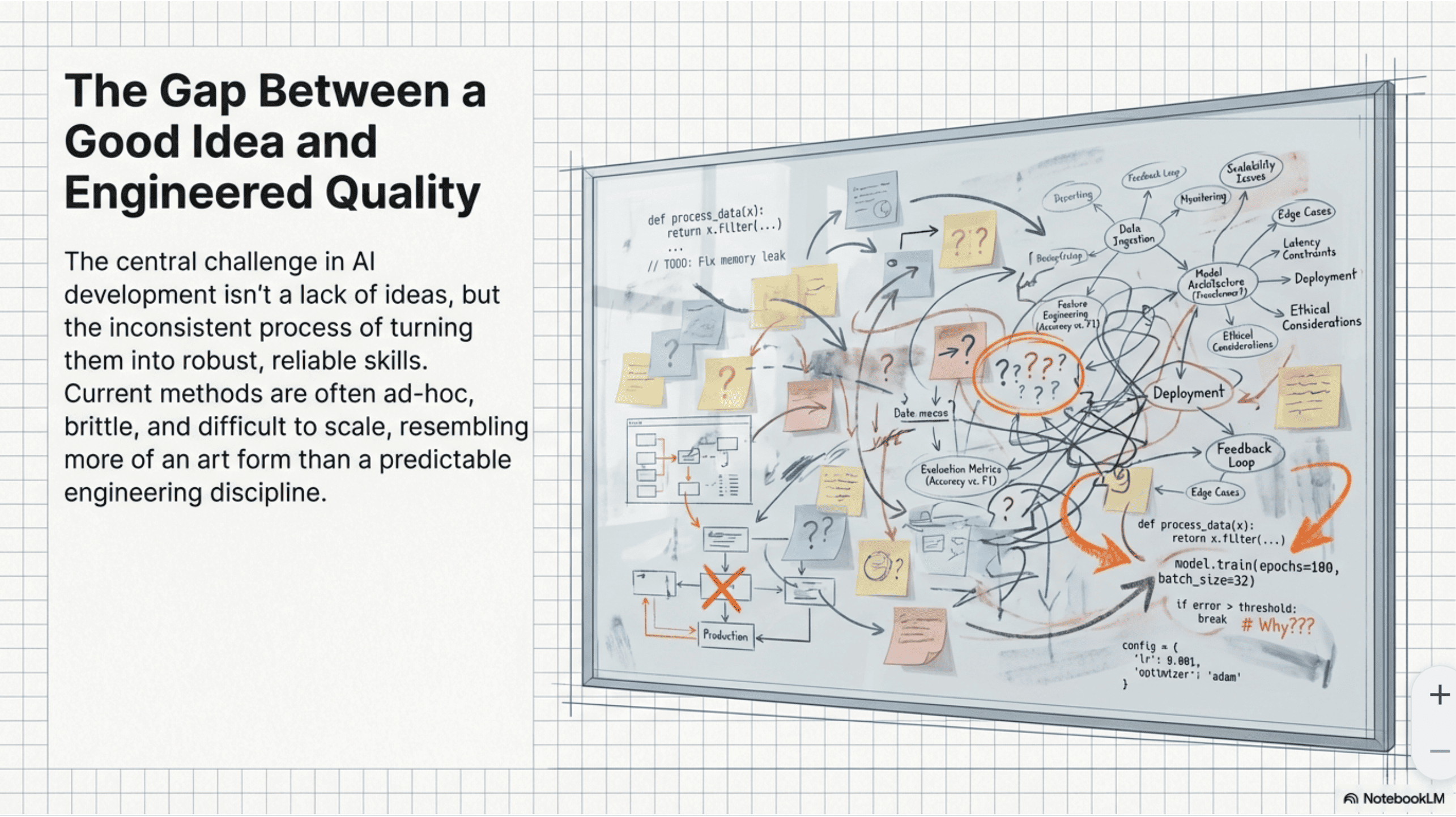
The central challenge in AI development isn't a lack of ideas, but the inconsistent process of turning them into robust, reliable skills. Current methods are often ad-hoc, brittle, and difficult to scale—resembling more of an art form than a predictable engineering discipline.
The Solution
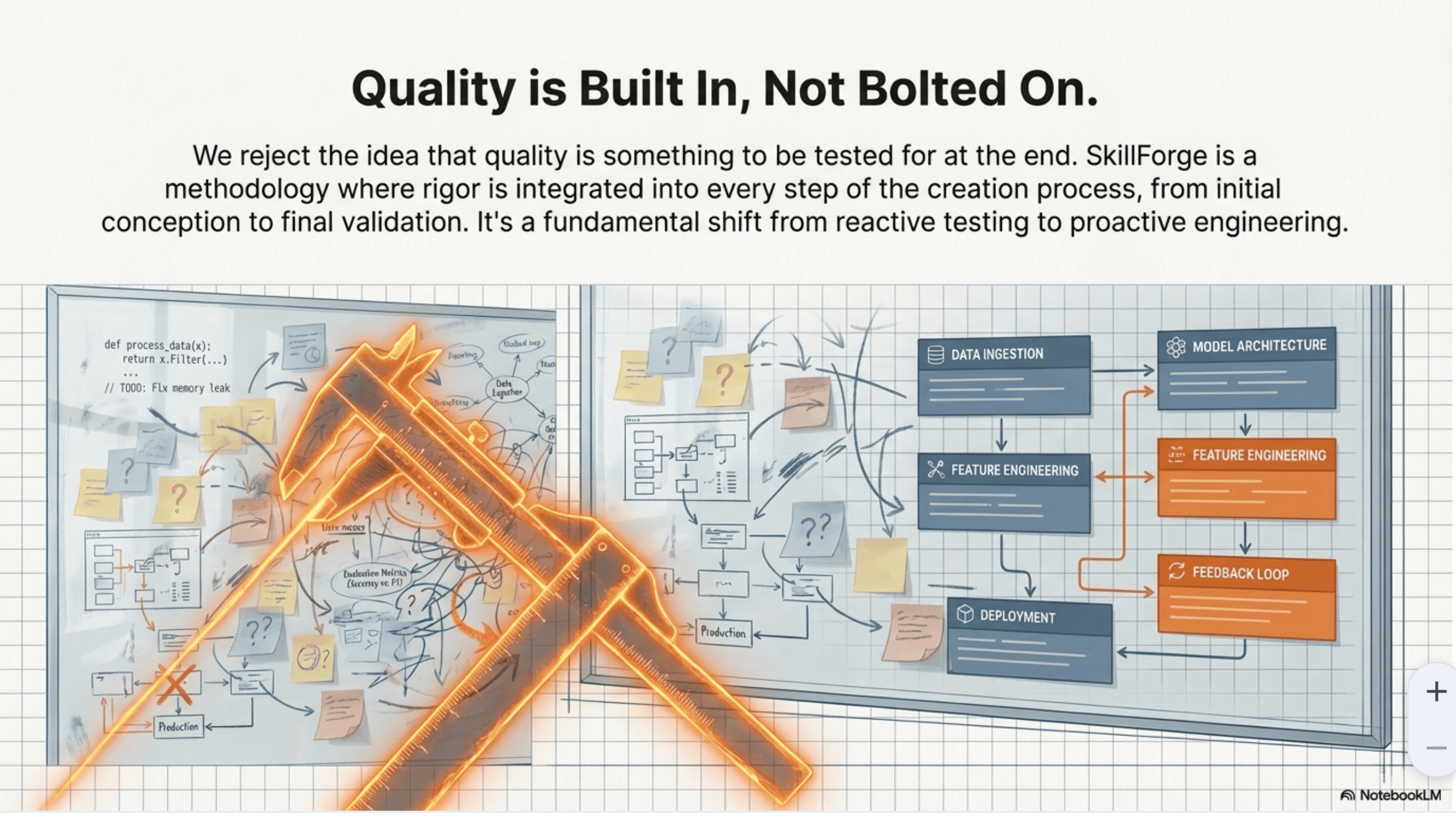
Quality is built in, not bolted on.
SkillForge is a methodology where rigor is integrated into every step of the creation process, from initial conception to final validation. It's a fundamental shift from reactive testing to proactive engineering.
What's New in v5.2
v5.2 adds the Context Skill Advisor: proactive, evidence-backed skill suggestions with user-controlled Proactivity Levels.
Context Skill Advisor
- Proactive by default with install-time levels:
off,quiet,balanced, andactive balancedis the default level- Supports global config plus project-level overrides
- Uses Session Context, Project Context, and Personal Context by default
- Uses Targeted Content Access: search broadly, then read only narrow relevant excerpts
- Runs from Advisor Checkpoints and Scheduled Background Advising
- Writes suggestions to an Advisory Queue and learns from Advisor State feedback
- Requires confirmation before invoking suggested skills
Advisor Commands
# Configure proactive advising
python scripts/install_skillforge.py

# Run a checkpoint from the current agent session
python scripts/context_advisor.py checkpoint --cwd "$PWD" --text "<brief current context>"

# Run scheduled advising and queue suggestions
python scripts/context_advisor.py run --cwd "$PWD"

# Review queued suggestions
python scripts/context_advisor.py list
What's New in v5.1
v5.1 builds on the v5.0 context-efficient redesign and adds stronger frontmatter support, hooks guidance, validation coverage, and packaging safety.
Context-Efficient Foundation (v5.0)
The foundation from v5.0 remains: the context window is a public good. Every line in SKILL.md competes with the user's actual work.
- SKILL.md slimmed from 872 to 313 lines (64% reduction)
- Deep dives moved to
references/where they're loaded only when needed - Triggers moved into
descriptionfield for pre-load routing
Simplified Frontmatter
Skills now use only name and description in frontmatter. The description field is the primary triggering mechanism — it determines when a skill activates, so all "when to use" information belongs there.
---
name: my-skill
description: What this skill does and when to use it. Include trigger scenarios.
---
Degrees of Freedom
A new design concept for matching instruction specificity to task fragility:
- High freedom (text guidance) — when multiple approaches are valid
- Medium freedom (pseudocode/parameterized scripts) — when a preferred pattern exists
- Low freedom (exact scripts) — when operations are fragile and error-prone
Scaffold Script
New init_skill.py creates rich skill templates with TODO placeholders, organizational pattern suggestions, and example resource files:
python scripts/init_skill.py my-new-skill --path ~/.codex/skills
Iteration as a Formal Step
Iteration is now built into Phase 3. Skills improve through real usage, not just synthesis panel review.
Extended Frontmatter + Hooks (v5.1)
v5.1 expands skill metadata support and documentation:
- Extended frontmatter coverage for
model,context,agent,hooks, anduser-invocable - New hooks integration guidance for
PreToolUse,PostToolUse, andStop - Template updates for modern skill authoring defaults
Validation + Packaging Hardening (v5.1)
v5.1 adds stronger guardrails for safe distribu