StackMap
Subscribe
Explore / trueforge
truefoundry

trueforge

TrueFoundry's open agent harness: the runtime loop — model calls, MCP tools, SKILL.md packs, sandboxing, approvals, compaction — behind a chat UI, HTTP API, TypeScript SDK and embeddable UI.

3,506 241 TypeScript MITupdated yesterday
View on GitHubDispute this mapping →
Curator's take

Take it when the agent logic is the easy part and you don't want to hand-build streaming, session persistence, tool auth, sandboxing and an approval UI: YAML catalogs configure models, MCP servers, skills and a sandbox once, then agents pick from what you connected. Context engineering is first-class — subagents, deferred tool loading, Code Mode, large-result offloading, compaction — and it scales from `npx` on SQLite to Postgres+Redis via Docker Compose or Helm. Caveats: local mode has no login and is explicitly not for anything internet-facing, sandboxing means Daytona today, and it's a harness rather than a graph framework — if you need bespoke control flow per step, a lower-level runtime fits better.

Mapped by ShipWithAI editors · links verified
README.md

TrueForge logo

The open-source agent harness - the runtime layer that turns an LLM into a working agent

License: MIT Node.js >= 22.14 Documentation Quickstart SDK

npm @truefoundry/trueforge npm @truefoundry/trueforge-sdk npm @truefoundry/trueforge-ui npm @truefoundry/trueforge-core helm trueforge Ask DeepWiki

TrueForge

TrueForge runs the agent execution loop for you - model calls, MCP tools, skills, sandboxing, approvals, context management, and session state - and exposes it three ways: a chat UI, an HTTP API with a TypeScript SDK, and an embeddable UI SDK.
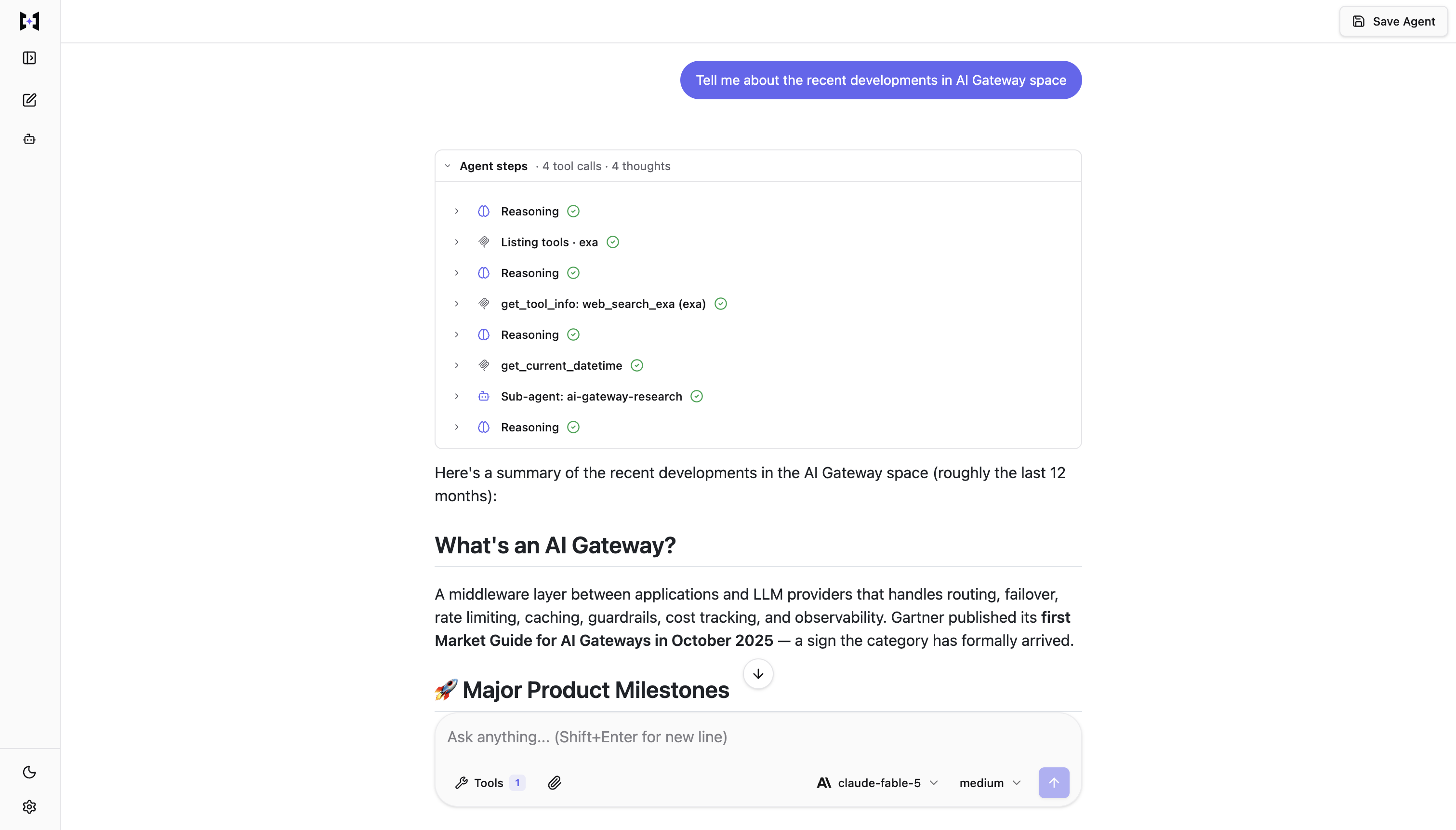
TrueForge Chat UI

Why TrueForge?

Building an agent is easy. Running one well is not - you need streaming, session persistence, tool servers, sandboxing, approvals, and a UI. TrueForge gives you that out of the box:

  • Initial setup from catalogs - configure models, MCP servers, skills, and a sandbox once; agents pick from what you connected. Presets come from shipped YAML catalogs you can customize.
  • Any model provider - OpenAI, Anthropic, Google Gemini, and other catalog providers, or any OpenAI-compatible endpoint.
  • MCP tools - remote MCP servers with header auth or OAuth, including in-chat authorization.
  • Skills - git-backed SKILL.md instruction packs, loaded on demand in the sandbox.
  • Sandbox as a tool - isolated code/file execution (Daytona today; more providers planned), provisioned only when needed. Secrets stay in the harness.
  • **Hum

Continue your stack

What teams reach for next — and why each earns a place beside trueforge. Ranked by curator confidence.








