Anatomy
A Claude skill that explains an idea by building it as a real, working object.
Also runs in Antigravity, OpenCode, Codex and MiniMax Code.
Crafted, interactive isometric figures with many small precise parts, in SVG, WebGL and 3D.









Quick start · Gallery · What it makes · Install · Usage · Examples · How it works · Limits
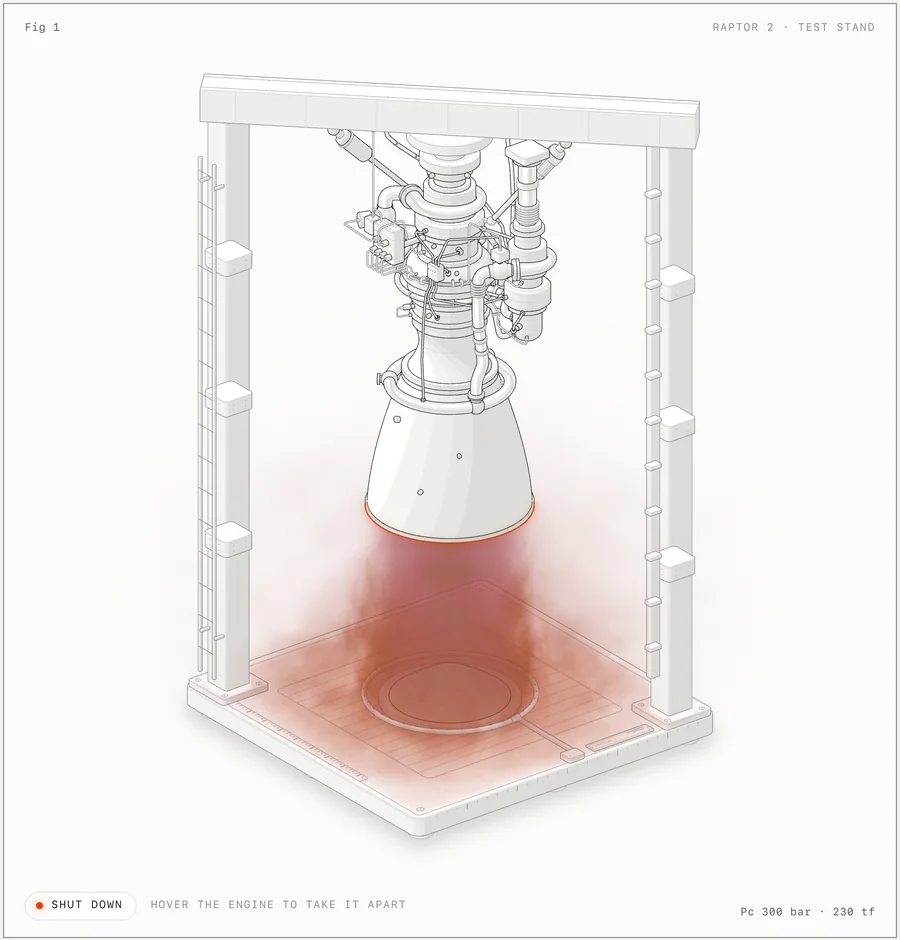
examples/raptor-engine, light theme, firing. The engine and stand are SVG; the plume is a WebGL shader in the same isometric camera.
Ask Claude for a figure that explains a technical idea, and Anatomy has it invent a physical thing whose working is the concept. A cache key that skips work when nothing changed becomes a pin-tumbler lock that only turns when every pin matches. One GPU context serving many canvases becomes a gantry plotter whose single print head visits 16 wells.
Then Claude builds that thing out of dozens of small, solid, shaded parts, puts it in a framed card with a title, a hint and a live readout, makes it move calmly under the pointer and the keyboard, and checks its own work by zooming in on every joint. Every number the figure shows comes from the same small model that moves its parts.
Quick start
npx skills add wheresryan22/anatomy -g
The CLI asks which agents to set up (Claude Code, Antigravity, OpenCode, Codex, MiniMax Code). To skip the question, add -a claude-code, -a antigravity, -a opencode, -a codex, or -a minimax-code.
Then, in Claude Code:
/anatomy explain how a token bucket rate limiter works, interactive
For Antigravity, OpenCode, Codex, or MiniMax Code, target that agent: -a antigravity, -a opencode, -a codex, or -a minimax-code. Antigravity, OpenCode and MiniMax Cod