StackMap
Subscribe
Explore / ktx
Kaelio

ktx

Self-improving context layer for data agents — ingests dbt/Looker/wikis, maps your warehouse, builds a semantic layer with approved metrics, and serves Claude Code/Codex via CLI and MCP.

1,492 93 TypeScript Apache-2.0updated 4 days ago
Curator's take

Reach for it when agents re-explore your warehouse on every question and invent their own metric logic: ktx samples tables, detects joinable columns (resolving chasm/fan traps), absorbs dbt/MetricFlow/LookML/Notion knowledge into one searchable surface, and flags contradictions for human review. Read-only by design; runs locally on your own LLM keys or your Claude Code / Codex login. Skip it if you have no SQL warehouse to sit on, or for one ad-hoc query. It ingests your existing semantic layers rather than replacing them. YC-backed (Kaelio); telemetry is on by default with opt-out.

Mapped by ShipWithAI editors · links verified
README.md

ktx

The context layer for data agents

npm version Codecov Tests Documentation Join the ktx Slack community License Y Combinator P25

Quickstart · CLI Reference · Agent Setup · Slack

Built and maintained by Kaelio


ktx is a self-improving context layer that teaches agents how to query your warehouse accurately - from approved metric definitions, joinable columns, and business knowledge it builds and maintains for you.

[!NOTE] Run ktx with your own LLM API keys or a local agent sign-in — a Claude Pro/Max subscription through Claude Code, or your local Codex authentication. No extra usage billing from ktx.
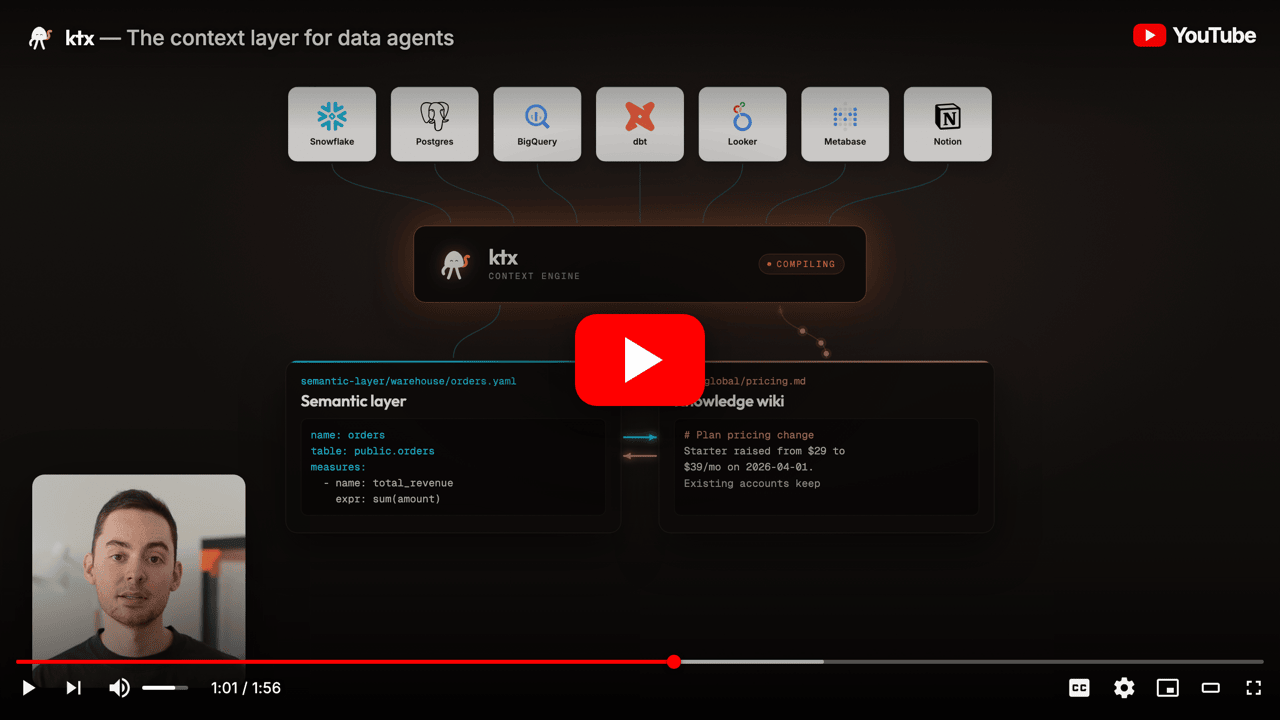
Watch the ktx launch video (1:56)

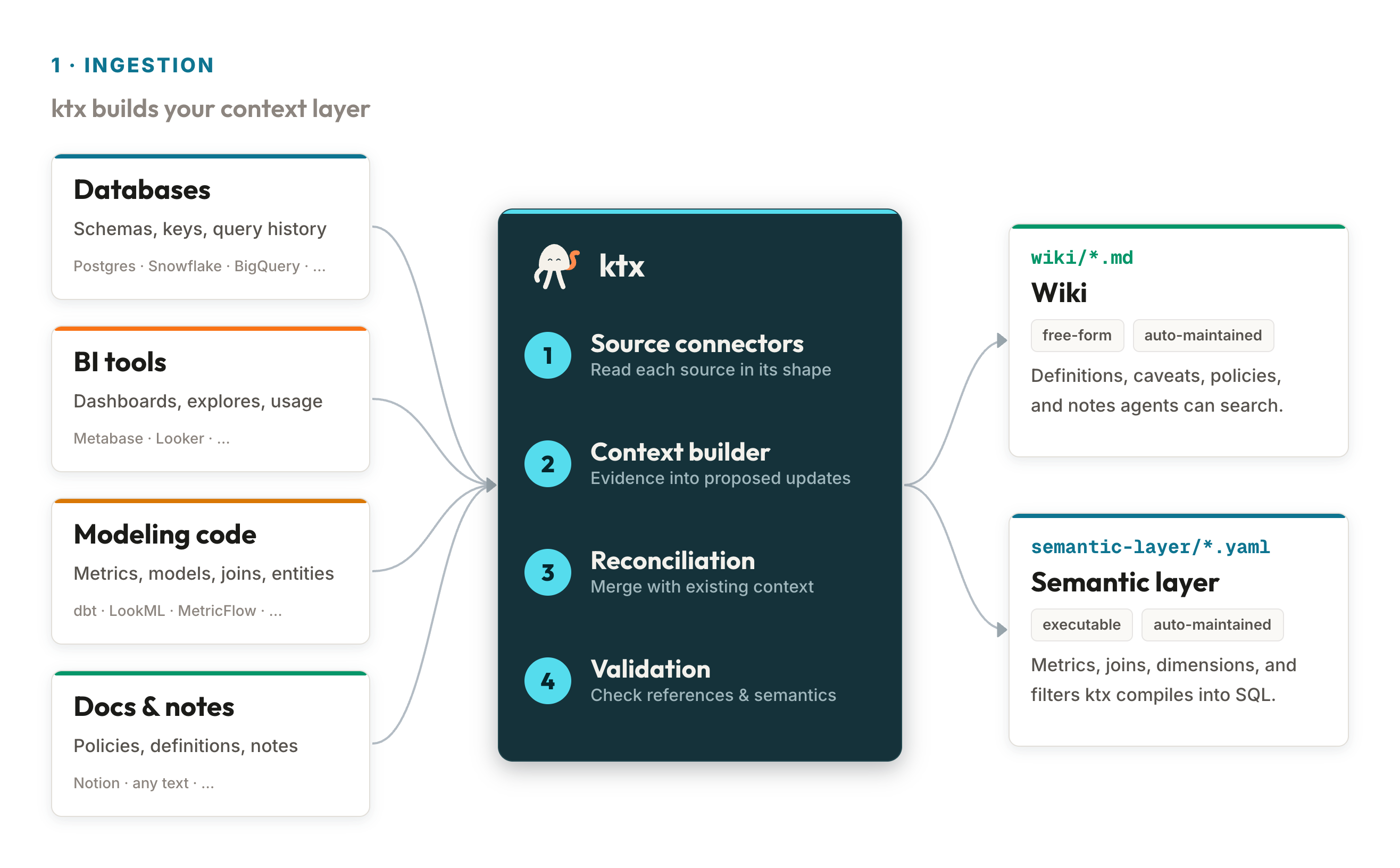
Ingestion: ktx ingests databases, BI tools, modeling code, and docs through its context engine (source connectors, context builder, reconciliation, validation) into wiki Markdown and semantic-layer YAML

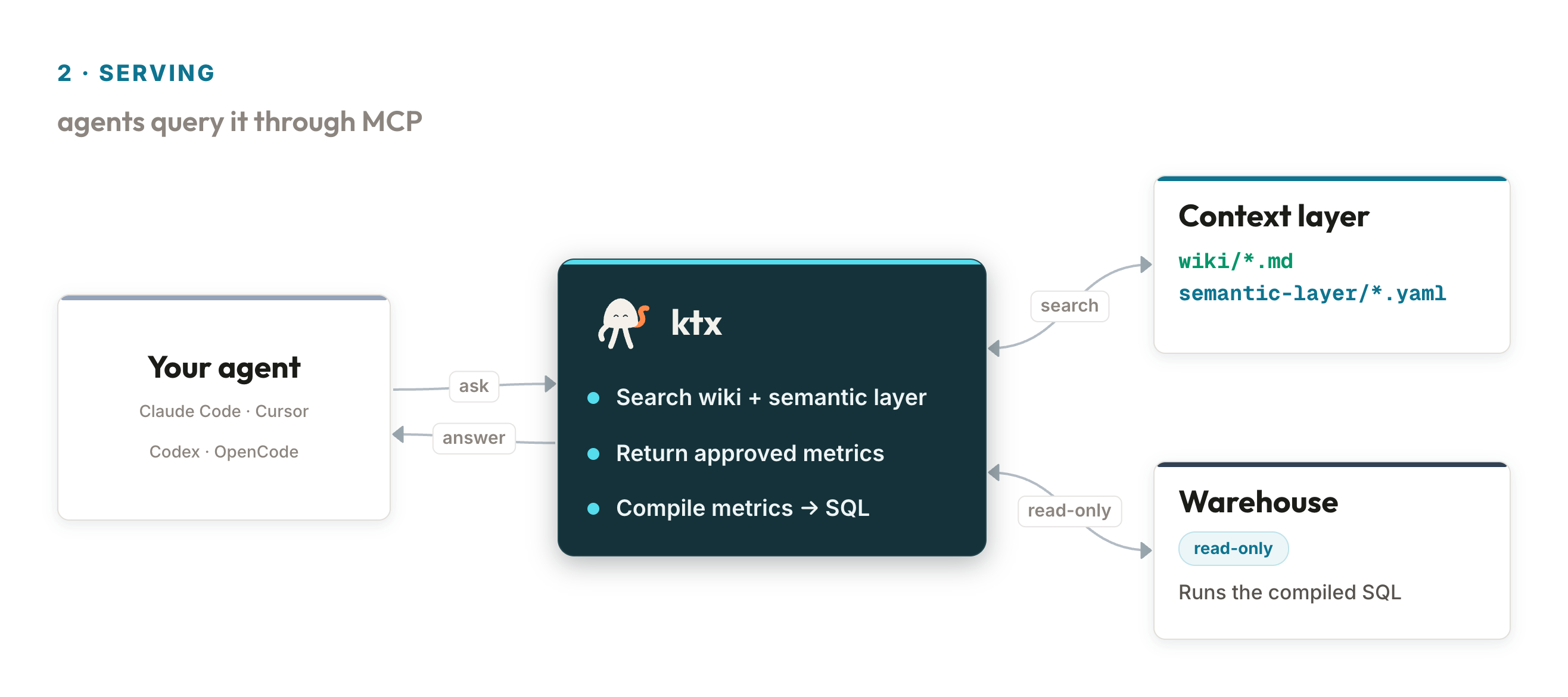
Serving: an agent queries ktx through MCP, which searches the wiki and semantic layer, returns approved metrics, and compiles them into read-only SQL run against the warehouse

Why ktx

General-purpose agents struggle on data tasks. They re-explore your warehouse on every question, invent their own metric logic, and return numbers that don't match approved definitions.

Traditional semantic layers don't fix this. They demand constant manual upkeep and don't absorb the rest of your company's knowledge.

ktx does both, automatically:

  • Learns from company knowledge. Ingests wiki content, organizes it, removes duplicates, and flags contradictions for human review.
  • Maps the data stack. Samples tables, captures metadata and usage patterns, detects joinable columns, and annotates sources so agents write better queries.
  • Builds a semantic layer. Combines raw tables and high-level metrics through a join graph that automatically resolves chasm and fan traps, so agents fe

Continue your stack

What teams reach for next — and why each earns a place beside ktx. Ranked by curator confidence.