
In the post-AGI economy, humans will eventually stop writing and reading code, but we still need an ambiguity-free language to communicate our intents to the AIs building the world around us. Bend is that language.
With laws, intents can be more precise than natural language. With proofs, we can mechanically verify the AI implemented our prompts correctly. And with a fast compiler, we can run that code at peak compute.
That's Bend - and nothing else.
Bend runs FAST
Target: be as fast as C on the CPU, as fast as CUDA on the GPU. Status:
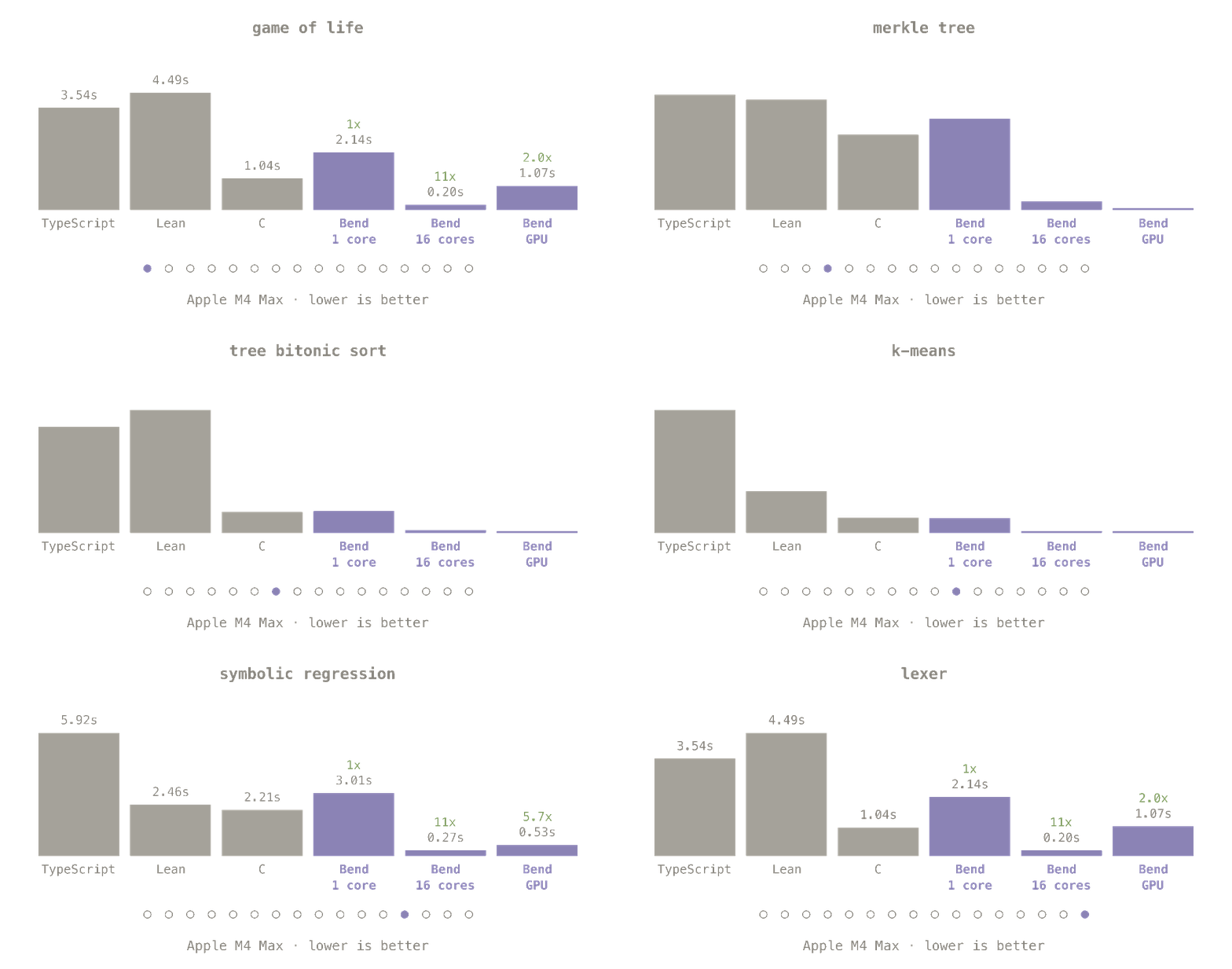
Thanks to strong types, purity and linearity, Bend compiles to fast executables as fast as hand-written C (single-core), and even faster (on 10000s cores). The entire language runs on the GPU, with full memory unification.
Bend checks FAST
Target: outperform every proof assistant by several OOMs. Status:
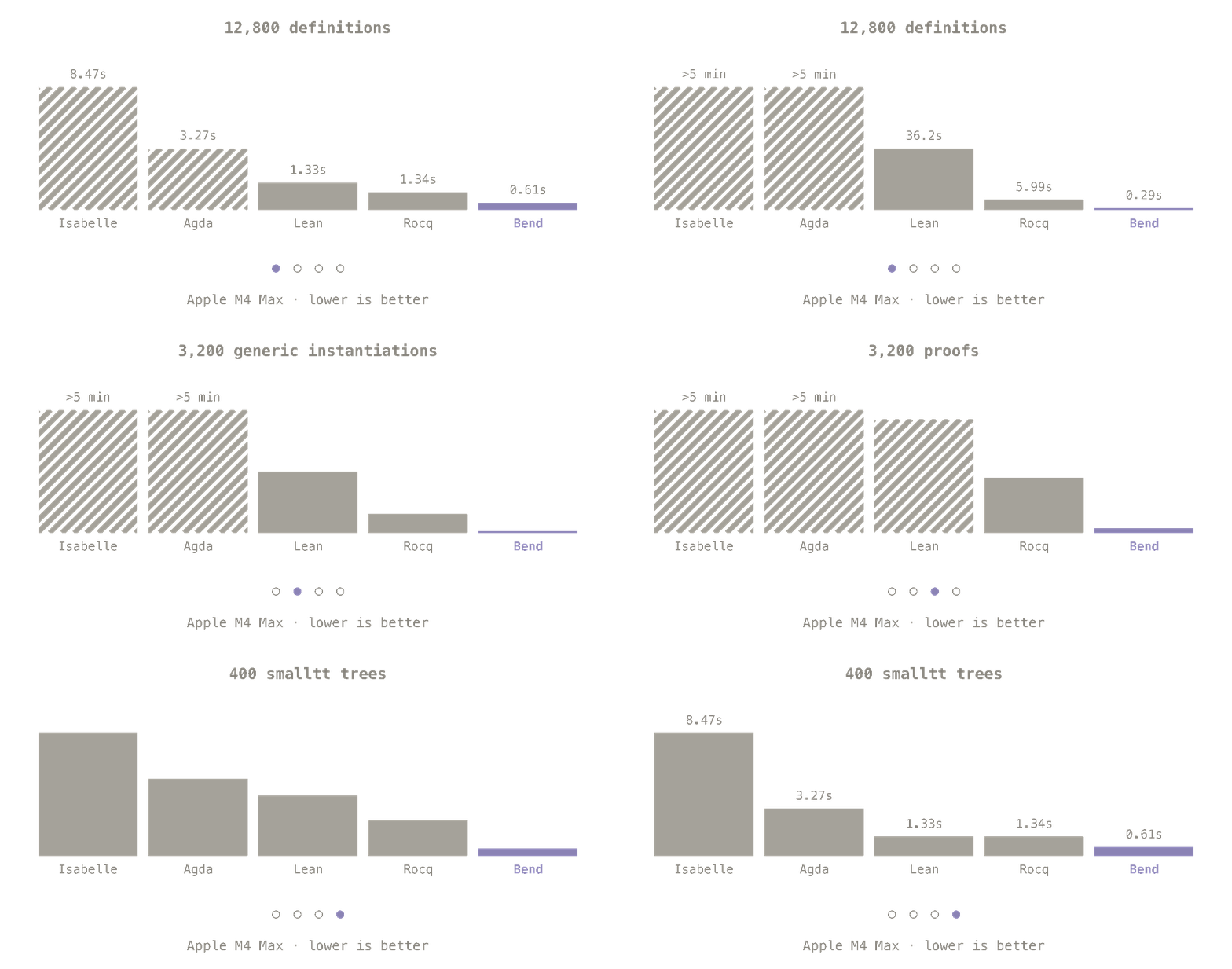
Bend's compiler is so powerful it can verify mathematical proofs. Usually, this is slow. Bend is not. It checks, in under a second, files that other projects would take minutes, making proofs way more practical.
Bend is PARALLEL
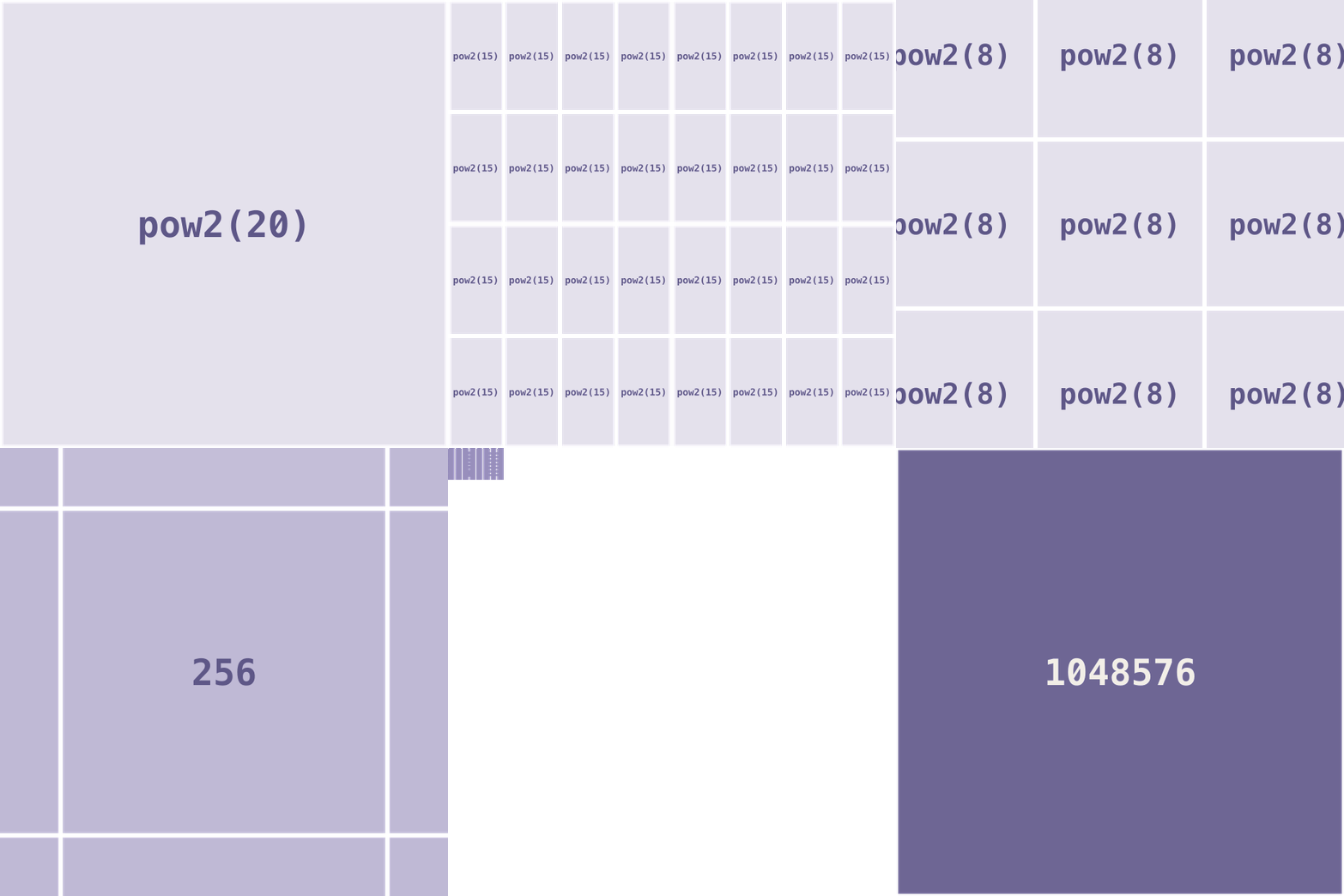
No threads, no locks, no kernels to write. Split the work in two, and Bend
spreads the calls over every core it can find, then joins them back. Below,
pow2(20) divides until one task sits on each of 4,096 GPU cores:
Bend BLOCKS mistakes - with proof
PROBLEM: How can you trust AI code, without reading it?
SOLUTION: By forcing your AI to write a correctness proof.
Bend introduces LAWS.bend, a file where you declare rules that your app must
not break. Bend's compiler then guarantees that these laws always hold, by
demanding mathematical proof whenever your code is edited. For example,
consider a game with one law: winning is impossible. Here's how it plays out:
Law: winning is impossible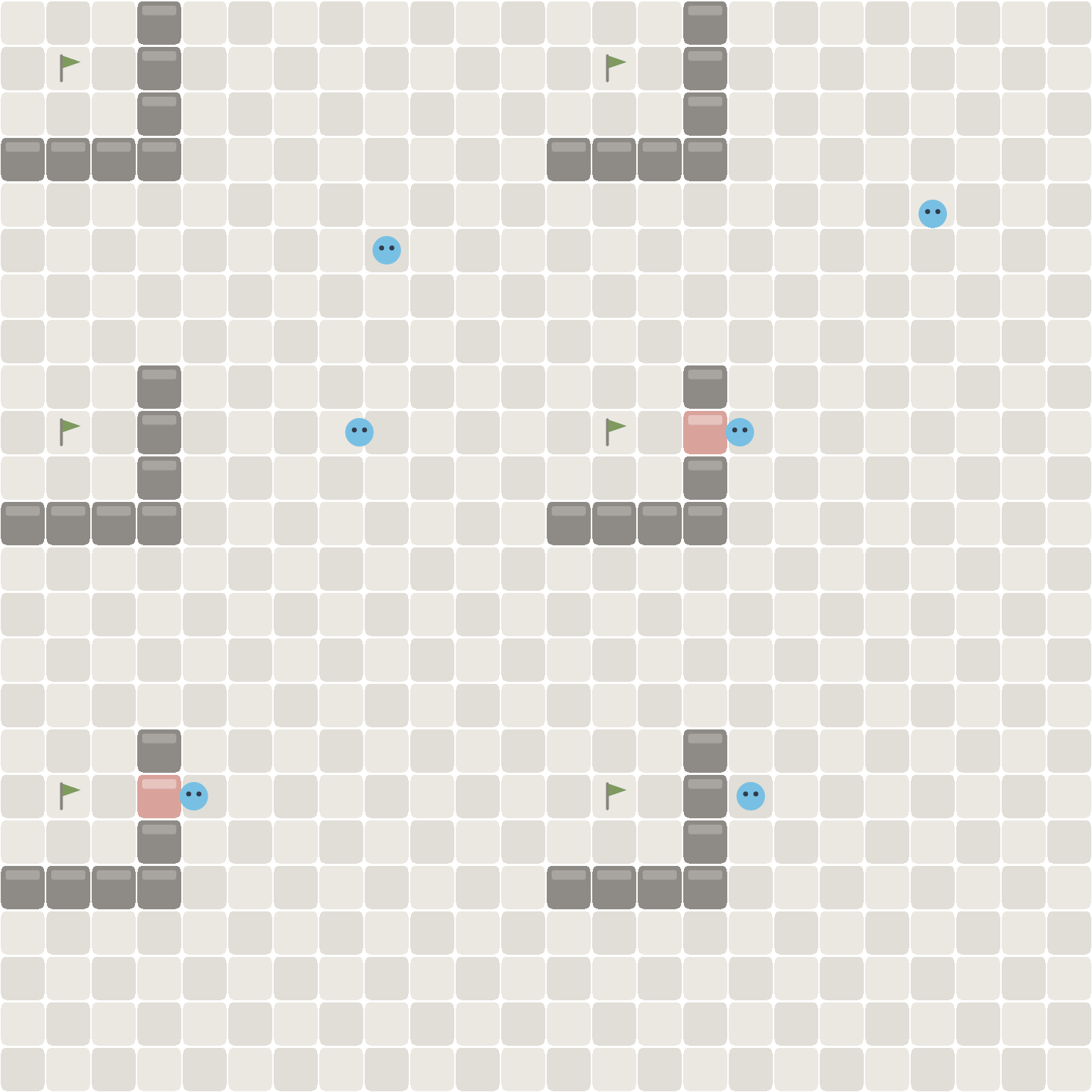
So far, it works!
New feature: "Claude, make the board wrap around"
Without LAWS.bend: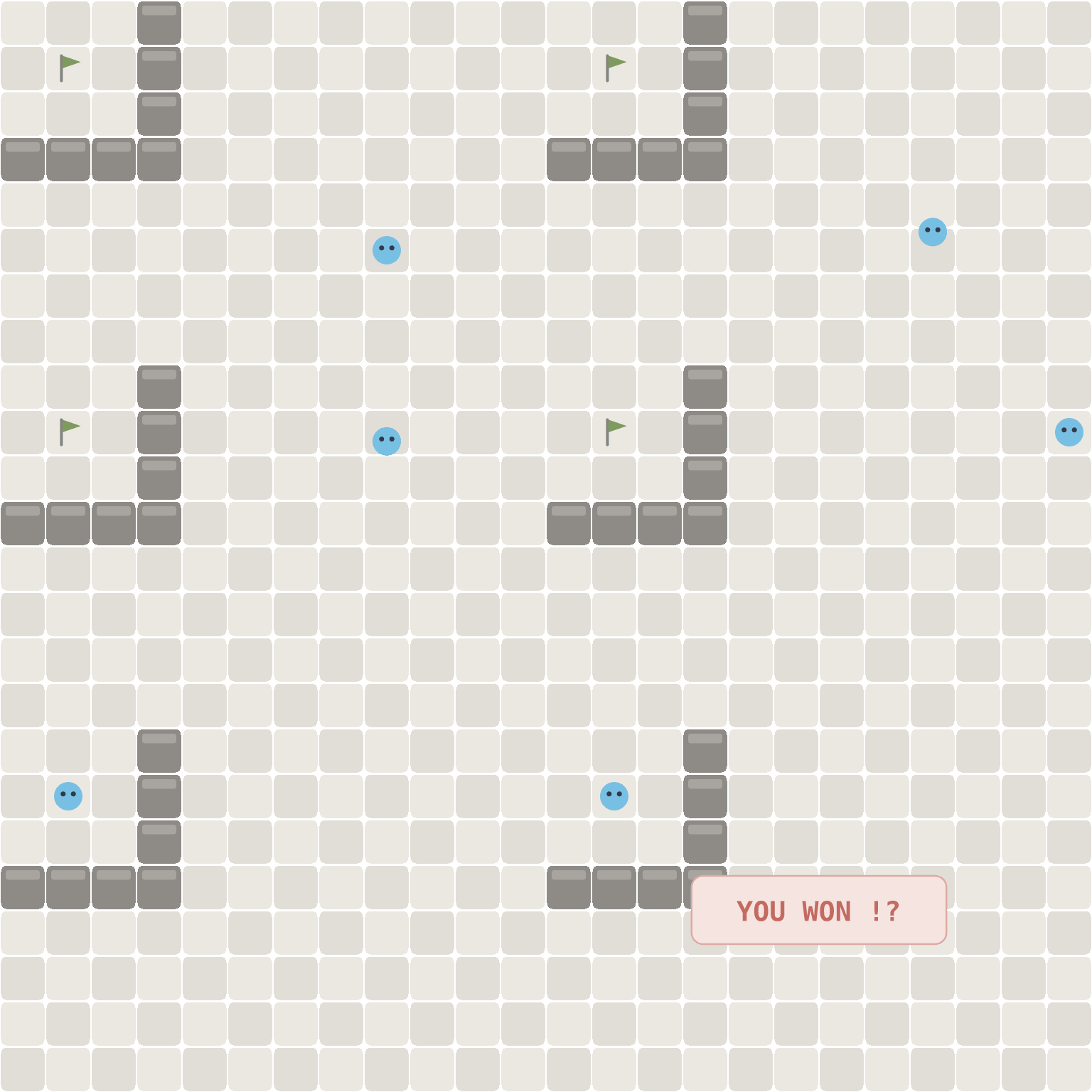
Laws broken. AI mistake: merged.
With LAWS.bend: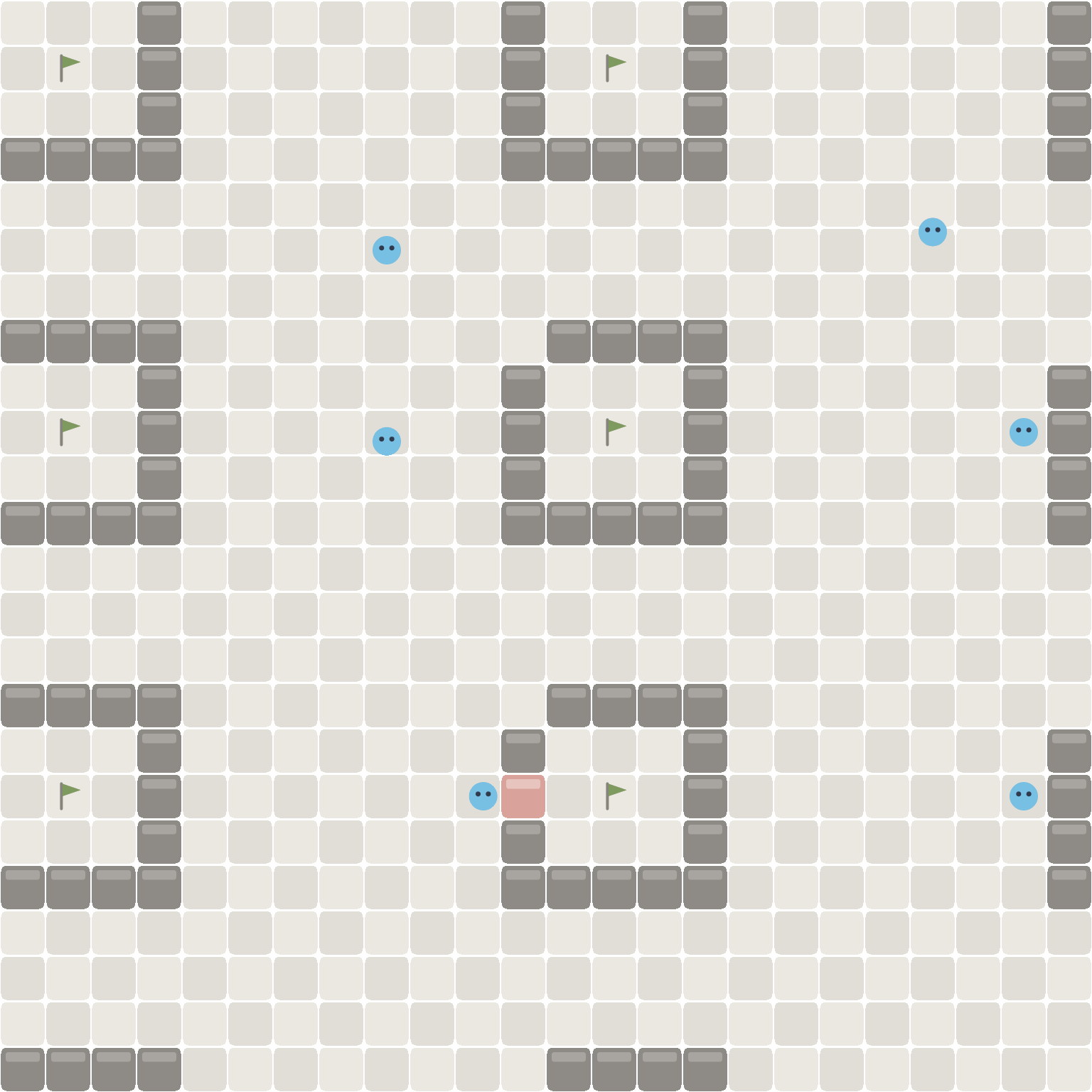
Laws intact. AI mistake: blocked!
Without LAWS.bend, a bug was merged. With it, the AI had to retry, until no
bugs were left! In this case, it added a wall, but it could have moved the flag,
made the room kill you, or whatever. The only thing it can't do is commit a bug,
because it is mathematically impossible to break laws in LAWS.bend. The
compiler enforces it.
Using LAWS.bend is simple.
Ask your AI to formalize your app's rules in
LAWS.bend. Example:LAW: "the sum of all balances must be zero"
LAW: "players can never pass through solid walls"
LAW: "list_sort() must always return ascending numbers"
LAW: "array_set() may never be called out-of-bounds"
LAW: "winning is impossible" (the demo above!)
And so on. Anything you can spell can become a law.
Ask your AI to run
bend PROOF.bendafter editing any code.That's it. R