Jev Ultrafast ⚡
[!IMPORTANT] The Browser Use Cloud waitlist is open. Get early access to ultrafast browser agents in the cloud. Join the waitlist →
A browser agent with a dynamic, indexed action space.
Give it one goal. TypeSafe's Jev picks an operation and an element. A small LLM writes text only when the operation is TYPE_TEXT.
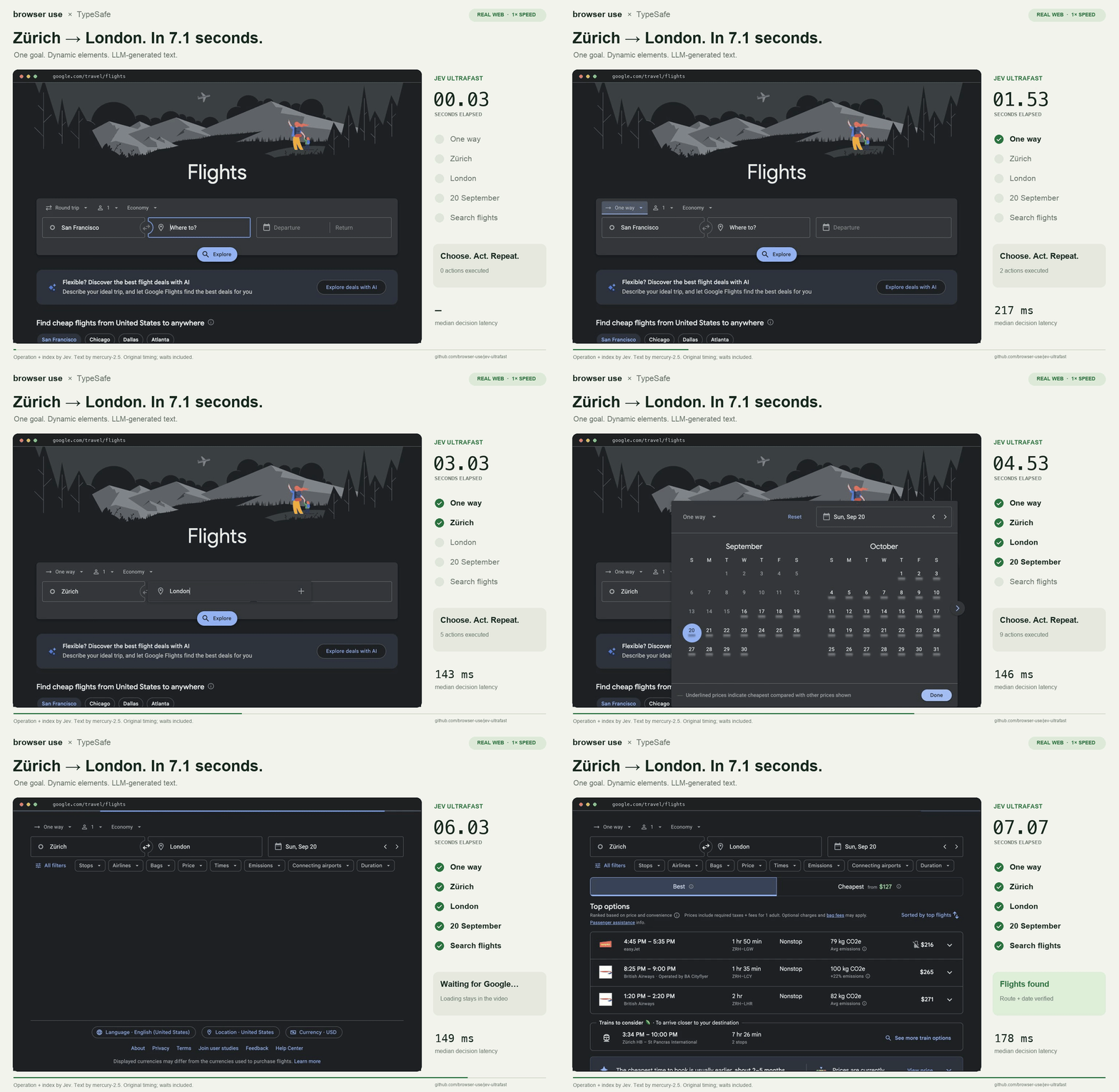
Zürich → London on Google Flights in 7.1 seconds. One natural-language goal, actual text generation, and loading waits included.
Watch the MP4 · Measurements · Read the loop
The action space
Every observation produces a new element table:
[1] button    Change ticket type · Round trip
[2] combobox  Where from?        · San Francisco
[3] combobox  Where to?          · empty
[4] textbox   Departure          · empty
...
The operations are CLICK, TYPE_TEXT, SELECT, SCROLL_UP, SCROLL_DOWN, WAIT, DONE, and BLOCKED. Only supported operations and targets are offered.
                      one TypeSafe request
                     ┌───────────────────────────┐
page → element table → operation                 │
                     │ click_target              │
                     │ type_text_target          │
                     │ select_target, if present │
                     └─────────────┬─────────────┘
                         use the matching target
                                   │
                    CLICK [7] ─────┤──→ browser
                TYPE_TEXT [3] ─────┘
                          ↓
                   small LLM → text → browser
Target questions are speculative. If the operation is CLICK, only click_target can execute. Two decisions, one network round trip. Each target head contains only compatible elements. Native dropdown choices carry an observed element/option index.
There are no site-specific action scripts or prepared field strings in the policy. The Flights example supplies a goal and independently verifies the outcome. The screenshot renderer adds labels afterward; it does not drive the browser.
Try it
git clone https://github.com/browser-use/jev-ultrafast.git
cd jev-ultrafast
uv sync
cp .env.example .env
# Add TYPESAFE_API_KEY and TEXT_MODEL_API_KEY.
uv run jev
Open http://127.0.0.1:8766 and click Start demo → Run automatically. The inspector shows numbered elements, operation probabilities, target probabilities, and executed actions. Choose next pauses before execution.
Chrome connects through Browser Harness, installed by uv sync. Run uv run browser-harness --doctor if it needs connecting. Allow remote debugging in Chrome when prompted.
TEXT_MODEL_API_KEY is an OpenRouter key in the example configuration. The current demo uses inception/mercury-2.5 with reasoning disabled. Gemini, GLM, and DeepSeek can also use the OpenAI-compatible text helper; configure the appropriate model, endpoint, and reasoning setting.
Use the library
from jev_ultrafast import Agent

with Agent(
    "https://www.google.com/travel/flights?hl=en",
    "Find one-way flights from Zurich to London on September 20, 2026, "
    "for one adult in economy. Stop when matching flight options are visible.",
) as agent:
    for state in agent.run():
        print(state["elapsed_ms"], state["status"])
Run with uv run --env-file .env python your_script.py. The same policy can run a different task:
uv run --env-file .env python examples/run.py