CommonForms
🪄 Automatically convert a PDF into a fillable form.
💻 Hosted Models (detect.semanticdocs.org) | 📄 CommonForms Paper | 🤗 Dataset | 🤗 FFDNet-L | 🤗 FFDNet-S
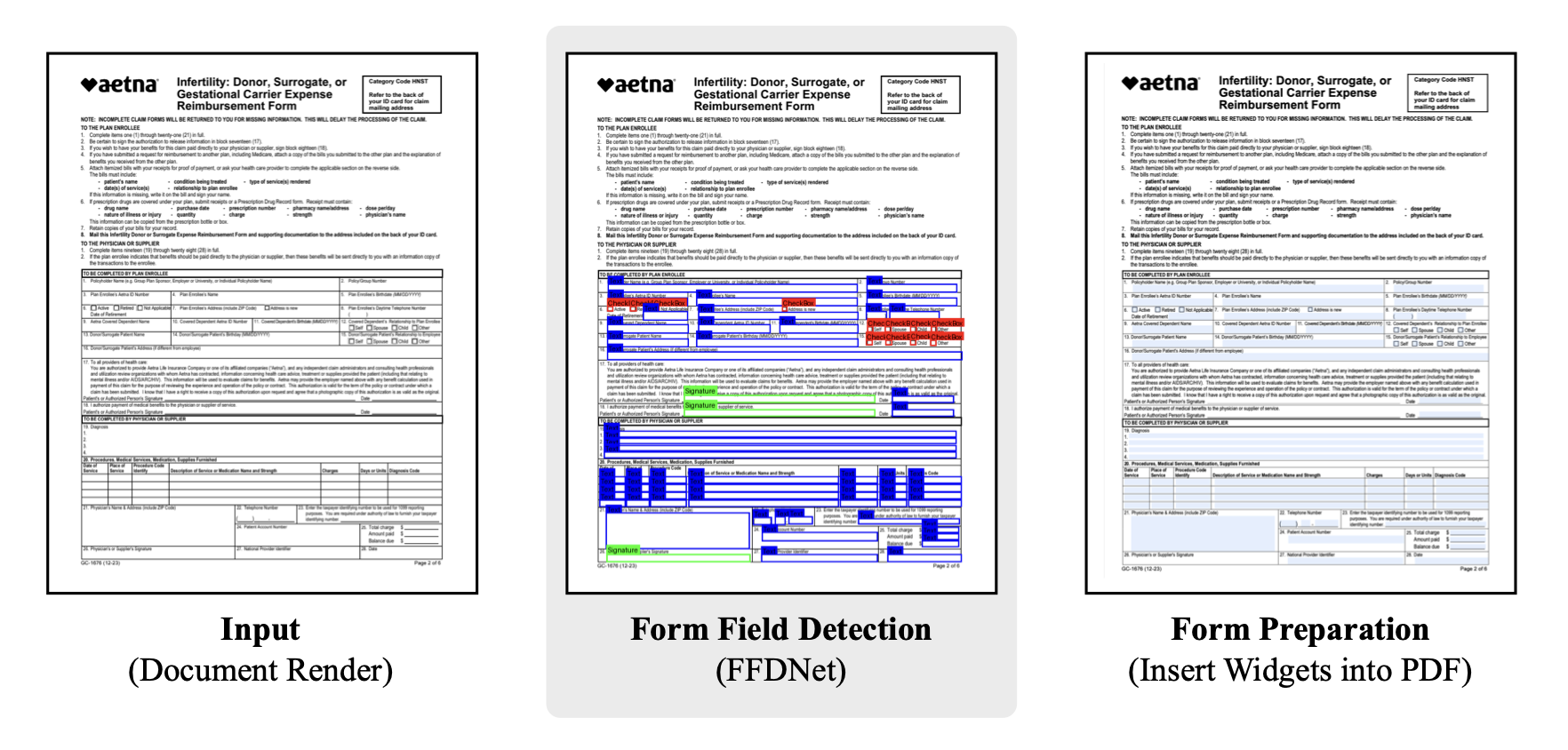
This repo contains three things:
- the pip-installable
commonformspackage, which has a CLI and API for converting PDFs into fillable forms - the FFDNet-S and FFDNet-L models from the paper CommonForms: A Large, Diverse Dataset for Form Field Detection
- the preprocessing code for the CommonForms dataset, which is hosted on HuggingFace: https://huggingface.co/datasets/jbarrow/CommonForms
Installation
CommonForms is a CLI tool with a sizable dependency footprint (transformers,
torch, rfdetr, ultralytics, and friends), so the cleanest install is an
isolated one that creates a dedicated environment and exposes just the
commonforms command:
uv tool install commonforms
# or
pipx install commonforms
If you'd rather use it as a library inside an existing project, install it with
uv or pip, feel free to choose your package manager flavor:
uv pip install commonforms
# or
pip install commonforms
⚠️ A plain
pip install(oruv pip install) installs into your active environment. Because the dependency set is large and pins recent versions, this can upgrade packages likenumpy,pillow, andtransformersin place — so install into a dedicated virtualenv/conda env, not a sharedbase.
Once it's installed, you should be able to run the CLI command on ~any PDF.
CommonForms CLI
The simplest usage will run inference on your CPU using the default suggested settings:
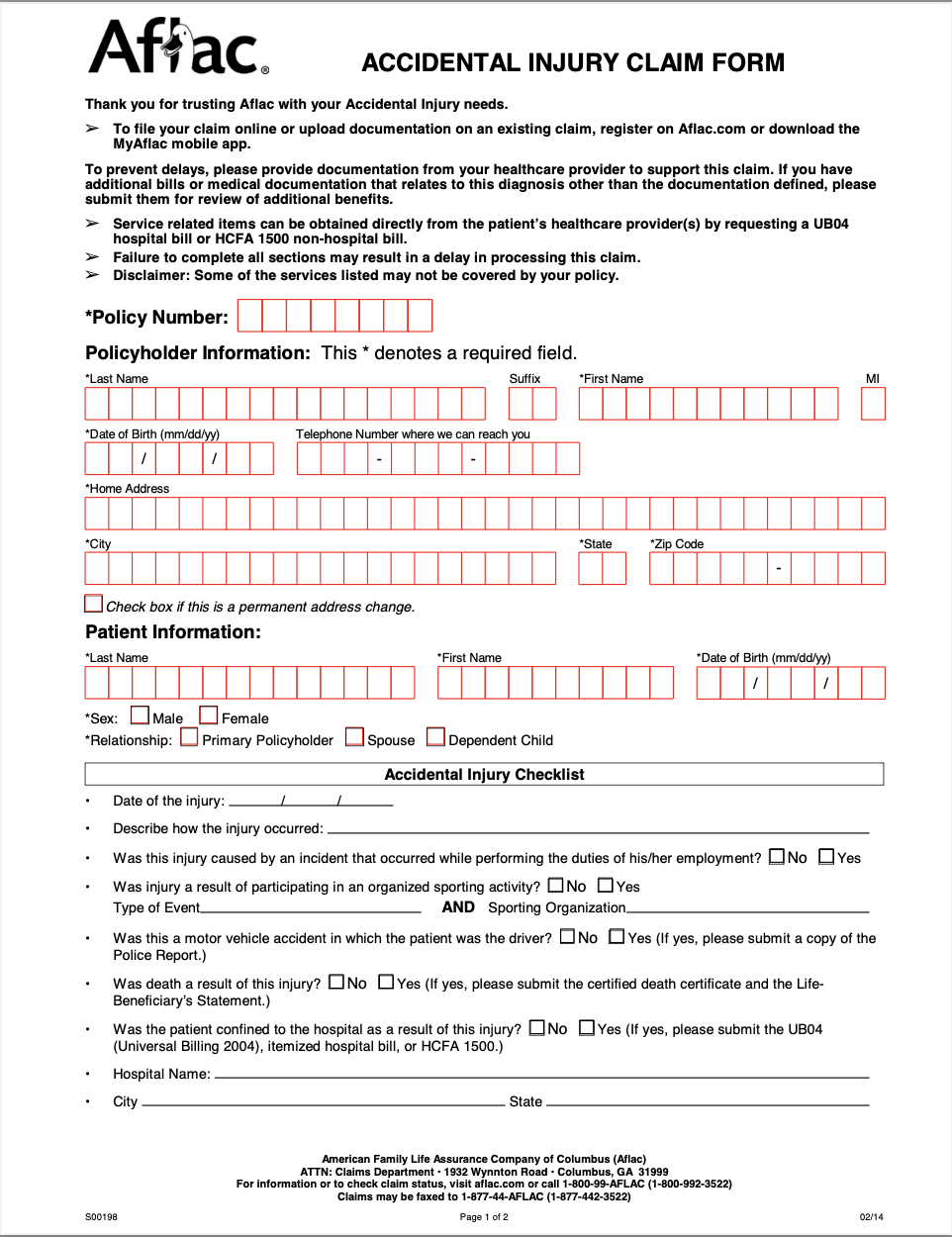
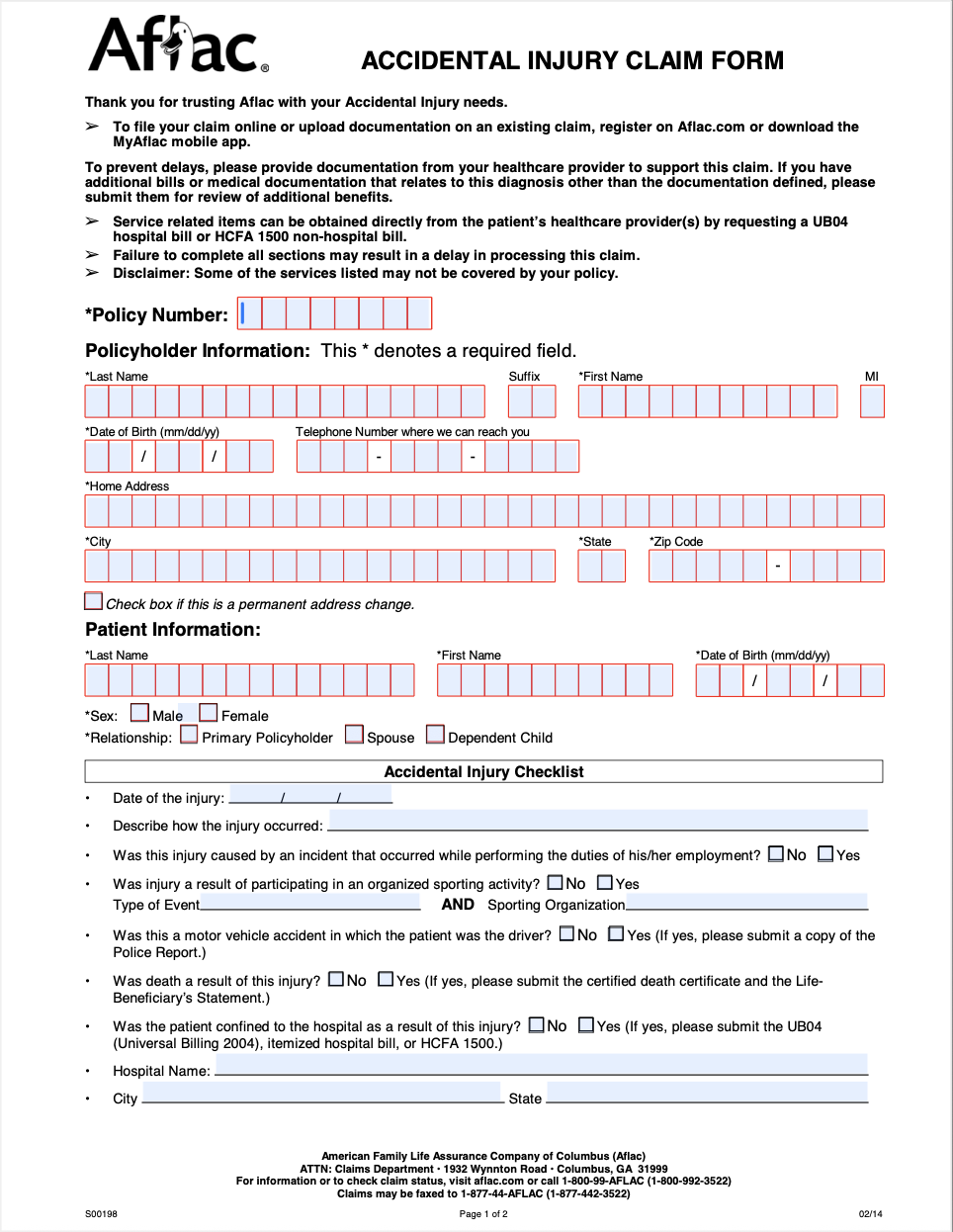
commonforms <input.pdf> <output.pdf>
| Input | Output |
|---|---|
 |
 |
Command Line Arguments
| Argument | Type | Default | Description |
|---|---|---|---|
input |
Path | Required | Path to the input PDF file |
output |
Path | Required | Path to save the output PDF file |
--model |
str | FFDNet-L |
Model name (FFDNet-L/FFDNet-S) or path to custom .pt file |
--keep-existing-fields |
flag | False |
Keep existing form fields in the PDF |
--use-signature-fields |
flag | False |
Use signature fields instead of text fields for detected signatures |
--device |
str | cpu |
Device for inference (e.g., cpu, cuda, 0) |
--image-size |
int | 1600 |
Image size for inference |
--confidence |
float | 0.3 |
Confidence threshold for detection |
--fast |
flag | False |
If running on a CPU, you can trade off accuracy for speed and run in about half the time |
--multiline |
flag | False |
If you want the detected textboxes to allow multiline inputs |
CommonForms API
In addition to the CLI, you can use
from commonforms import prepare_form

prepare_form(
    "path/to/input.pdf",
    "path/to/output.pdf"
)
All of the above arguments are keyword arguments to the prepare_form function.
Dataset Prep
🚧 Code for dataset prep exists in the dataset folder.
Citation
If you use the tool, models, or code in an academic paper, please cite the CommonForms paper:
@misc{barrow2025commonforms,
  title        = {CommonForms: A Large, Diverse Dataset for Form Field Detection},
  author       = {Barrow, Joe},
  year         = {2025},
  eprint       = {2509.16506},
  archivePrefix= {arXiv},
  primaryClass = {cs.CV},
  doi          = {10.48550/arXiv.2509.16506},
  url          = {https://arxiv.org/abs/2509.165