Stop building your AI stack from 40 open tabs.
A curated map of open-source AI & agent tools. Every connection is a typed, human-reviewed relationship — with the why written down. How we curate →
452 repos · 24 topics · curated by ShipWithAI · new: moli, edgextract, lift →
 lexmount 18.6k · today
Rust headless browser for AI agents on Servo/Stylo components: fetch pages as Markdown or a semantic tree, automate via CDP, WebDriver or BiDi — about 13% of Chrome's memory per task.
 raphaelmansuy 121 · 11 days ago
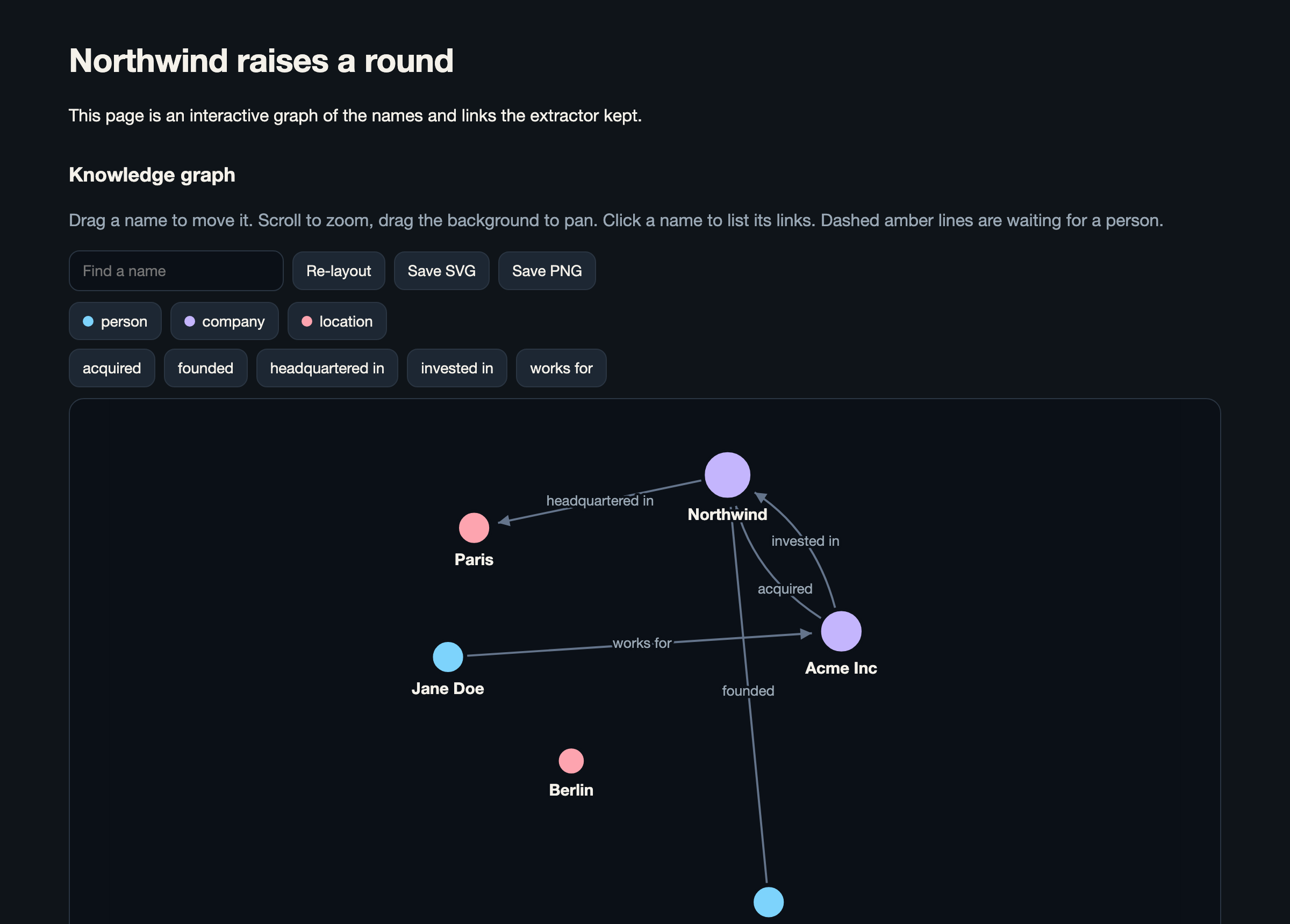
Markdown to knowledge graph with an ontology you write: a small local decision model answers closed yes/no questions per candidate, and your cutoff keeps, queues for review or drops each link.

 datalab-to 1.2k · 10 days ago
Datalab's 9B vision model that extracts JSON matching your schema from PDFs and images in one pass — schema-constrained decoding, multi-page values, vLLM or HF inference, Schema Studio.

 thu-nics 726 · 6 days ago
Cache-to-Cache (ICLR'26): LLMs talk by projecting and fusing each other's KV-caches instead of generating text — higher accuracy than text relay at ~2x lower latency. Fuser weights on HF.
 NVIDIA 20.2k · today
NVIDIA's security scanner for agent skills: 71 patterns across 17 categories — prompt injection, exfiltration, supply chain, MCP tool poisoning — static plus optional LLM pass, SARIF output.
 FalkorDB 10k · today
Low-latency, multi-tenant property graph database that runs queries as sparse-matrix linear algebra (GraphBLAS); OpenCypher over the Redis protocol, built for GraphRAG and agent memory.

 strands-agents 8.8k · today
Strands Agents: open-source Python and TypeScript SDK for building and running agent harnesses in your process — model-agnostic, with lifecycle controls, hooks, MCP, multi-agent and tracing.
 strands-labs 636 · yesterday
Strands' small decision model (2B, Qwen3.5-based): pick between options, answer yes/no or rate on a scale with calibrated confidence. CLI and /v1/systemone server on CUDA, MPS, MLX or CPU.
 walkinglabs 19.9k · 14 days ago
Project-based course on harness engineering for coding agents: 14 lectures, 8 projects on tools, state, verification and loops, plus breakdowns of Claude Code, Codex and Pi. 15 languages.
 apache 2.5k · today
Apache Ossie (incubating, formerly Open Semantic Interchange): a vendor-neutral JSON/YAML spec for exchanging semantic models across BI, analytics and AI tools, with reference converters.
 tinyhumansai 42k · today
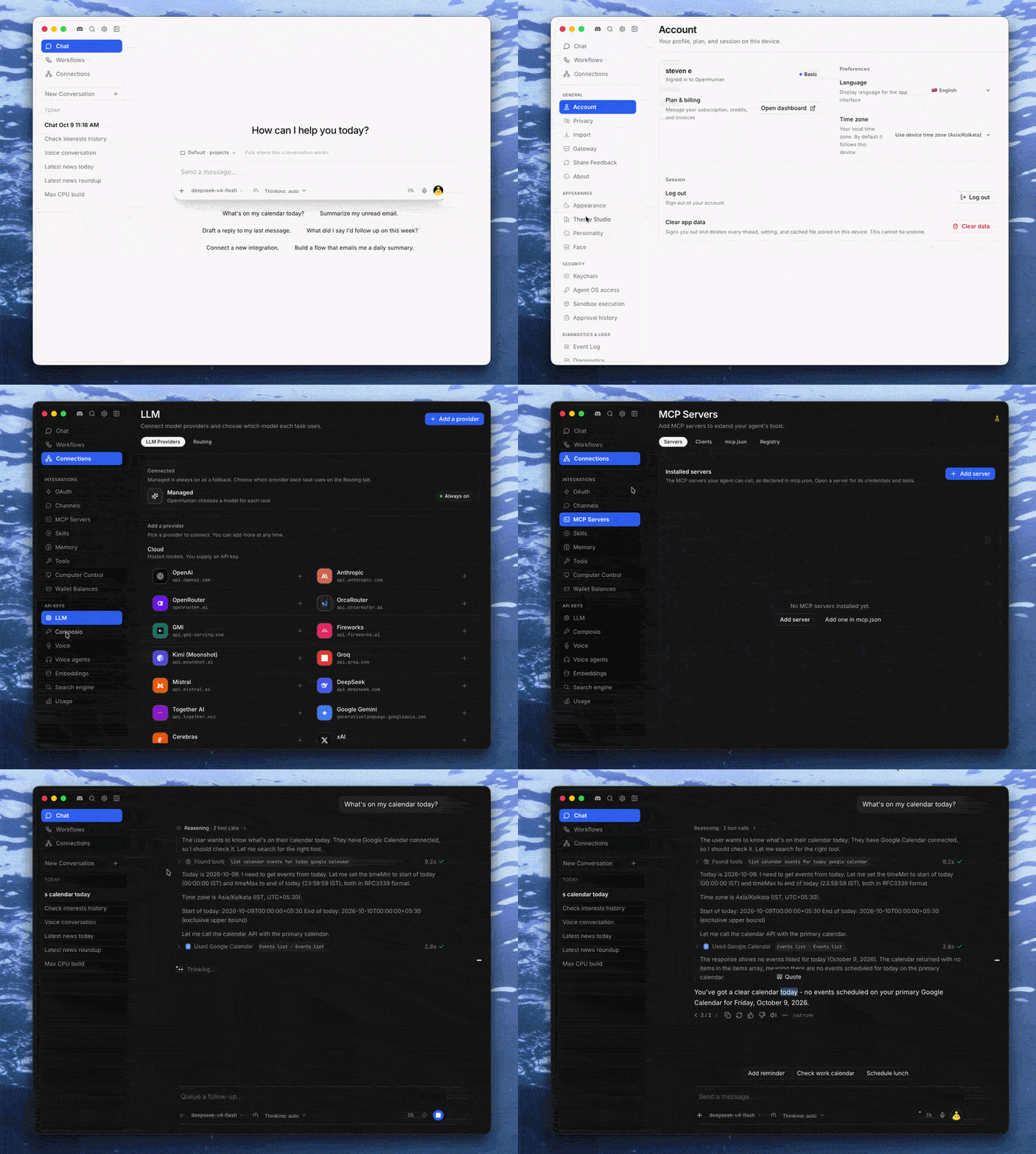
Rust agent harness built for fleets: desktop app, terminal or embeddable library, with built-in memory, browser/desktop control, 119 OAuth apps and 14 channels — 500 agents on a $10 VPS.
 microsoft 1.4k · today
Microsoft's Go CLI for agent-skill quality: scaffold eval suites from SKILL.md, run them through Copilot, grade, compare models, replay snapshots and check spec and token budgets.
 ag-ui-protocol 16.6k · today
AG-UI, the Agent-User Interaction Protocol: ~16 standard event types that stream agent runs into frontends — chat, shared state, generative UI, frontend tools, human-in-the-loop.
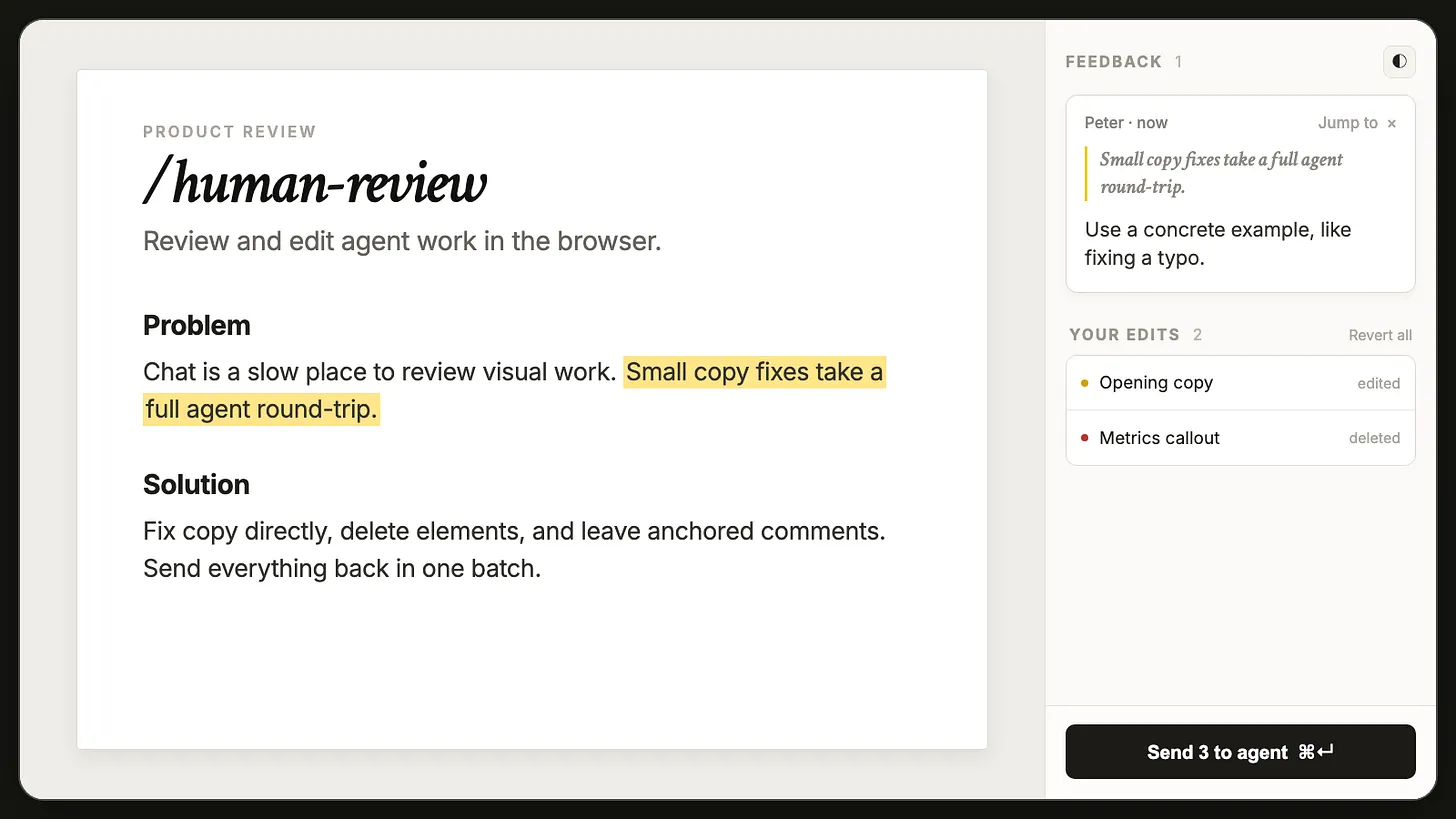
 petergyang 1.4k · 28 days ago
Skill + local tool to review HTML and Markdown like a Google Doc: edit text, drag blocks, comment on elements, then send every change to your coding agent in one batch.
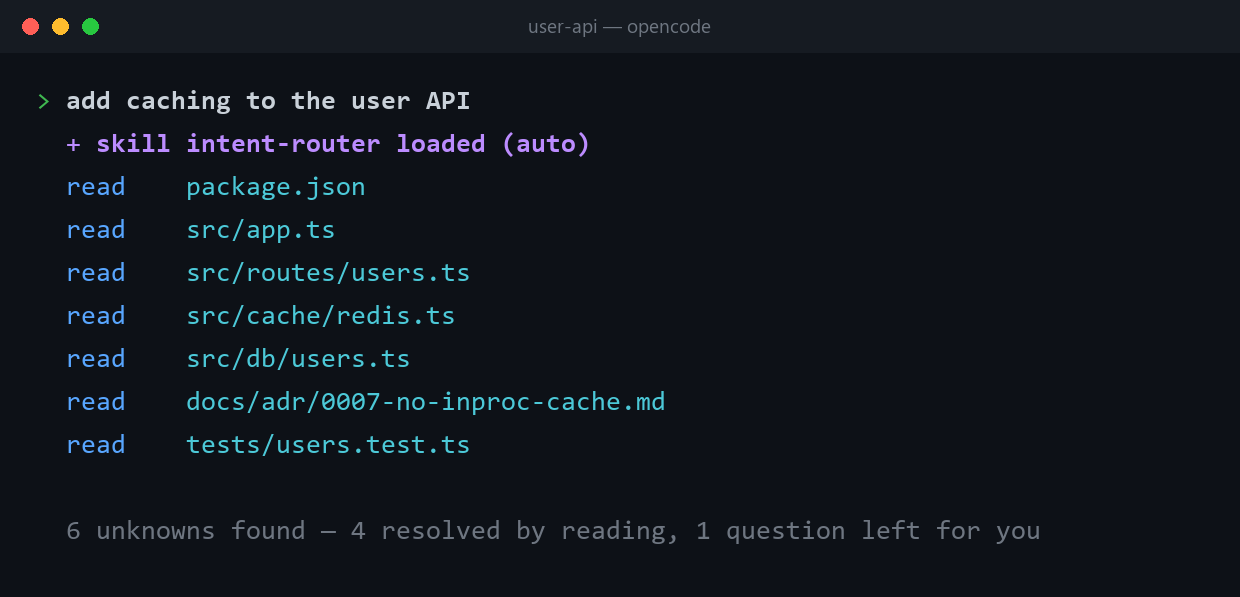
 angel291592 507 · today
Intent compiler skill for coding agents: probes your repo, asks only what no file answers, halts on ambiguity, and emits a typed IntentSpec it later checks the delivered work against.
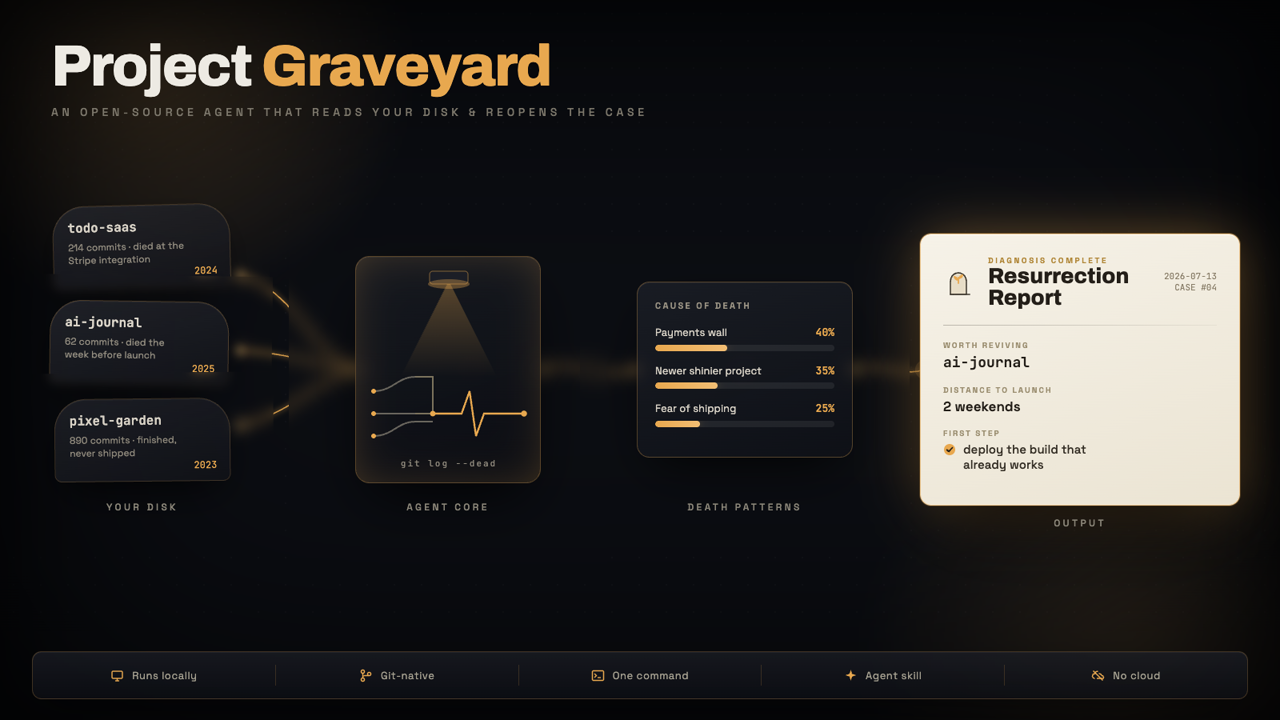
 Shubhamsaboo 141.8k · 2 days ago
141k-star collection of 100+ runnable AI agent, agent-skill and RAG app templates — clone one, pip install, run — across Claude, Gemini, GPT and open models. Apache-2.0.
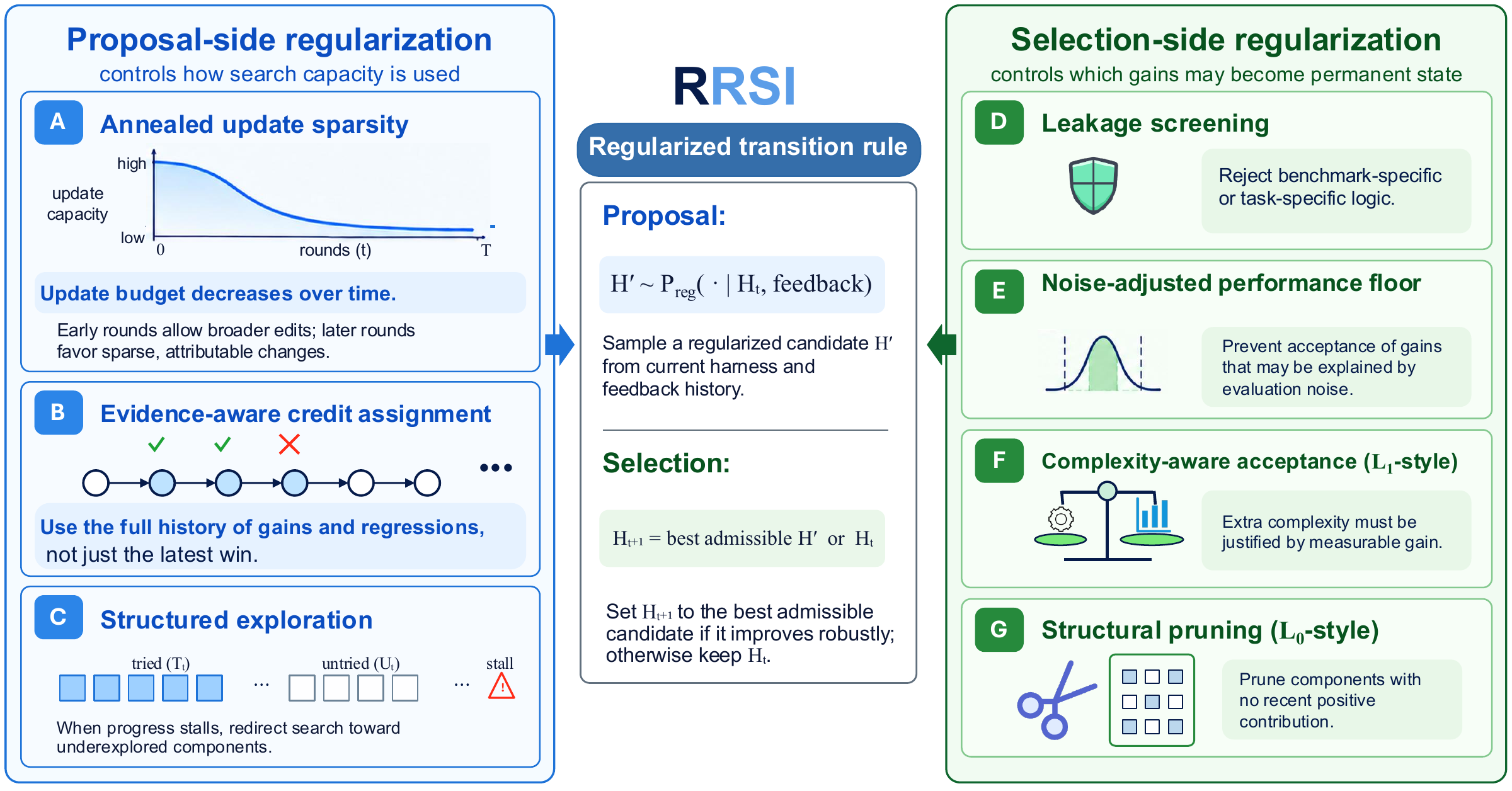
 google-research 1.5k · 22 days ago
Google Research's Regularized Recursive Self-Improvement: evolves an agent harness (prompts, tools, memory, sub-agents) with constraints on the search so gains hold out of distribution.
 dzhng 2.7k · yesterday
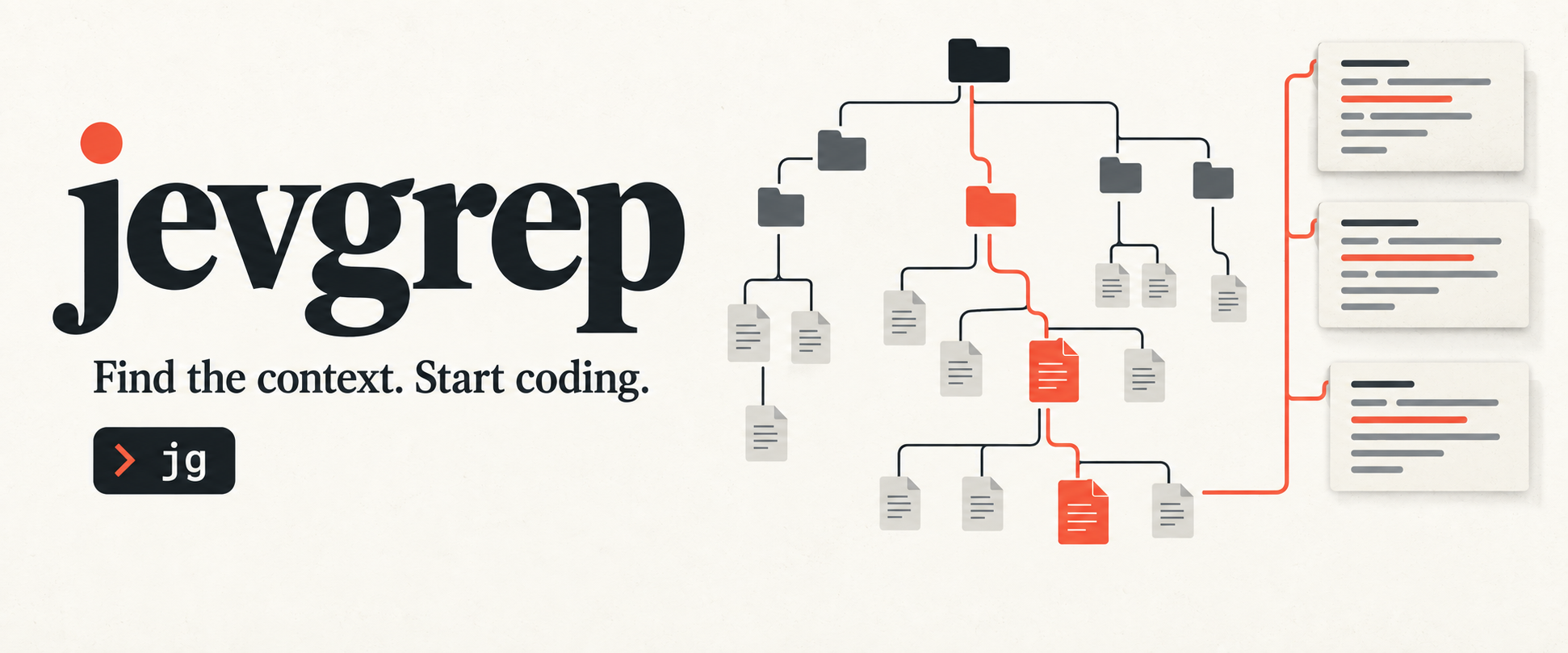
Find code by asking what it does: `jg` uses the Jev decision model to judge folders, files and declarations, returning relevant files plus verbatim excerpts for coding agents. CLI + skill.
 NVIDIA 16.3k · today
NVIDIA's safe runtime for autonomous agents: kernel-enforced sandboxes with policy on every file, syscall and connection; credentials injected only for approved endpoints.
microsoft 18.4k · 9 days agoMicrosoft's text-space optimizer that trains a frozen agent's skill document like weights — rollouts, bounded edits, validation-gated updates — and ships a compact best_skill.md.
 OpenBMB 387 · 5 days ago
OpenBMB's RL training framework where every role — inference, training, rollout — is an independent service talking over one TransferQueue data plane. Built on SGLang and torchtitan.

 vllm-project 6.2k · today
vLLM's programmable decision layer: one endpoint for your agent harness that selects or combines models per call by policy — quality, latency, cost, location — across local and cloud backends.

 yetone 13.2k · today
Pick any model for any coding agent from one menu-bar app: a local gateway translating OpenAI, Anthropic and Gemini APIs, with subscription sign-ins and quota failover across accounts.

 spinabot 11.3k · 3 days ago
Self-hosted crew of AI agents on an org chart sharing one long-term memory: delegation, mid-task model switching, 1,000+ app connectors, reachable from terminal, WhatsApp, Telegram or Slack.
 block 36k · today
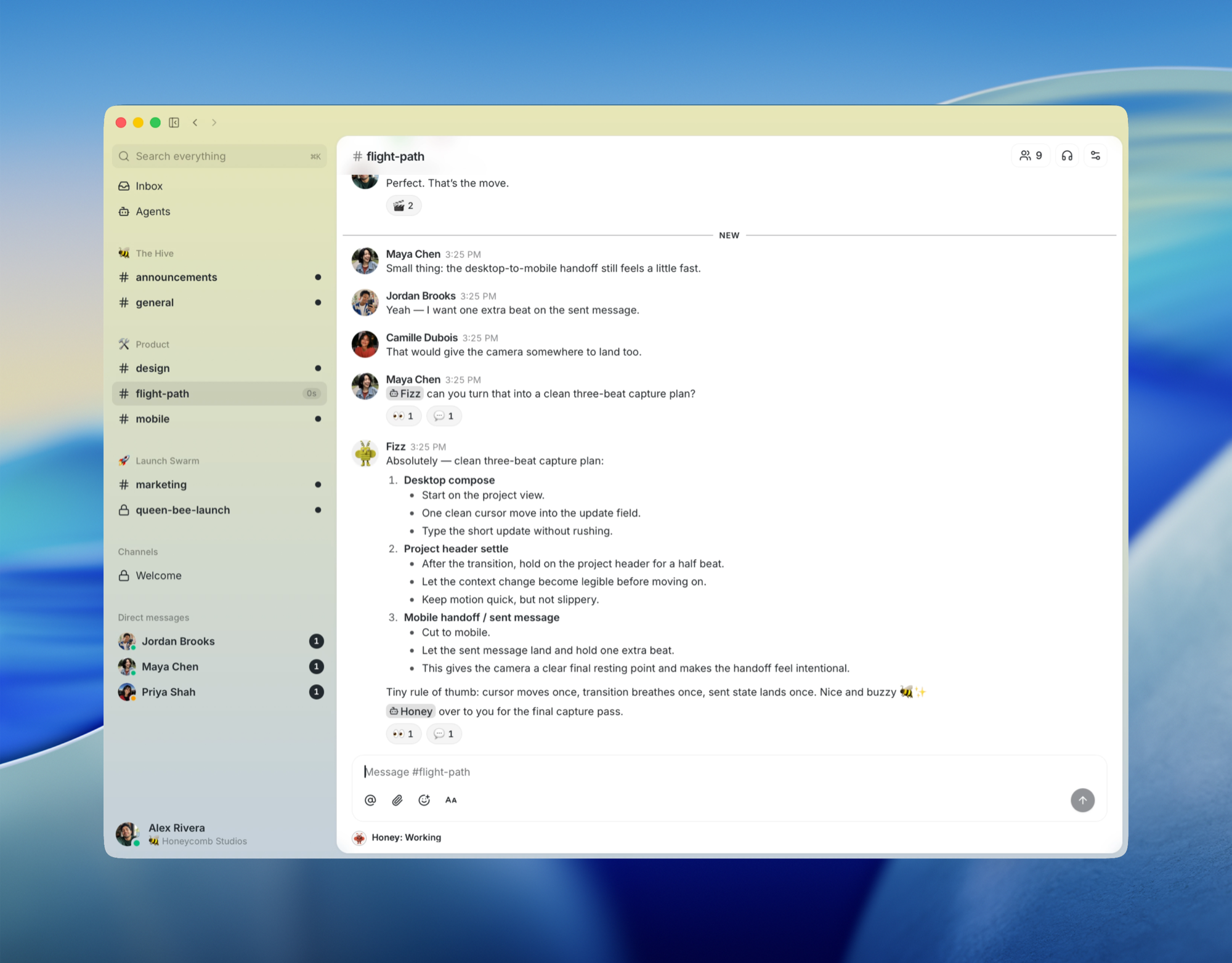
Block's self-hostable workspace where humans and agents share rooms on a Nostr relay — chat, canvases, workflows, patches and reviews as signed events; agents join with their own keys.

 tigerless-labs 11.1k · yesterday
Self-learning skill layer for Claude Code: distills skills from your real sessions, merges same-scenario ones, updates them in use and prunes the unused — touching only skills it wrote.
 aru-labs 143 · 22 days ago
Lossless long-term memory for a personal AI: verbatim JSONL logs, time-first search over SQLite FTS5 (sqlite-vec as last resort) and a tiny 'where are we now' index injected every turn.

 coldteadotai 580 · 5 days ago
Hooks Claude Code, Codex, OpenCode and Pi so every edit is checked against the rules in your AGENTS.md/CLAUDE.md by a decision model (Jev) — ~300 ms per check, violations fixed in-turn.

 dream-num 22.6k · today
Office SDK for embedding spreadsheets, docs, slides, bases and PDFs in your own product — canvas rendering, formula engine, plugins and one Facade API across browser and Node.js.

 Contrastive-LM 3k · 10 days ago
Contrastive Language Models: CLM-8B, an open System-1 decision model scoring states against actions — typed choice/score/yes-no answers on a TypeSafe-compatible API, up to 9x faster than Jev.
 volotat 1.2k · yesterday
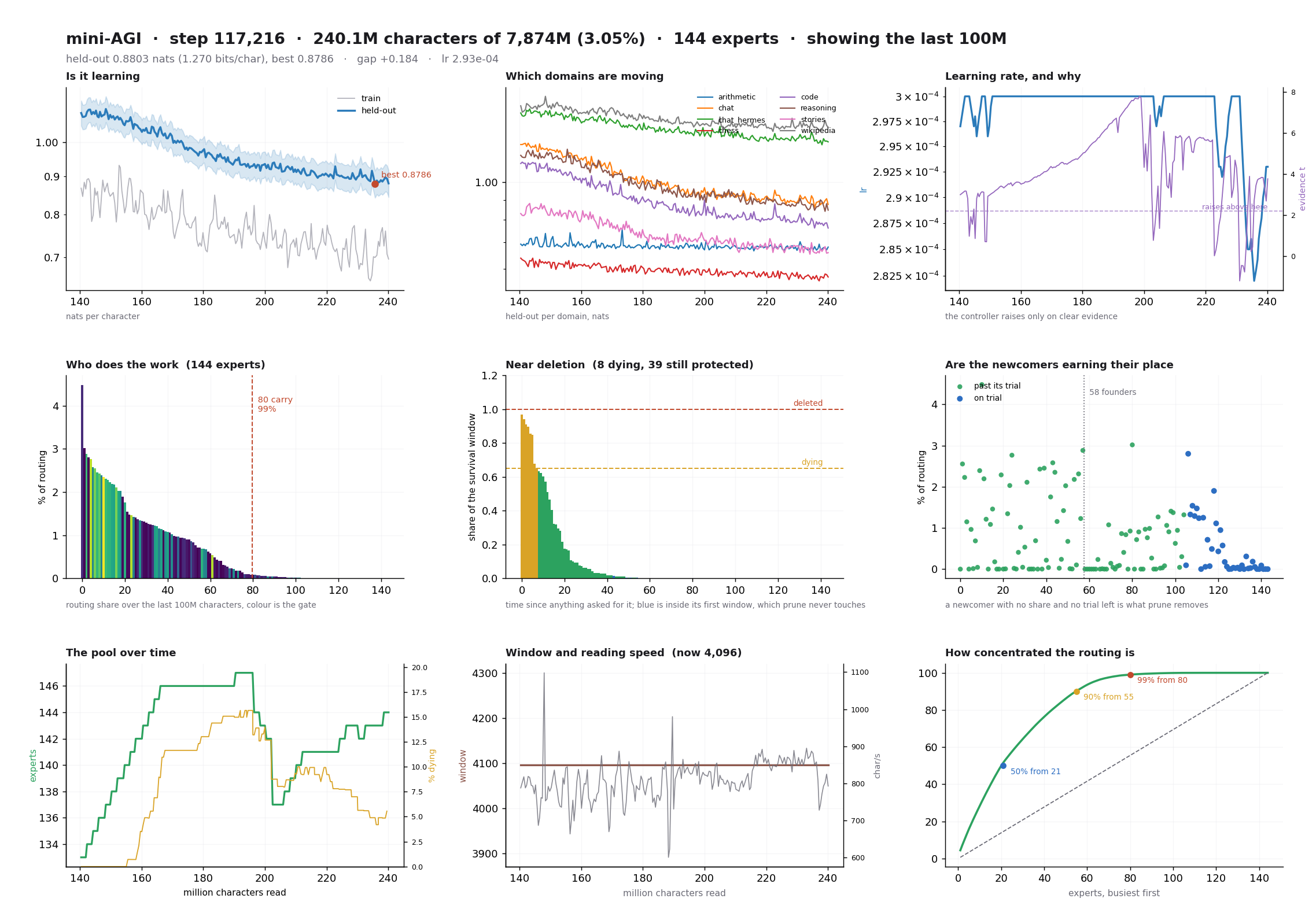
Continual-learning byte-level LM trained from scratch on one 8 GB GPU: weights page in from disk, capacity grows and prunes itself while it keeps reading a single data stream.

 trycua 29.8k · today
Computer-use infrastructure for agents: sandboxed Linux, macOS and Windows desktops locally or in the cloud, Cua Driver for native apps (CLI/MCP/SDK), Lume VMs, CUA-S1 models, Cua Bench.
 run-llama 12.9k · 3 days ago
LlamaIndex's local document parser in Rust: PDFium text with bounding boxes at ~2-5 ms/page, selective Tesseract or HTTP OCR, Markdown/JSON output, screenshots; Python, Node, WASM.

 google 13.7k · today
Google's declarative runtime for agent workloads on Kubernetes: Task, Workspace and Model manifests run each agent sandboxed on Agent Substrate, with suspend/resume and ax ssh.
 nokia-applied-research 1.3k · 3 days ago
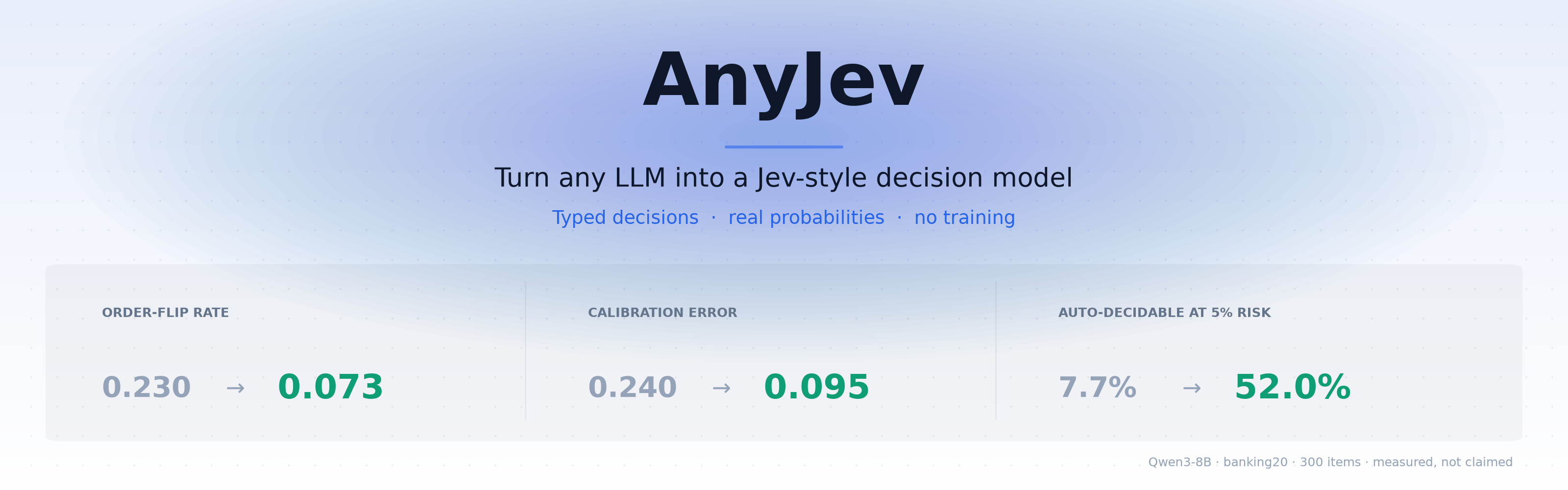
Nokia research: turn any open LLM into a Jev-style decision model. Typed choice, yes/no or score from one prefill, de-biased with no labels or a fitted head, served on vLLM.

 NandhaKishorM 33k · today
Non-autoregressive decision engine: typed choice, score and yes/no answers over text in one forward pass (~33 ms), 100+ languages, calibrated probabilities, a router picking the checkpoint.
One email a week: what changed in the AI stack
New repos, new typed connections, the why behind each. No spam, unsubscribe anytime.