Stop building your AI stack from 40 open tabs.
A curated map of open-source AI & agent tools. Every connection is a typed, human-reviewed relationship — with the why written down. How we curate →
434 repos · 24 topics · curated by ShipWithAI · new: OpenShell, SkillOpt, Meshy →
 NVIDIA 15.7k · yesterday
NVIDIA's safe runtime for autonomous agents: kernel-enforced sandboxes with policy on every file, syscall and connection; credentials injected only for approved endpoints.
 microsoft 18.2k · 5 days ago
Microsoft's text-space optimizer that trains a frozen agent's skill document like weights — rollouts, bounded edits, validation-gated updates — and ships a compact best_skill.md.
 OpenBMB 386 · yesterday
OpenBMB's RL training framework where every role — inference, training, rollout — is an independent service talking over one TransferQueue data plane. Built on SGLang and torchtitan.

 vllm-project 6.1k · yesterday
vLLM's programmable decision layer: one endpoint for your agent harness that selects or combines models per call by policy — quality, latency, cost, location — across local and cloud backends.

 yetone 8.6k · yesterday
Pick any model for any coding agent from one menu-bar app: a local gateway translating OpenAI, Anthropic and Gemini APIs, with subscription sign-ins and quota failover across accounts.

 spinabot 11.3k · 2 days ago
Self-hosted crew of AI agents on an org chart sharing one long-term memory: delegation, mid-task model switching, 1,000+ app connectors, reachable from terminal, WhatsApp, Telegram or Slack.
 block 35.8k · yesterday
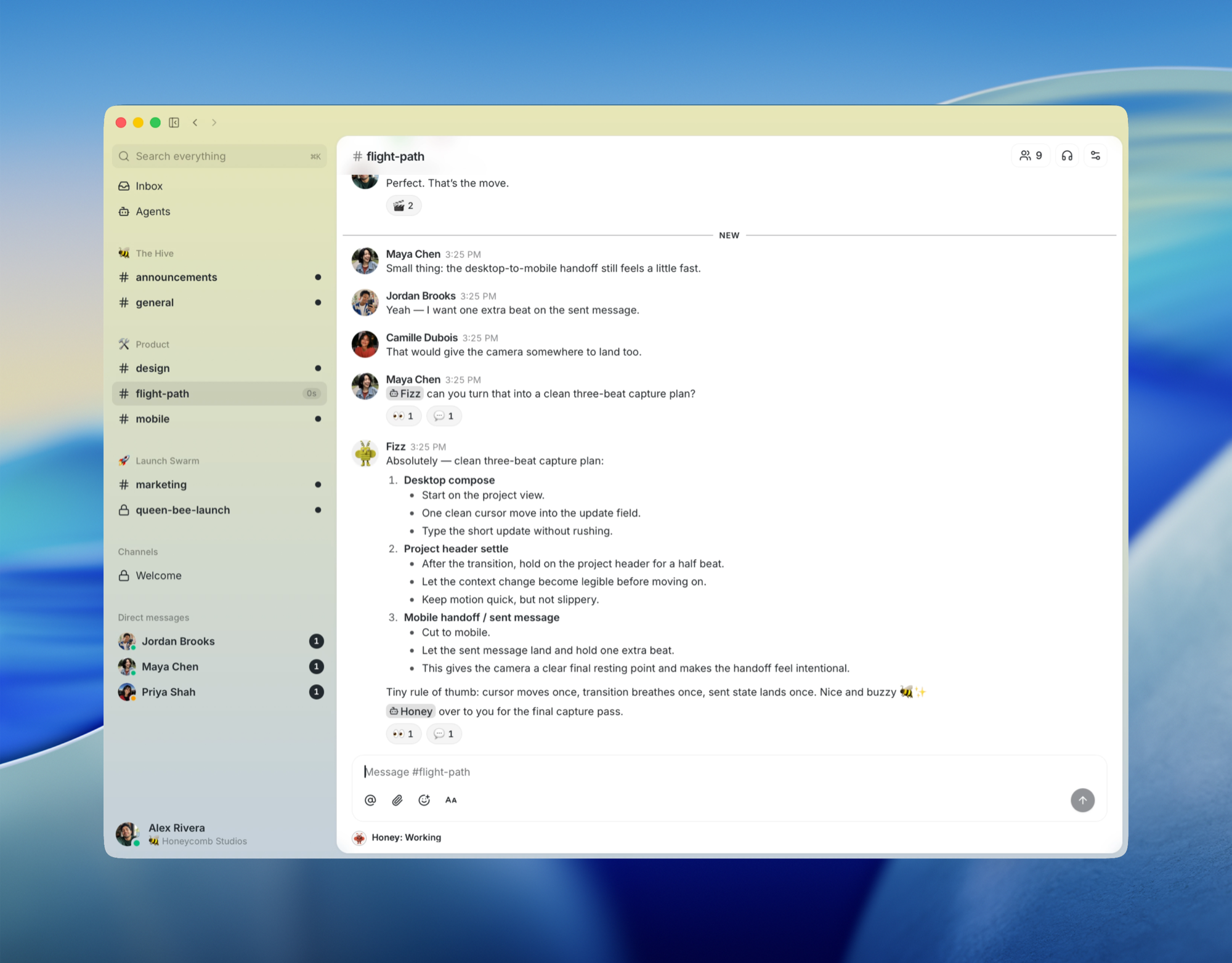
Block's self-hostable workspace where humans and agents share rooms on a Nostr relay — chat, canvases, workflows, patches and reviews as signed events; agents join with their own keys.

 tigerless-labs 11k · 2 days ago
Self-learning skill layer for Claude Code: distills skills from your real sessions, merges same-scenario ones, updates them in use and prunes the unused — touching only skills it wrote.
 aru-labs 143 · 18 days ago
Lossless long-term memory for a personal AI: verbatim JSONL logs, time-first search over SQLite FTS5 (sqlite-vec as last resort) and a tiny 'where are we now' index injected every turn.

 coldteadotai 572 · yesterday
Hooks Claude Code, Codex, OpenCode and Pi so every edit is checked against the rules in your AGENTS.md/CLAUDE.md by a decision model (Jev) — ~300 ms per check, violations fixed in-turn.

 dream-num 22.5k · yesterday
Office SDK for embedding spreadsheets, docs, slides, bases and PDFs in your own product — canvas rendering, formula engine, plugins and one Facade API across browser and Node.js.

 Contrastive-LM 3k · 6 days ago
Contrastive Language Models: CLM-8B, an open System-1 decision model scoring states against actions — typed choice/score/yes-no answers on a TypeSafe-compatible API, up to 9x faster than Jev.
 volotat 1.2k · yesterday
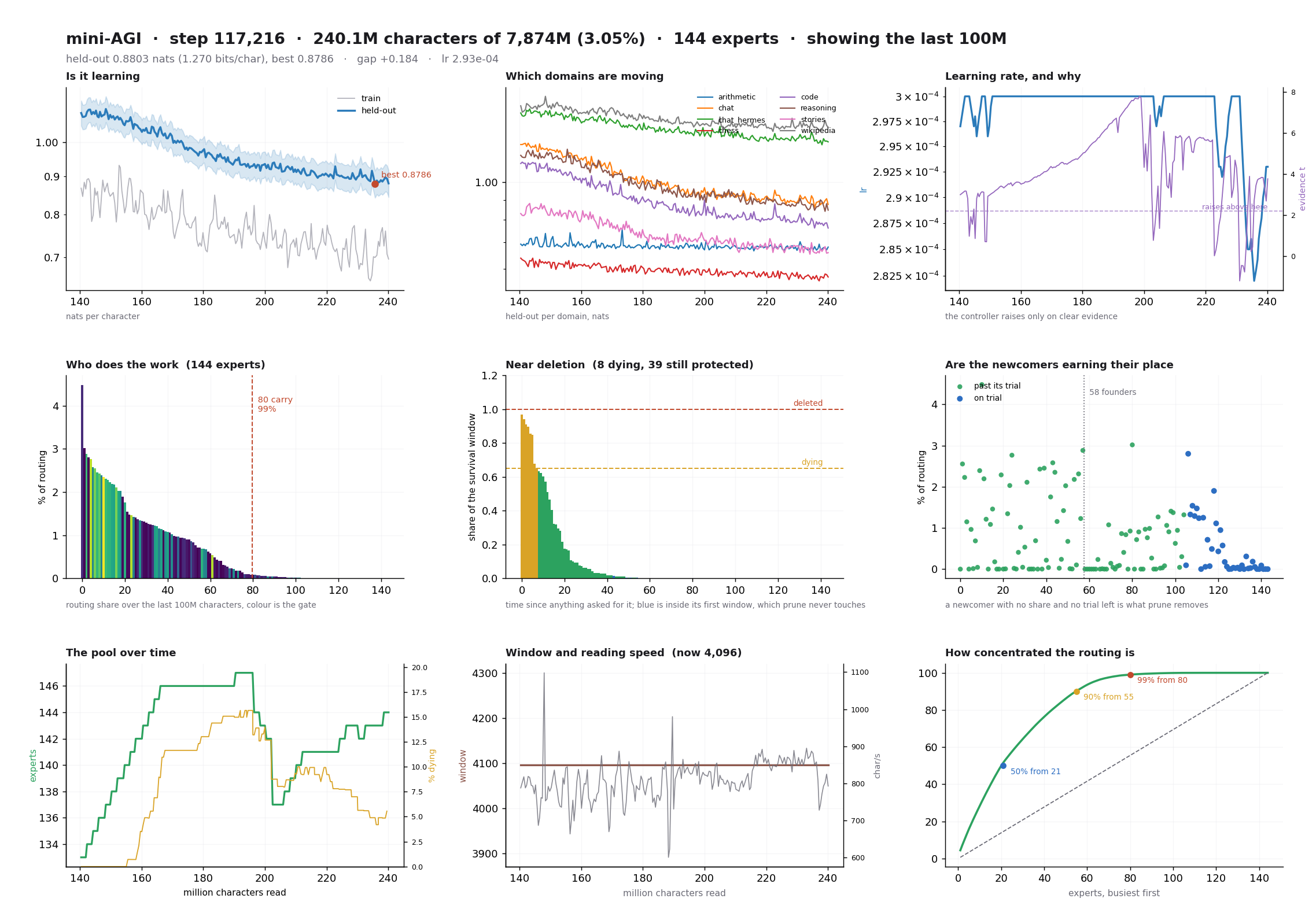
Continual-learning byte-level LM trained from scratch on one 8 GB GPU: weights page in from disk, capacity grows and prunes itself while it keeps reading a single data stream.

 trycua 29k · 3 days ago
Computer-use infrastructure for agents: sandboxed Linux, macOS and Windows desktops locally or in the cloud, Cua Driver for native apps (CLI/MCP/SDK), Lume VMs, CUA-S1 models, Cua Bench.
 run-llama 12.8k · 6 days ago
LlamaIndex's local document parser in Rust: PDFium text with bounding boxes at ~2-5 ms/page, selective Tesseract or HTTP OCR, Markdown/JSON output, screenshots; Python, Node, WASM.

 google 13.3k · 14 days ago
Google's declarative runtime for agent workloads on Kubernetes: Task, Workspace and Model manifests run each agent sandboxed on Agent Substrate, with suspend/resume and ax ssh.
 nokia-applied-research 1.1k · 4 days ago
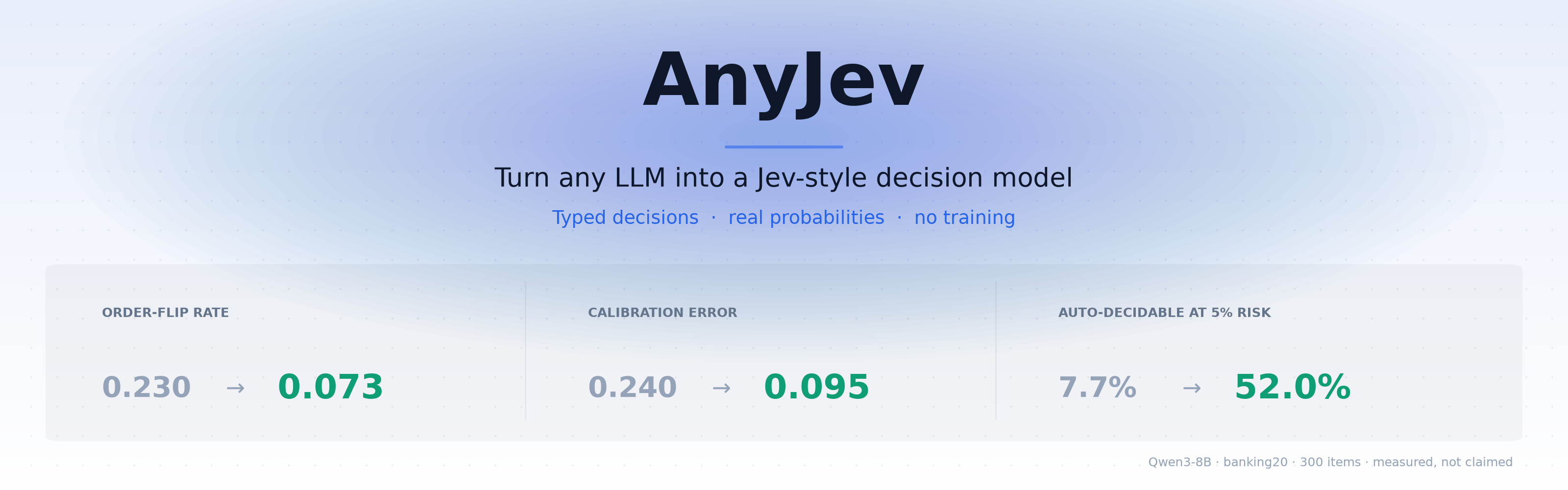
Nokia research: turn any open LLM into a Jev-style decision model. Typed choice, yes/no or score from one prefill, de-biased with no labels or a fitted head, served on vLLM.

 NandhaKishorM 31.6k · 4 days ago
Non-autoregressive decision engine: typed choice, score and yes/no answers over text in one forward pass (~33 ms), 100+ languages, calibrated probabilities, a router picking the checkpoint.

 FareedKhan-dev 8.9k · 9 days ago
Kimi K3 (2.78T-parameter MoE) inference in portable C99 on one CPU: the dense trunk stays in RAM, 4-bit experts stream from disk, and output is byte-identical from 8 GB to 224 GB.
 tensorlakeai 1k · 3 days ago
Serverless platform for agent sandboxes: stateful Firecracker microVMs with snapshots, cloning, auto suspend/resume and network policy, plus fan-out orchestration functions. Python SDK and CLI.

 supermemoryai 31.2k · 3 days ago
Memory and context engine for AI: fact extraction, user profiles, contradiction handling and forgetting, hybrid RAG + memory search, connectors, agent plugins and a one-binary local mode.

 ruc-datalab 653 · 12 days ago
Renmin University's self-evolving ontology layer for data agents: builds a workload-grounded ontology over tables, files and databases, serves it via MCP, and evolves it from agent trajectories.

 oxigraph 2k · 4 days ago
Rust RDF graph database and SPARQL 1.1 engine on RocksDB, with Python (pyoxigraph), JavaScript/WASM bindings and a CLI server, plus reusable crates for RDF parsing, serialization and SPARQL.
 naw103 538 · 7 days ago
Coordination protocol for parallel coding agents above Git: agents declare intent in a shared SQLite store, and a deterministic detector flags plan collisions before code is written.

 magnitudedev 6.5k · 3 days ago
Local inference desktop app + CLI: profiles your hardware, estimates tok/s per model before download, tunes the one you pick, and connects Pi, OpenCode, Hermes, Codex or Claude Code in a click.

 iwe-org 1.8k · 3 days ago
Markdown notes as a knowledge graph: an LSP for VS Code, Neovim, Zed and Helix, plus CLI and MCP so AI agents query the same files by structure. Rust, local-first, OKF-compatible.
 gura105 180 · 6 days ago
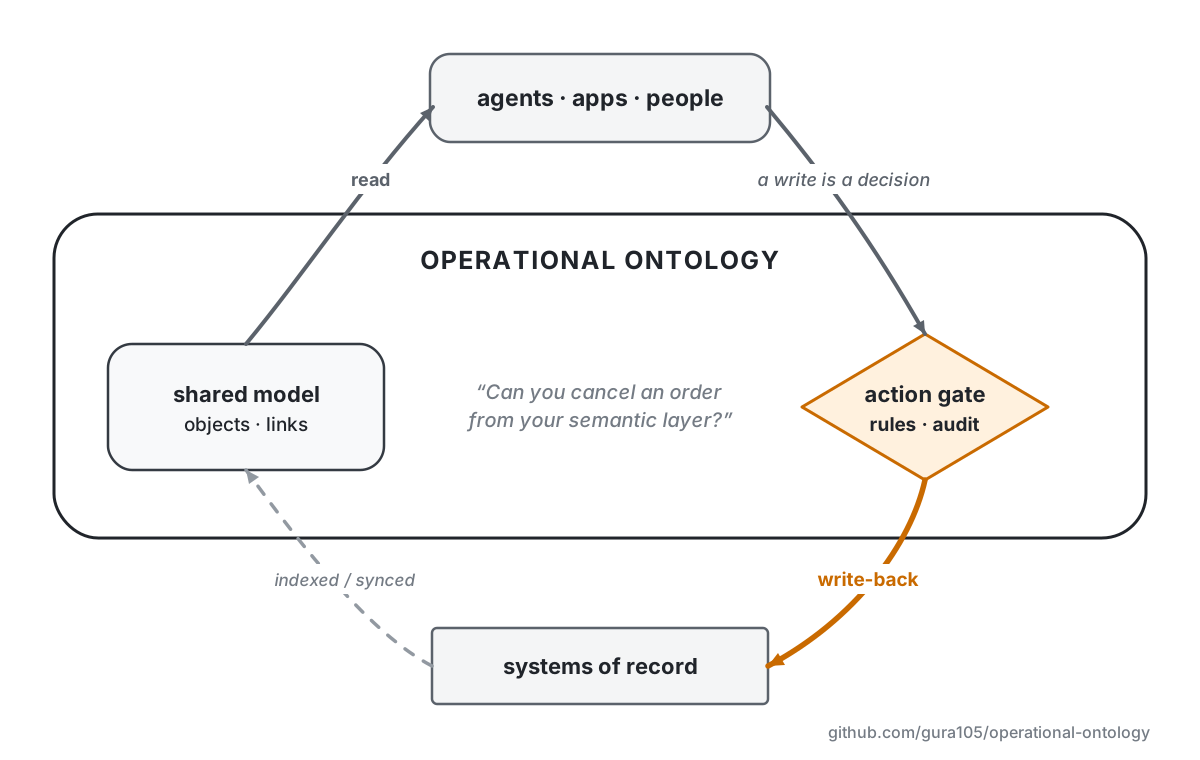
Minimal TypeScript reference implementation of the Operational Ontology pattern behind Palantir Foundry: shared objects and links, action-gated writes, business rules, audit and write-back.

 context-labs 1.1k · 6 days ago
WhipCode: open-source coding agent in Go built on a recursive language-model loop; agents delegate to sub-agents through short programs, with daemon-owned sessions across desktop, TUI and web.

 cartography-cncf 4.1k · 3 days ago
CNCF tool that syncs infrastructure assets and relationships (AWS, GCP, Azure, Kubernetes, GitHub, Okta and 30+ more) into a Neo4j graph, then runs security rules and Cypher queries over it.
 bendlang 23.5k · 3 days ago
Bend 2: a Python-like language with dependent types that compiles to fast CPU/GPU code; LAWS.bend declares invariants the compiler forces AI-written code to prove before it builds.
 MotleyAI 239 · 3 days ago
Embeddable semantic layer for AI agents: define metrics once, compose them with expressions and time shifts, row-level security and read-only SQL, over MCP, REST, CLI, Python or a Postgres facade.
 HelixDB 6.1k · 3 days ago
Rust OLTP graph database on object storage with native vector and BM25 search: property graph, traversal-prefiltered ANN and full-text in one transactional engine; Rust, TS, Go, Python SDKs.
 Asymptote-Labs 1.8k · 3 days ago
Cross-harness memory for coding agents: captures sessions from Claude Code, Cursor, Codex and 20+ harnesses, distills reviewed knowledge over MCP/skills, and forwards telemetry to SIEMs.

 nashsu 20.3k · 13 days ago
Desktop app implementing Karpathy's LLM Wiki pattern: an LLM ingests your documents into a persistent, interlinked wiki with a knowledge graph, hybrid search, deep research and an MCP server.
microsoft 3.4k · 4 days agoMicrosoft's trigram-indexed grep: a client/server index narrows each regex to candidate files. Powers search in GitHub Copilot CLI; ships MCP tools and hooks for Codex and pi. Rust.
 markburgess 266 · 3 days ago
Mark Burgess's Semantic Spacetime knowledge graph on Postgres: write notes in the N4L language, compile them into a story graph, then search, browse and path-solve it via Go API or web UI.
One email a week: what changed in the AI stack
New repos, new typed connections, the why behind each. No spam, unsubscribe anytime.