Data
Move, model and query your data — pipelines, semantic layers, dataframes and BI that agents can drive.

 shcherbak-ai 2k · 1 months ago
Declarative LLM extraction from documents: describe Aspects and Concepts in plain language, get structured values back with paragraph- or sentence-level references and built-in justifications.
 slothflowlabs 1.5k · 4 days ago
Self-hosted ETL/ELT on DuckDB: author pipelines on a canvas, in SQL or Python, then ship the same file to your own server — 190+ sources, dbt, CDC, lineage, and an MCP server for agents.

 ruc-datalab 594 · 6 days ago
Renmin University's self-evolving ontology layer for data agents: builds a workload-grounded ontology over tables, files and databases, serves it via MCP, and evolves it from agent trajectories.

 typedef-ai 673 · today
Semantic DataFrames: PySpark-style select, filter and join alongside AI operators — extract, classify, summarize, embed, semantic join — compiled on an engine built for inference.
 gridex 1.7k · 28 days ago
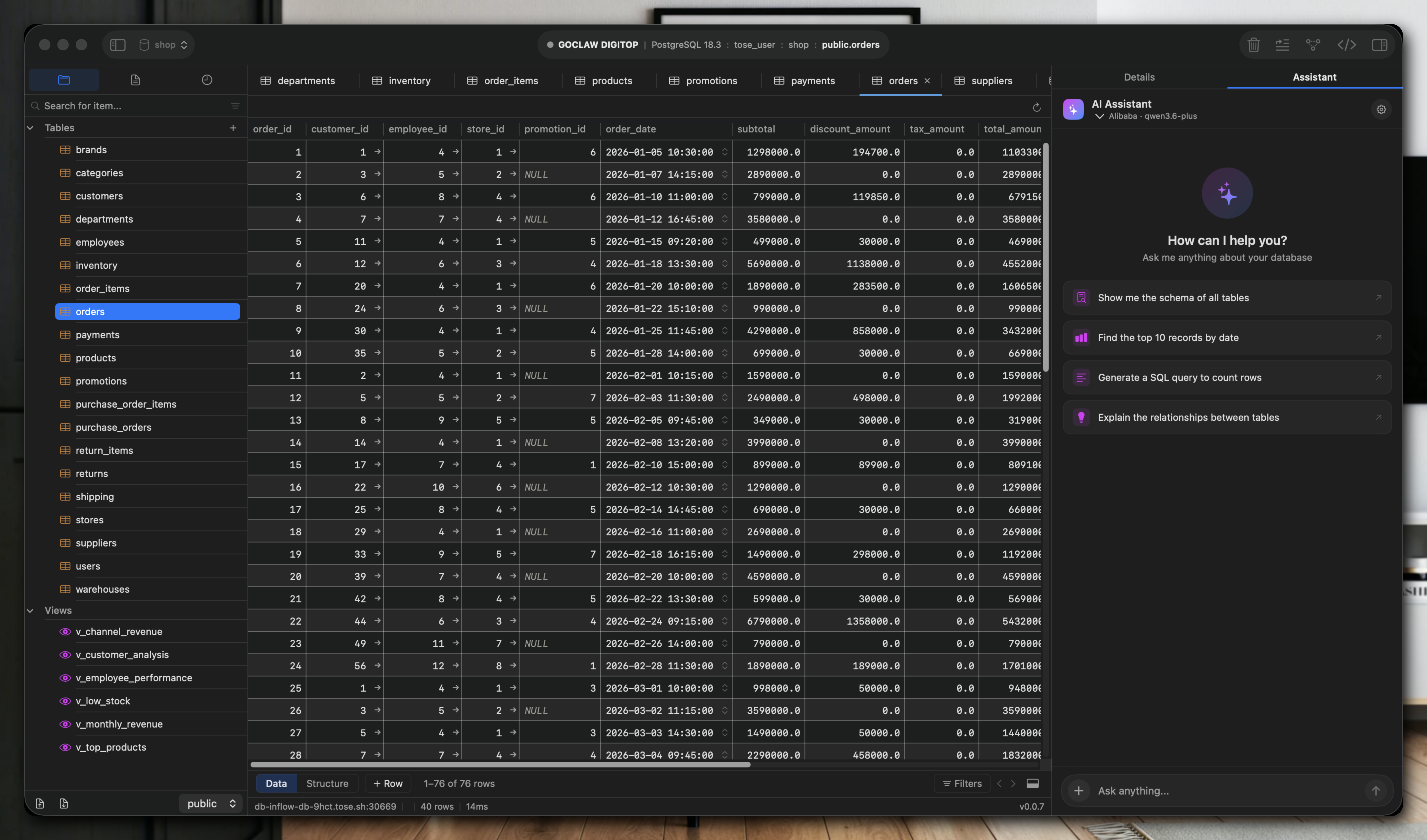
Native database IDE for Postgres, MySQL, SQLite, Redis, MongoDB, SQL Server and ClickHouse, with a built-in MCP server — 13 tools, 3-tier permissions, audit trail — and schema-aware AI chat.
 lupppig 6 · 1 months ago
YAML-defined ETL/ELT engine with a CLI and self-hosted control plane: Postgres/MySQL/Mongo/CSV/REST/PDF in, upserts with cursors, validation and quarantine, durable workers — AI transforms optional.
 Volland 36 · 2 days ago
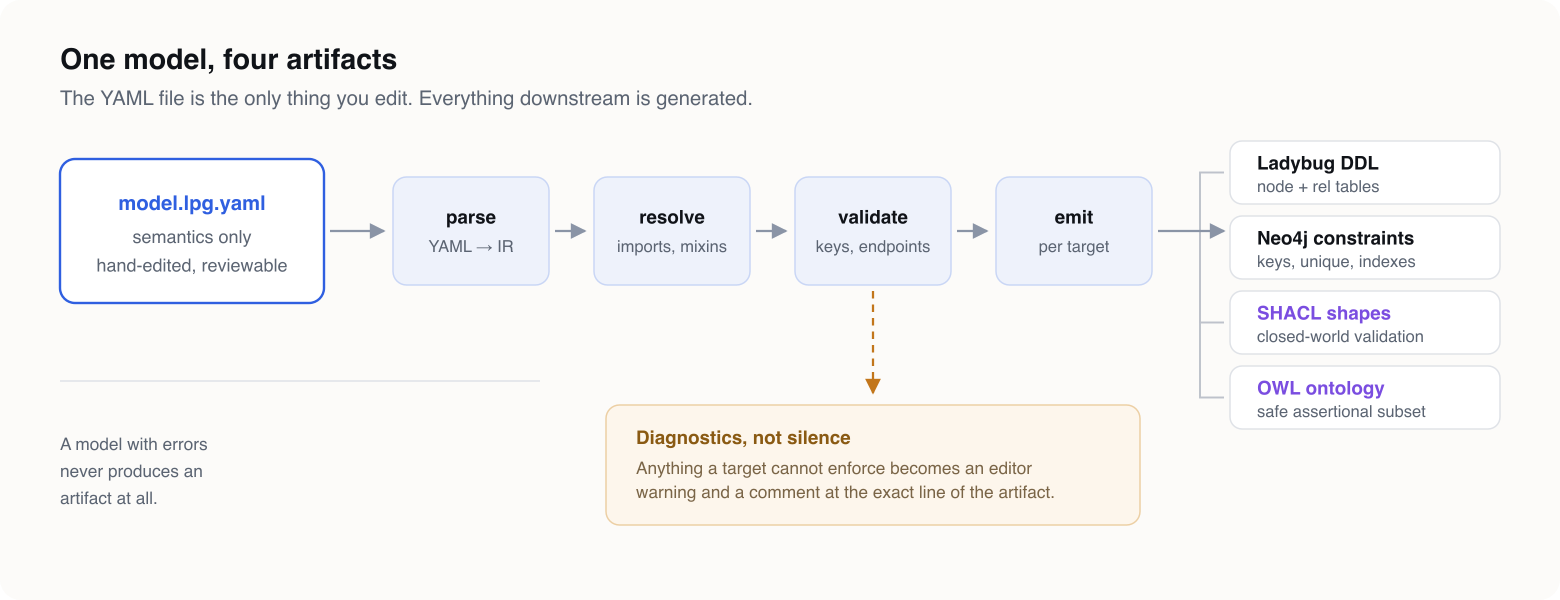
VS Code extension + CLI: author a labeled property graph schema as YAML on a canvas, then generate Neo4j, LadybugDB, Memgraph and FalkorDB schemas, SHACL, OWL, GQL, PG-Schema and LinkML.

 neo4j-labs 143 · 14 days ago
Neo4j Labs' semantic layer for data agents: ingest warehouse schema, business glossary, metrics and query history into one graph, then serve it over MCP so agents route queries and write grounded SQL.
 gura105 174 · today
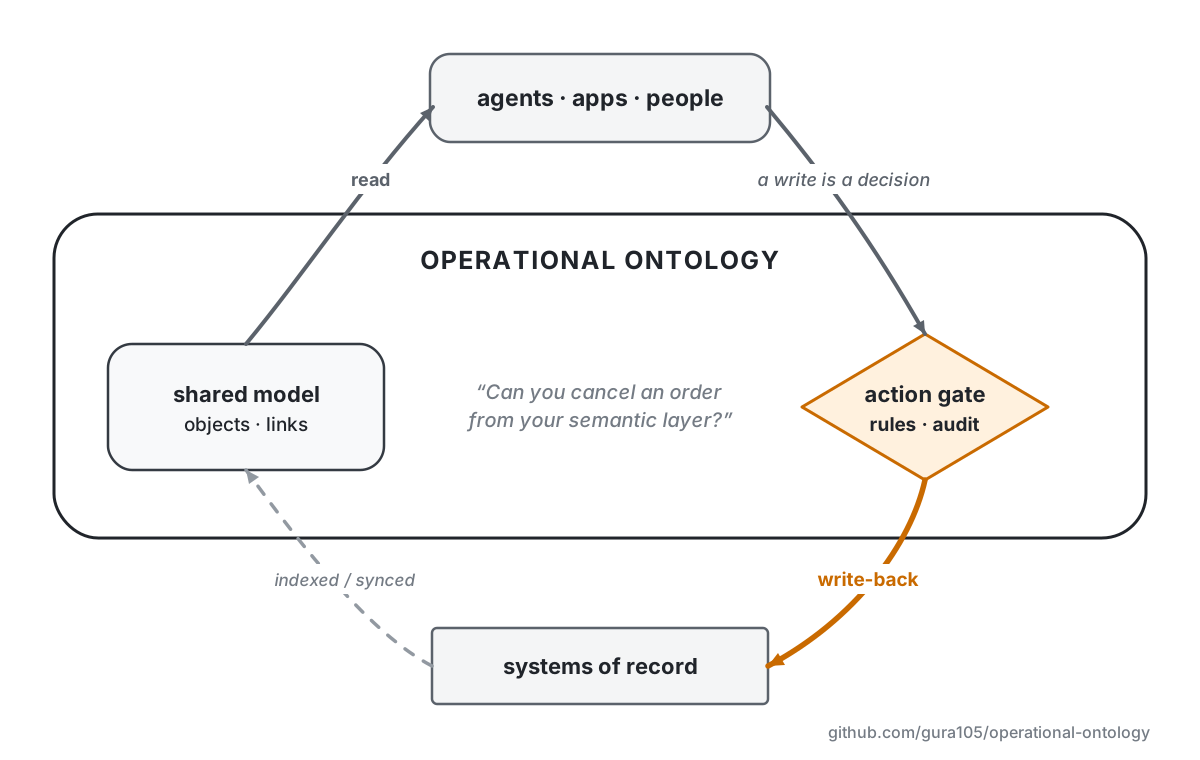
Minimal TypeScript reference implementation of the Operational Ontology pattern behind Palantir Foundry: shared objects and links, action-gated writes, business rules, audit and write-back.
 bhimrazy 730 · yesterday
Receipt-to-JSON in one pip install: CLI, Python API and FastAPI service that send a receipt image to any OpenAI-compatible model and return merchant, totals and line items, plus a Tesseract module.
 MotleyAI 233 · today
Embeddable semantic layer for AI agents: define metrics once, compose them with expressions and time shifts, row-level security and read-only SQL, over MCP, REST, CLI, Python or a Postgres facade.