Memory
Persistent memory for AI systems — from vector recall to compounding agent lessons.

 memodb-io 3.7k · 3 months ago
Skill memory layer for agents: auto-captures learnings from runs into plain Markdown skill files you can read, edit, git and share across frameworks — memory without an opaque store.

 Asymptote-Labs 1.8k · today
Cross-harness memory for coding agents: captures sessions from Claude Code, Cursor, Codex and 20+ harnesses, distills reviewed knowledge over MCP/skills, and forwards telemetry to SIEMs.
 neo4j-labs 586 · yesterday
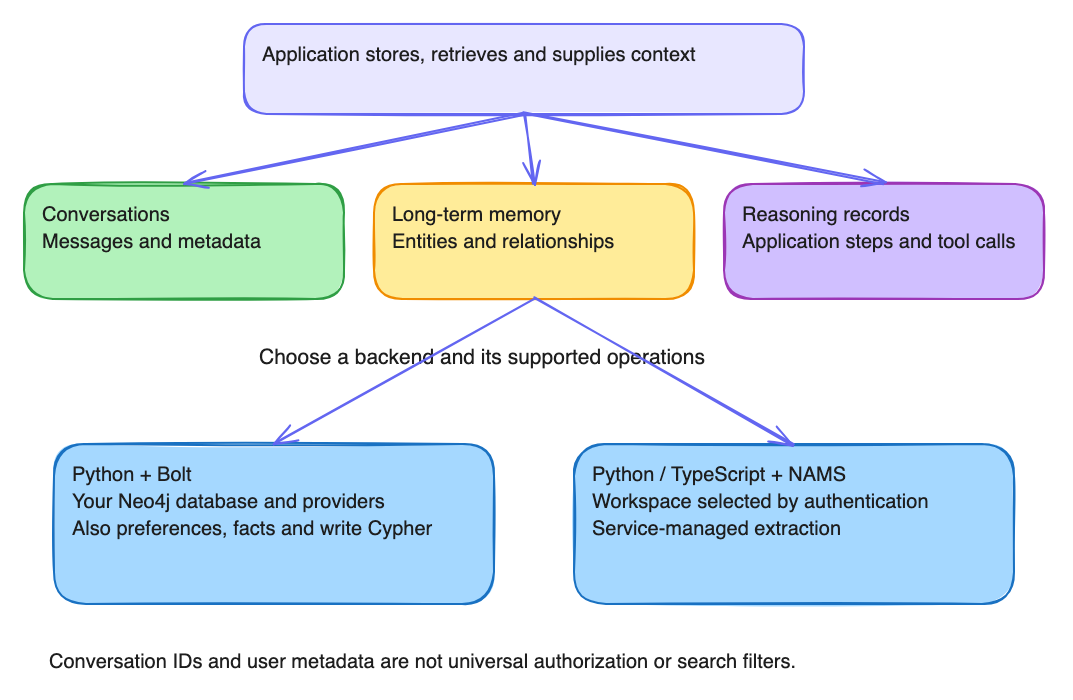
Neo4j Labs' graph-native agent memory: conversations, a POLE+O entity knowledge graph and reasoning traces in one store, with a 16-tool MCP server and hosted or self-hosted backends.

 kayba-ai 2.6k · 21 days ago
Learning loop for any agent: reflect on failures, distill strategies into a Skillbook, inject them next run — 2x consistency on Tau2, 49% token cuts. LiteLLM-based, 100+ providers.
 rohitg00 29.5k · yesterday
Persistent memory for coding agents on the iii engine: MCP server with 53 tools, 12 auto-capture hooks, hybrid search + knowledge graph, zero external DBs. Claims 95% R@5 and 92% token cuts.
 akitaonrails 9.3k · today
Rust long-term memory server for coding CLIs: lifecycle hooks capture sessions into a sanitized shared wiki, then hand a bounded summary to the next agent so Codex can resume what Claude Code started.
 gastownhall 27.9k · today
Distributed graph issue tracker for coding agents on Dolt: dependency-aware beads replace markdown plans — bd ready/claim/close, cell-level merge, push/pull across machines and agents. CLI + MCP.
 vitotafuni 26 · 1 months ago
One markdown bootstrap file that scaffolds a structured workspace for any coding agent — persistent project docs plus a task tree run through a Think→Task→Execute→Verify cycle with human pacing gates.

 mindmuxai 567 · 1 months ago
File-based durable memory for coding agents: brain-setup scaffolds a BRAIN.md protocol + brain/ directory of decisions, requirements and constraints — plain Markdown in your repo, written via CLI.
 chroma-core 29.5k · today
Open-source embedding database for building AI apps with retrieval.

 thedotmack 100.9k · 2 days ago
Cross-harness session memory: hooks capture what the agent does, an LLM compresses it into observations, and the next session gets the relevant ones back via progressive-disclosure MCP tools.

 BayramAnnakov 1.8k · 12 days ago
Claude Code plugin that learns from your corrections — hooks capture them in-session, /reflect syncs approved learnings to CLAUDE.md/AGENTS.md, /reflect-skills mines history into reusable commands.

 RedPlanetHQ 2k · 1 months ago
Self-hosted, always-on "personal AI OS": watches your apps, keeps a persistent memory graph, and acts autonomously within guardrails — a product, not a library for building agents.

 vshulcz 1.2k · today
Indexes the session histories your coding agents already wrote — 17 harnesses, months retroactive — and serves recall over MCP. 84.9% hit@1 on LongMemEval-S, no LLM, no embeddings. One Go binary.
 timgordontg 298 · 19 days ago
Local SQLite episodic memory shared across Antigravity, Claude Code, Cursor, Windsurf and Codex: hooks/MCP capture decisions, FTS5+model2vec hybrid recall reloads ~1k tokens per session.
 EverMind-AI 13.4k · today
One portable memory layer for every agent: conversations, files and trajectories kept as canonical Markdown, indexed locally by SQLite and LanceDB, with offline reflection that refines them.

 EXXETA 399 · today
Local-first agentic runtime with persistent AI rooms and approval-gated memory: every memory write needs your OK; rooms, KB and artifacts are plain files on disk.
 laude-institute 1.2k · today
Persistent-agency agent harness in ~11K lines of Bash: it keeps thinking between messages, thinks by writing shell commands, and one shared mind serves a whole team over Slack or Telegram.

 vectorize-io 49.9k · today
Agent memory that learns, not just recalls: retain/recall/reflect API over Postgres, SOTA on LongMemEval. Self-host via Docker with UI; Python/TS clients, any LLM provider.

 activeloopai 1.6k · yesterday
Activeloop's shared brain for agent TEAMS: traces from Claude Code, Codex, Cursor & co become reusable skills every teammate's agent can execute — cloud-backed, 25% cheaper on LoCoMo.

 iwe-org 1.8k · today
Markdown notes as a knowledge graph: an LSP for VS Code, Neovim, Zed and Helix, plus CLI and MCP so AI agents query the same files by structure. Rust, local-first, OKF-compatible.
 zjunlp 1.2k · 1 months ago
ICLR 2026 memory framework for LLMs/agents: LLMLingua pre-compression, topic segmentation and offline memory updates — leading LoCoMo/LongMemEval results at lower token cost.
 jucelioalencar 24 · 8 days ago
Legible persistent agent memory: records observable execution events, consolidates only validated knowledge and explains every relation — MCP server on PostgreSQL 17 with a web explorer.
 aru-labs 143 · 22 days ago
Lossless long-term memory for a personal AI: verbatim JSONL logs, time-first search over SQLite FTS5 (sqlite-vec as last resort) and a tiny 'where are we now' index injected every turn.

 mateaix 1.2k · today
Self-hosted Java agent platform: ReAct plus plan-and-execute 'digital employees' with an LLM Wiki knowledge layer, skills/MCP/ACP tools, approval-gated actions and eight IM channels in one JAR.
 0xK3vin 725 · 5 months ago
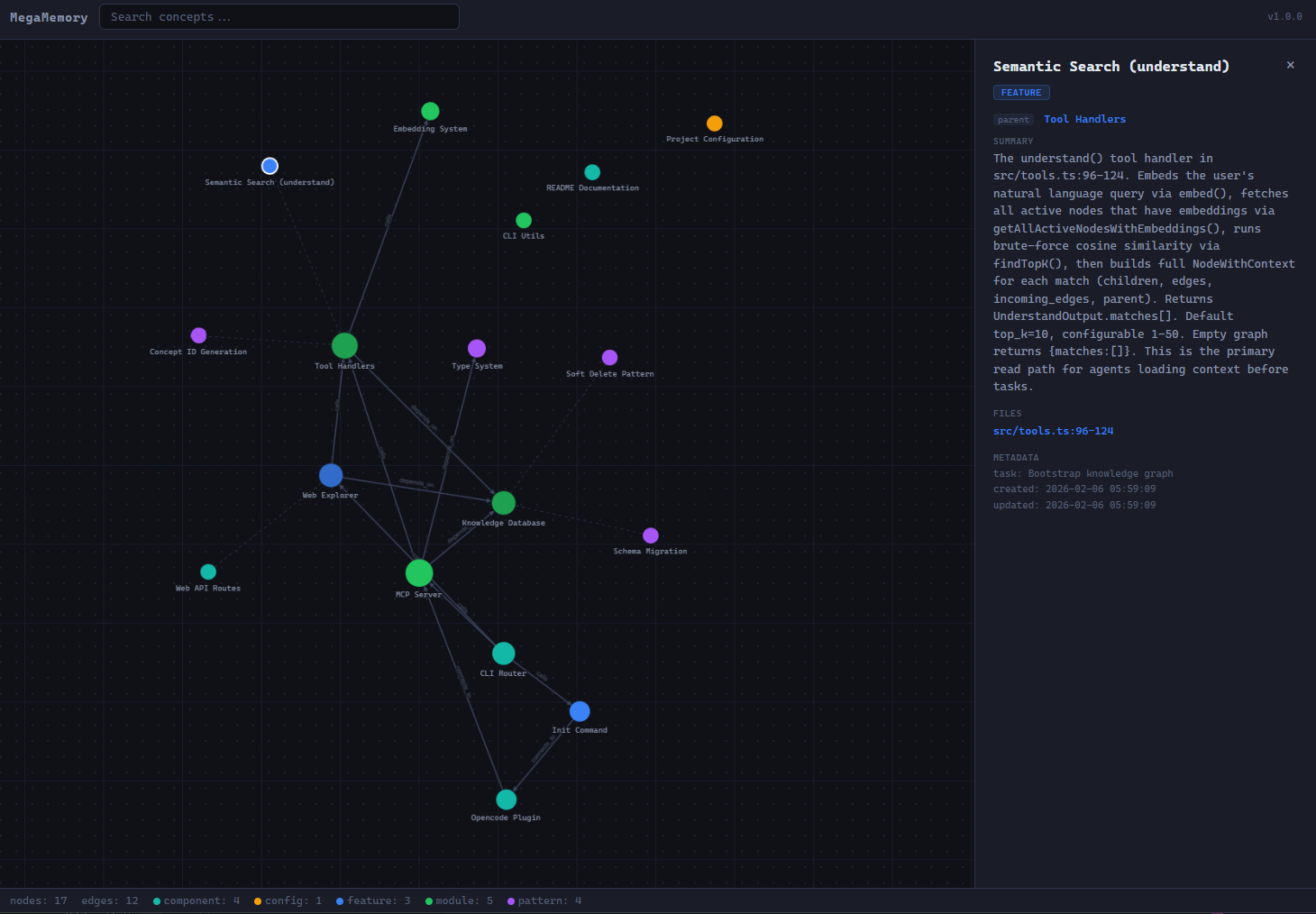
MCP server that lets a coding agent build and query a typed concept graph of the project — SQLite store, in-process embeddings, merge-conflict resolution and a local web graph explorer.

 moorcheh-ai 2.3k · yesterday
Companion memory agent for 20+ coding agents, built on Moorcheh — its own information-theoretic engine, no third-party vector DB to manage. Runs local (Docker + Ollama, keyless) or on their cloud.

 MemMachine 3.1k · today
Long-term memory layer for AI agents — episodic (graph), profile (SQL) and working memory behind Python/TS SDKs, REST and MCP; ships LangChain, LangGraph, CrewAI and LlamaIndex integrations.
 rituraj-io 4 · 6 months ago
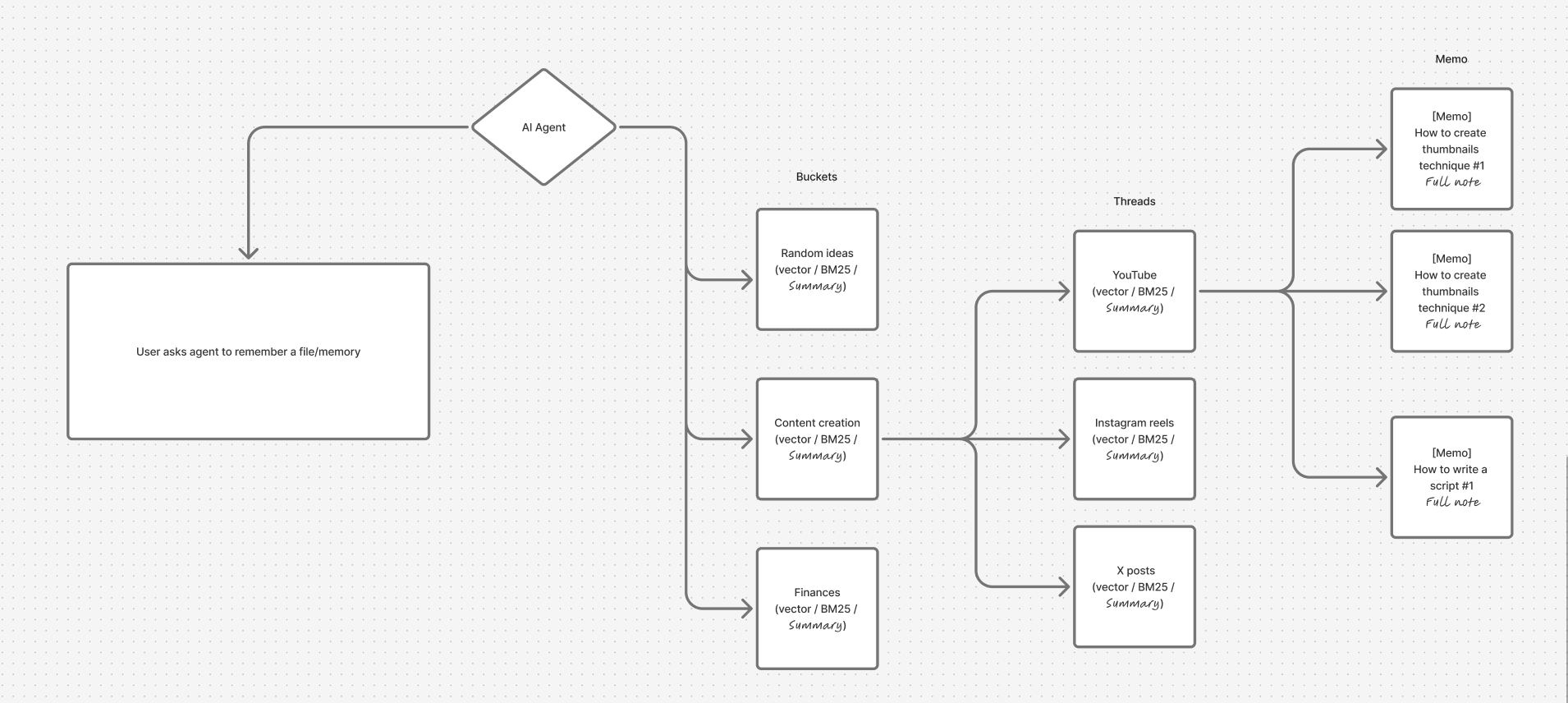
Structured long-term memory over MCP: an enforced bucket-thread-memo hierarchy in one SQLite file, hybrid FTS5 + vector search fused with RRF, local embeddings.

 matrixorigin 613 · today
Rust memory layer for AI agents with Git-style version control — snapshot, branch, merge and rollback over MatrixOne's copy-on-write engine, plus hybrid vector + full-text retrieval.

 ClaudioDrews 1.4k · 25 days ago
A 7-layer memory operating system for Hermes Agent: Qdrant vectors, structured facts, fabric recall, an auto-curated wiki, and surgical context injection.

 MemTensor 11.9k · 5 days ago
MemTensor's memory OS for LLM agents: one API over graph-structured, multi-modal memory with hybrid retrieval and skill evolution — hosted, self-hosted (Neo4j + Qdrant) or local plugins.

 zilliztech 2.7k · 6 days ago
Zilliz's unified memory for coding agents: one Markdown + Milvus store shared across Claude Code, Codex, OpenCode and OpenClaw — hybrid search, plus repeated workflows distilled into skills.
 memvid 16.6k · 3 months ago
Single-file memory layer for agents: data, embeddings, index and metadata in one portable .mv2 — append-only Smart Frames, time-travel queries, sub-5ms recall, no server. Rust core, Node/Python SDKs.
 mtrnix 107 · today
Self-hosted agent memory stack in Docker: Postgres + Qdrant + Neo4j hybrid retrieval, a temporal knowledge graph, ontology layer and freshness checks behind one MCP-native API.

 mex-memory 1.8k · yesterday
A living wiki for your codebase, written by your coding agents: a Tree-sitter graph grounds structured Markdown notes, task-aware routing loads only what's needed, and drift checks catch stale claims.
 okf-memory 799 · 3 days ago
Git-native agent memory on Google's OKF v0.2: Markdown+YAML concepts in knowledge/, a zero-dep Go CLI/MCP with <300µs BM25 search, provenance and trust tiers.

 ModernRelay 1.3k · today
Lakehouse graph database for agent context — graph, vector and full-text retrieval fused in one runtime on branchable Lance/S3 storage; agent fleets write on isolated branches and merge Git-style.

 tickernelz 1.7k · 2 days ago
OpenCode plugin giving coding agents persistent cross-session memory — local SQLite + vector search, automatic memory capture, user-profile learning, and a web UI. Nothing leaves your machine.

 volcengine 40k · today
Volcengine's context database: memories, resources and skills as one `viking://` filesystem agents ls, tree and grep — L0/L1/L2 tiers, traceable retrieval, sessions distilled into memory.
 rohitg00 2.9k · 16 days ago
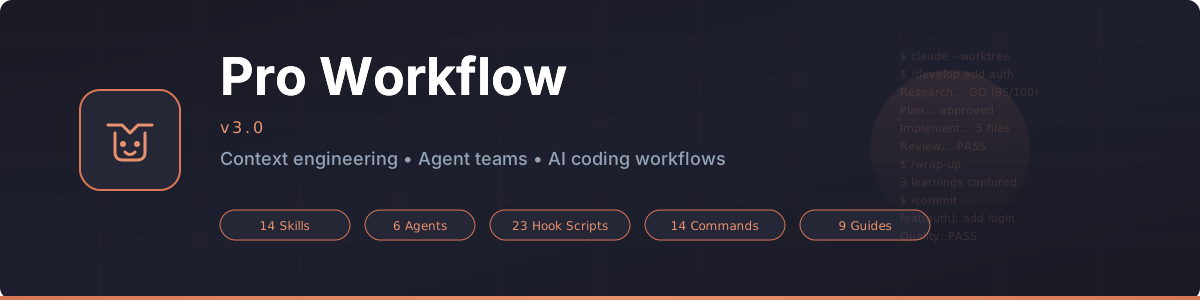
One SQLite store under every Claude Code session: corrections become FTS5-searchable rules that auto-load, research grows persistent wikis, and 37 hook scripts add quality gates.
 rowboatlabs 18k · today
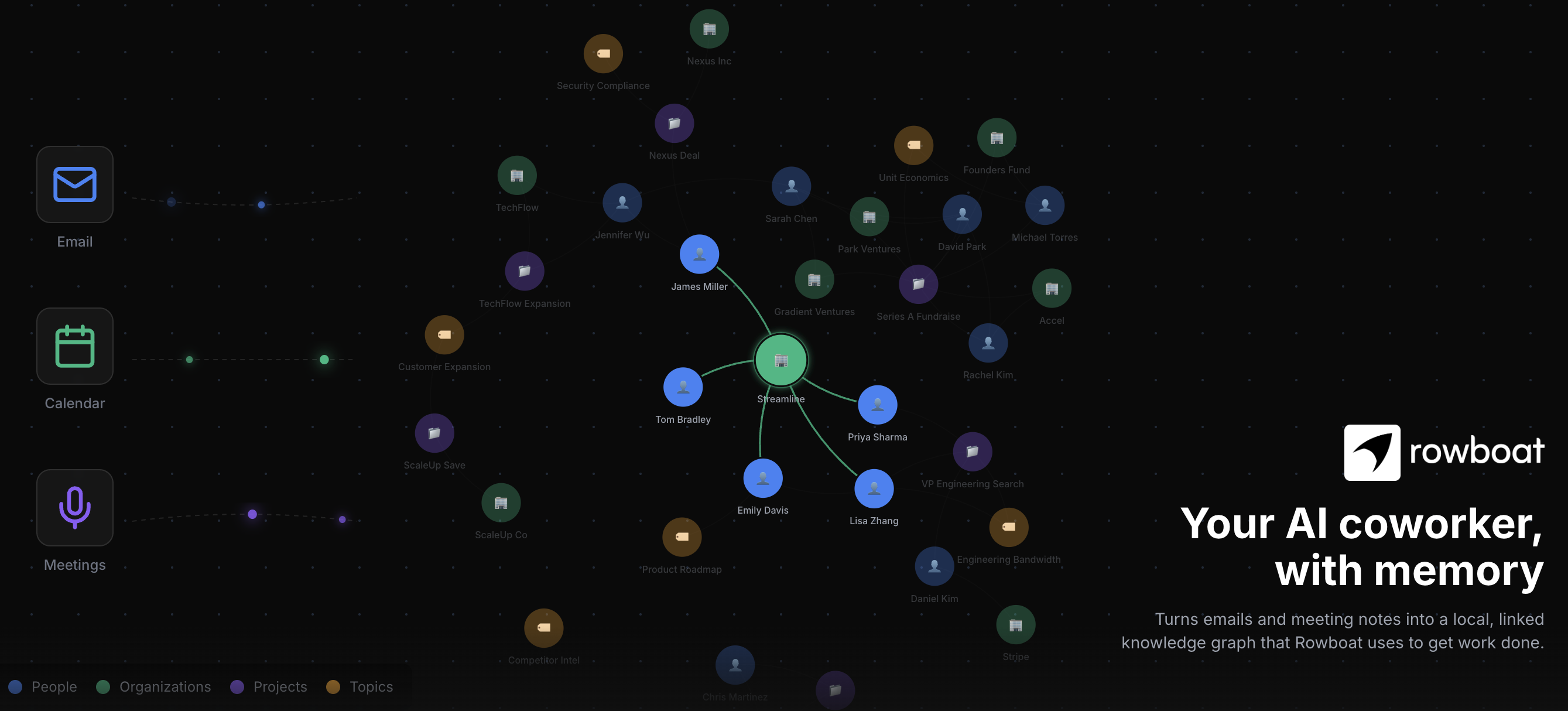
Desktop AI coworker (YC S24) that indexes email, meetings and Slack into a living backlinked knowledge graph, then acts on it — email client, browser, meeting notes, background agents, code mode.
 agno-agi 745 · 3 months ago
Company intelligence agent that navigates Slack, Drive, wiki and CRM live — no ingest/embed pipeline — and builds its own wiki + CRM as it learns your company.
 icedreamc 22 · 4 months ago
Benchmark plus memory pipeline for stale memories: STALE probes whether agents notice stored facts stopped being true; CUP-Mem adds conflict-aware writes, invalidation and premise verification.

 supermemoryai 31.2k · yesterday
Memory and context engine for AI: fact extraction, user profiles, contradiction handling and forgetting, hybrid RAG + memory search, connectors, agent plugins and a one-binary local mode.

 mindfold-ai 15k · 16 days ago
Spec, task and memory layer that lives in your repo: .trellis/ holds conventions, PRDs and journals, auto-injected each session — one workflow across 20 coding-agent platforms.