Stop building your AI stack from 40 open tabs.
A curated map of open-source AI & agent tools. Every connection is a typed, human-reviewed relationship — with the why written down. How we curate →
377 repos · 21 topics · curated by ShipWithAI · new: teamai-cli, router, ripwire →

 Tencent 4.5k · today
Tencent's team-level agent config manager: skills, rules, agents, hooks, MCP and env live in a shared git repo and sync into Claude Code, Codex, Cursor, CodeBuddy, OpenCode and more on every session.
 weave-os 4.3k · today
Weave's Go model router: drop-in proxy speaking Anthropic, OpenAI and Gemini APIs that scores each request with an on-box ONNX embedder (Avengers-Pro clusters) and routes to the cheapest fit model.
 redhat-et 2k · today
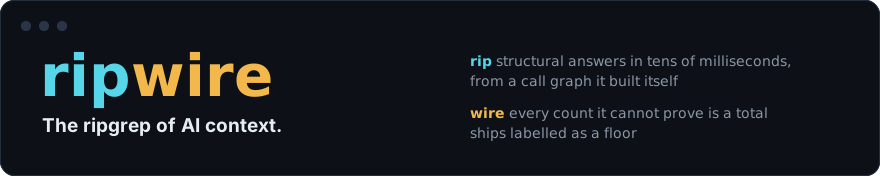
Red Hat's 'ripgrep of AI context': a zero-dependency C++23 CLI + MCP that hands a coding agent a ranked call graph — what to touch, blast radius, tests to run — with no index server.

 Human-Agent-Society 1.4k · today
Continual-learning infra for self-improving agents: serve traffic (OpenAI/Anthropic-compatible), match feedback to runs, train weights via Slime/SGLang or evolve the harness, ship versioned updates.

 Continuum-AI-Corp 244 · today
Time travel for coding agents: a local proxy records any run (Claude Code, Codex, SDKs, even TLS-only harnesses), replays it byte-for-byte offline, and forks from any step onto a different model.
 okf-memory 641 · today
Git-native agent memory on Google's OKF v0.2: Markdown+YAML concepts in knowledge/, a zero-dep Go CLI/MCP with <300µs BM25 search, provenance and trust tiers.
 hydra-db 3.1k · 26 days ago
Object-store-native distributed graph DB in Rust: graph on SlateDB over S3, snapshot-consistent OpenCypher, GraphBLAS traversal, Neo4j Bolt 5.x compatibility, disaggregated data nodes and indexers.

 HarnessRouter 1.4k · today
Self-hosted Apache-2.0 reference implementation of the Unified Harness Protocol: one OpenAI-Responses-style API running Codex, Claude Code, Hermes, Pi and DSH with sessions, streaming, files, traces.
 Atomburstofficial 122 · 2 days ago
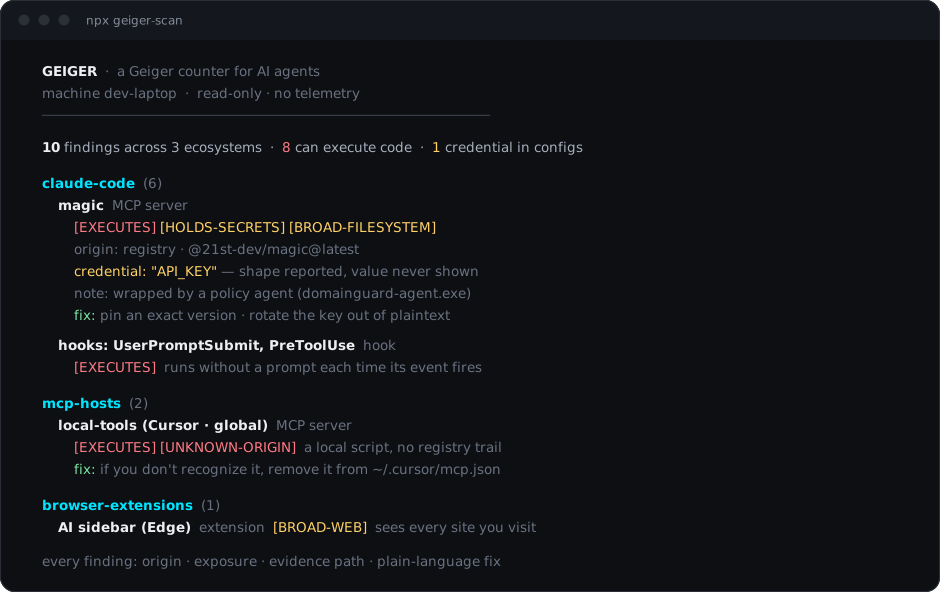
Read-only inventory of every AI agent, MCP server, hook, plugin and AI extension on a machine: npx geiger-scan labels what can execute code, hold secrets or reach the filesystem, with evidence.
 FlowiseAI 55.5k · 1 months ago
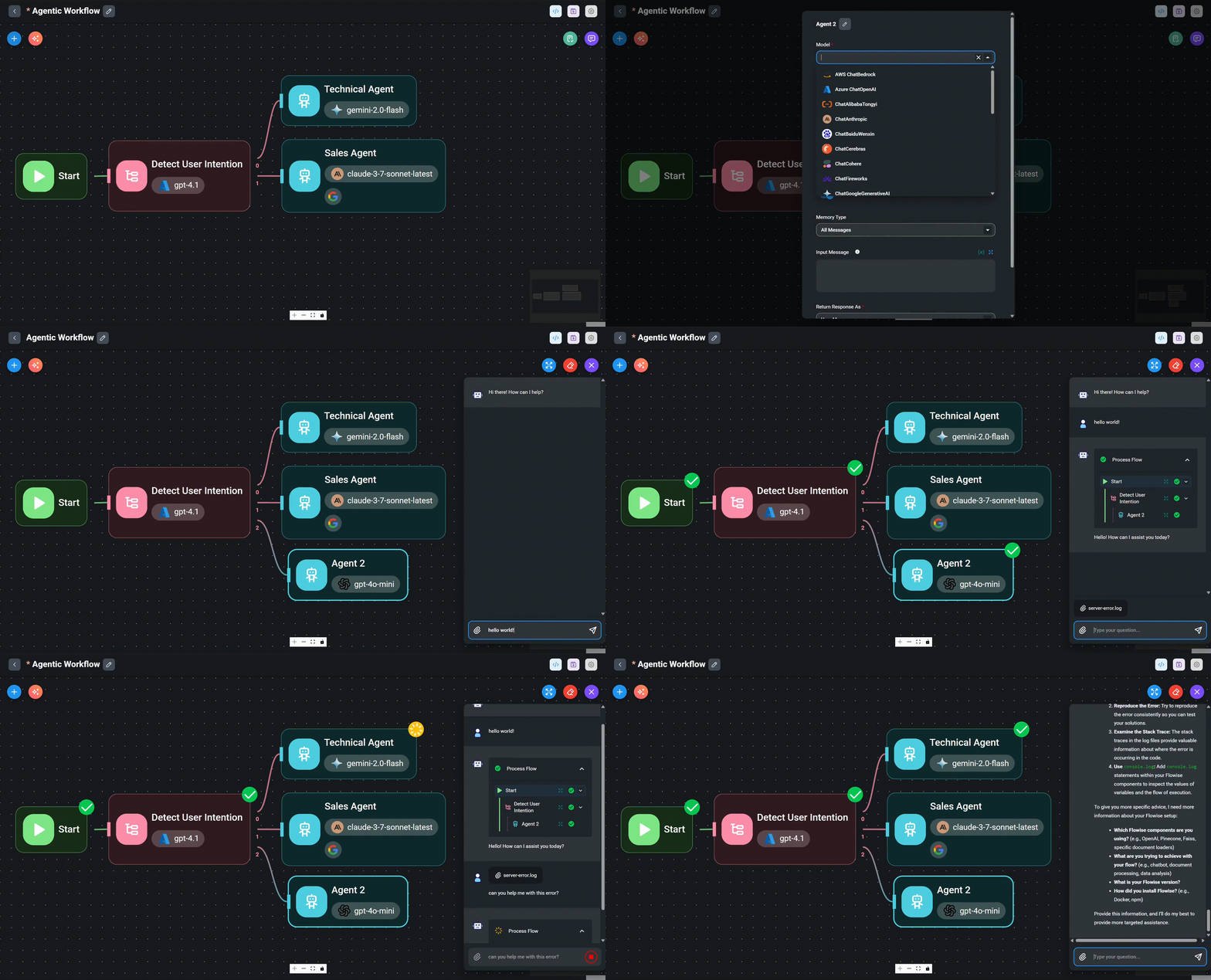
The 55k-star visual builder for LLM apps and agents — drag-and-drop chatflows and Agentflows, hundreds of nodes, self-hostable Node.js. Now ARCHIVED upstream (see 'Future of Flowise').
 timgordontg 255 · yesterday
Local SQLite episodic memory shared across Antigravity, Claude Code, Cursor, Windsurf and Codex: hooks/MCP capture decisions, FTS5+model2vec hybrid recall reloads ~1k tokens per session.
 jucelioalencar 18 · yesterday
Legible persistent agent memory: records observable execution events, consolidates only validated knowledge and explains every relation — MCP server on PostgreSQL 17 with a web explorer.

 iOfficeAI 30.5k · 3 days ago
Office suite built for AI agents: one binary, no Office install, creates, reads and edits Word, Excel and PowerPoint, and renders them to HTML/PNG so the agent can see what it made. Ships as a skill.
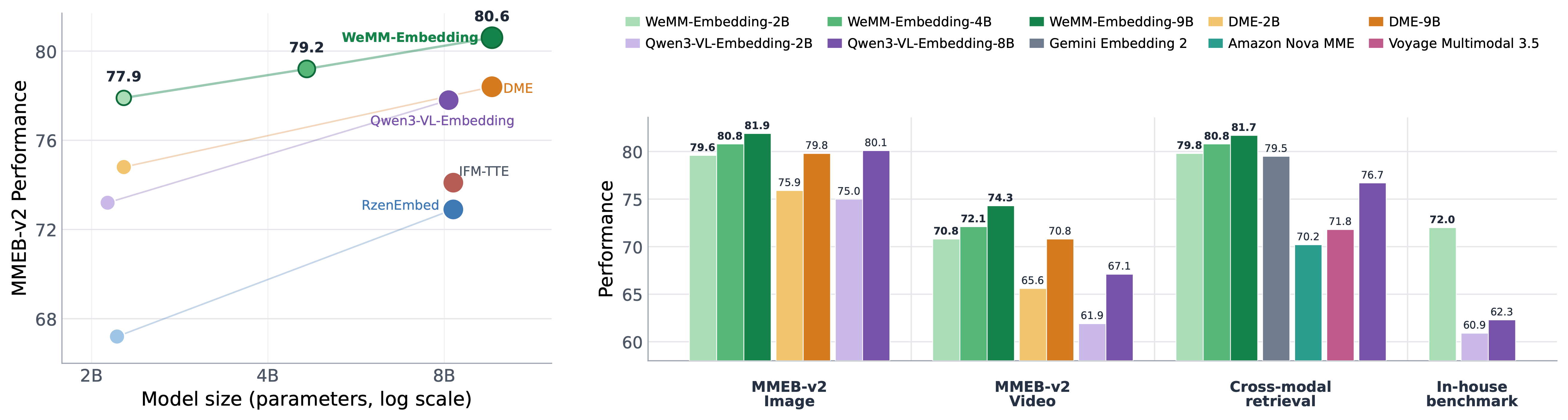 Tencent 1.6k · 11 days ago
Tencent WeChat's universal multimodal embedding family (2B/4B/9B): one vector space for text, images, video, visual documents and interleaved inputs, with Matryoshka dimensions from 64 to 4096.

 ovg-project 1.4k · 3 days ago
Virtualized, elastic KV cache for LLM serving on shared GPUs: reserve virtual memory, back it with physical GPU memory only when used — vLLM and SGLang, with a memory-limit CLI, router and sleep mode.

 vllm-project 271 · today
Rust gateway that gives vLLM a stateful, OpenAI-compatible Responses API: server-side conversation state, server-side tool loops, SSE and WebSocket streaming, background runs — Codex-ready.
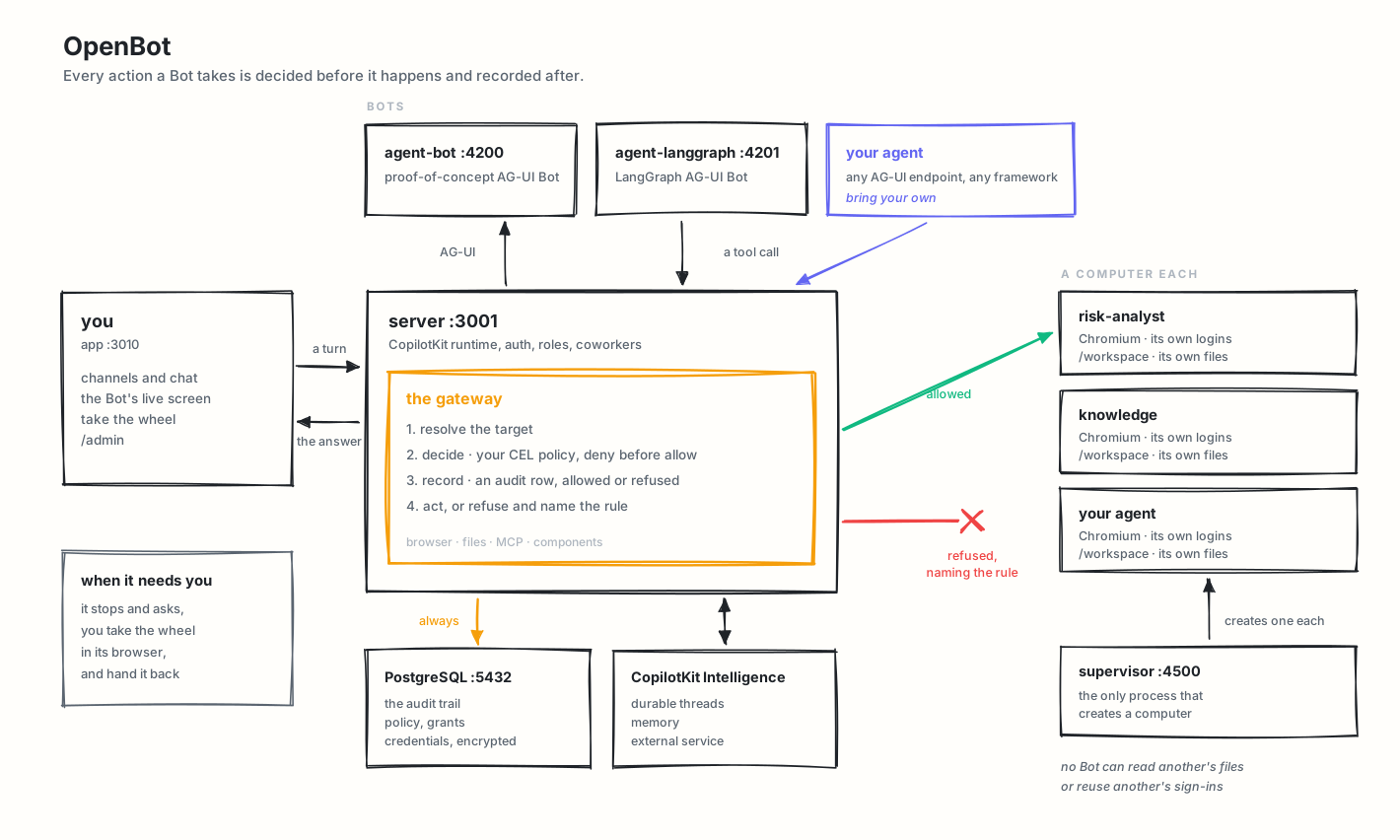
 CopilotKit 4.9k · today
CopilotKit's self-hosted AI coworkers: each gets its own computer — a real browser with logins, files, granted tools — with every action decided before it runs and recorded after. Any AG-UI agent.

 ralforion 208 · 3 days ago
Browser ontology workbench for OWL and SKOS on Streamlit + rdflib: OWL-RL reasoning, 22 SKOS checks, SPARQL console, bulk edits, gist starters and a vis-network graph — no Java, no Protégé.
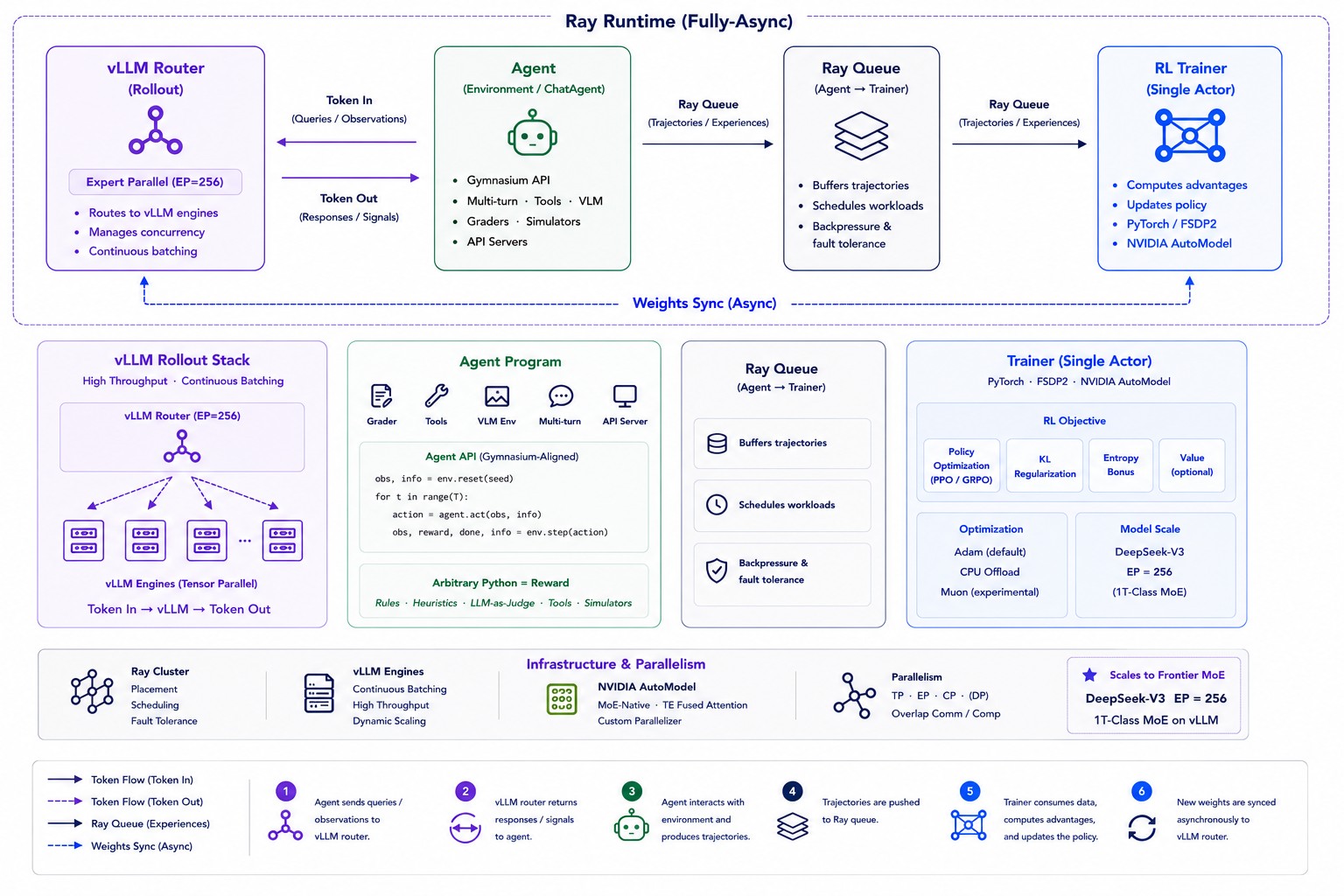
 NVIDIA-NeMo 1.1k · today
Molt: NVIDIA's agentic-first RL framework in ~9K lines — Ray for placement, vLLM for rollout, AutoModel + FSDP2 for training — fully async, multimodal, multi-turn, scaling to 1T-class MoE.
 arcboxlabs 5.7k · today
Open-source container and VM runtime for macOS in pure Rust: drop-in Docker engine, sub-100ms agent sandboxes (`abctl claude`), full Linux VMs and throwaway macOS guests on one daemon.

 bingreeky 468 · 18 days ago
JIT-Agent: a meta-agent that writes a task-specific harness on the fly — memory, planning, action and capability modules emitted as code — and revises it from traces at test time.

 zvec-ai 3.5k · today
zg: ripgrep, BM25 and vector search behind one local-first CLI for humans and agents — index a workspace once, search code, docs and data by meaning, then verify with exact text or regex.
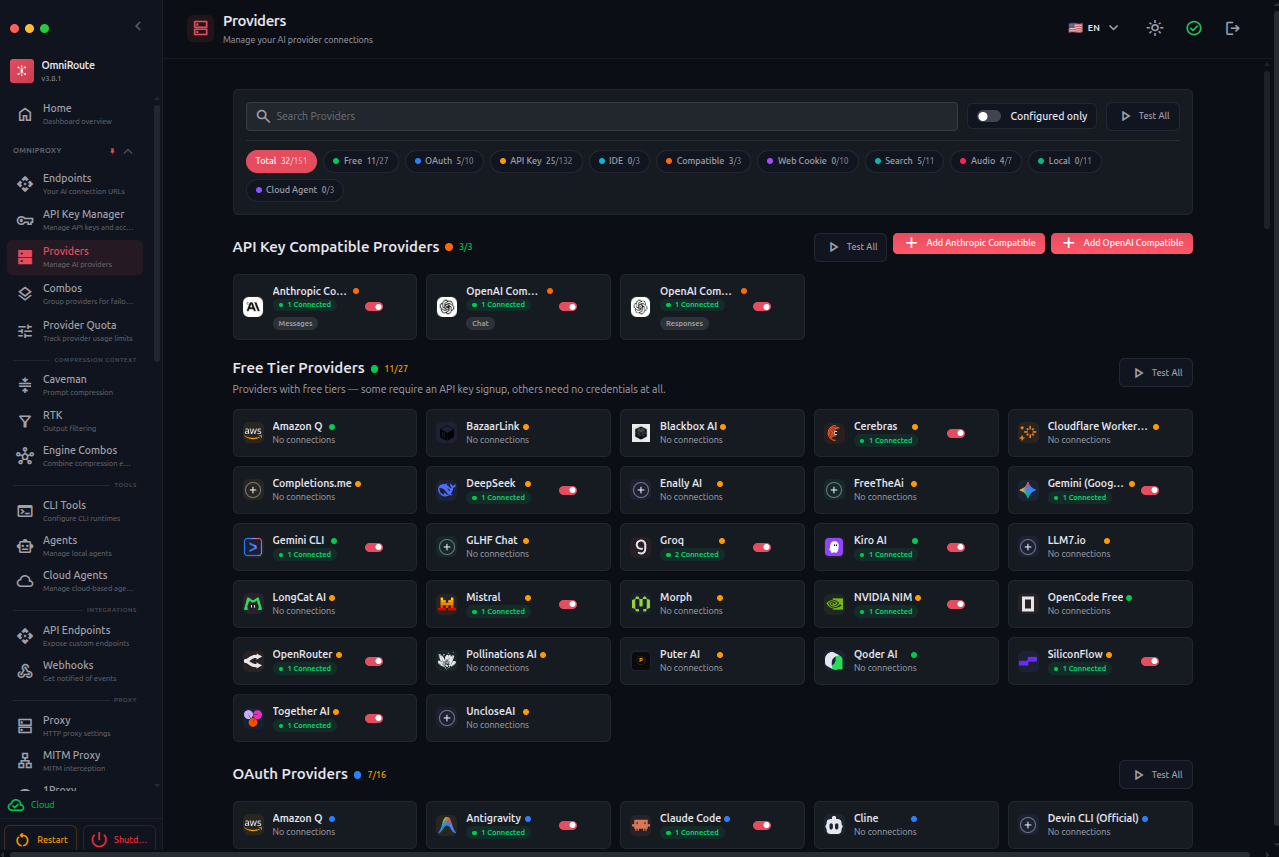
 diegosouzapw 65.9k · 2 days ago
Free MIT AI gateway for coding CLIs: one endpoint over 352 providers (150+ free tiers) and 1,200+ models with quota-aware auto-fallback, RTK+Caveman token compression, MCP/A2A and a desktop app.

 deeplethe 7.4k · today
DeepLethe's open 'enterprise world model': one Rust binary plus Postgres running a bitemporal knowledge graph with ontology packs, cited hybrid search, an agent harness and MCP. Air-gap ready.

 apache 5.4k · today
Apache-incubating agent workspace where the append-only run log IS the runtime: desktop, TUI, CLI and Eval are thin clients of one host, and every harness benchmark ships with per-task records.
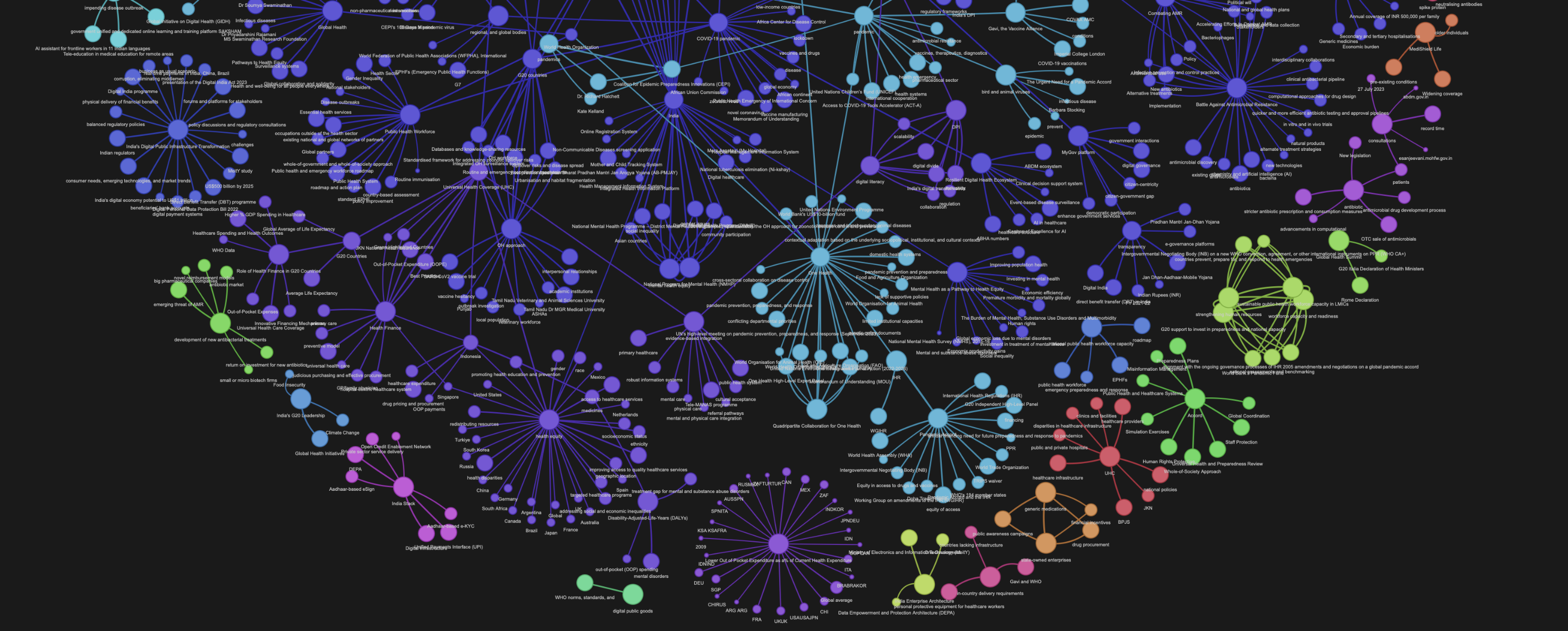
 rahulnyk 4.1k · 1 months ago
Notebook recipe that turns any text corpus into a concept graph with a local Mistral 7B via Ollama — chunk, extract concepts and relations, add proximity edges — for Graph RAG and KG QA.
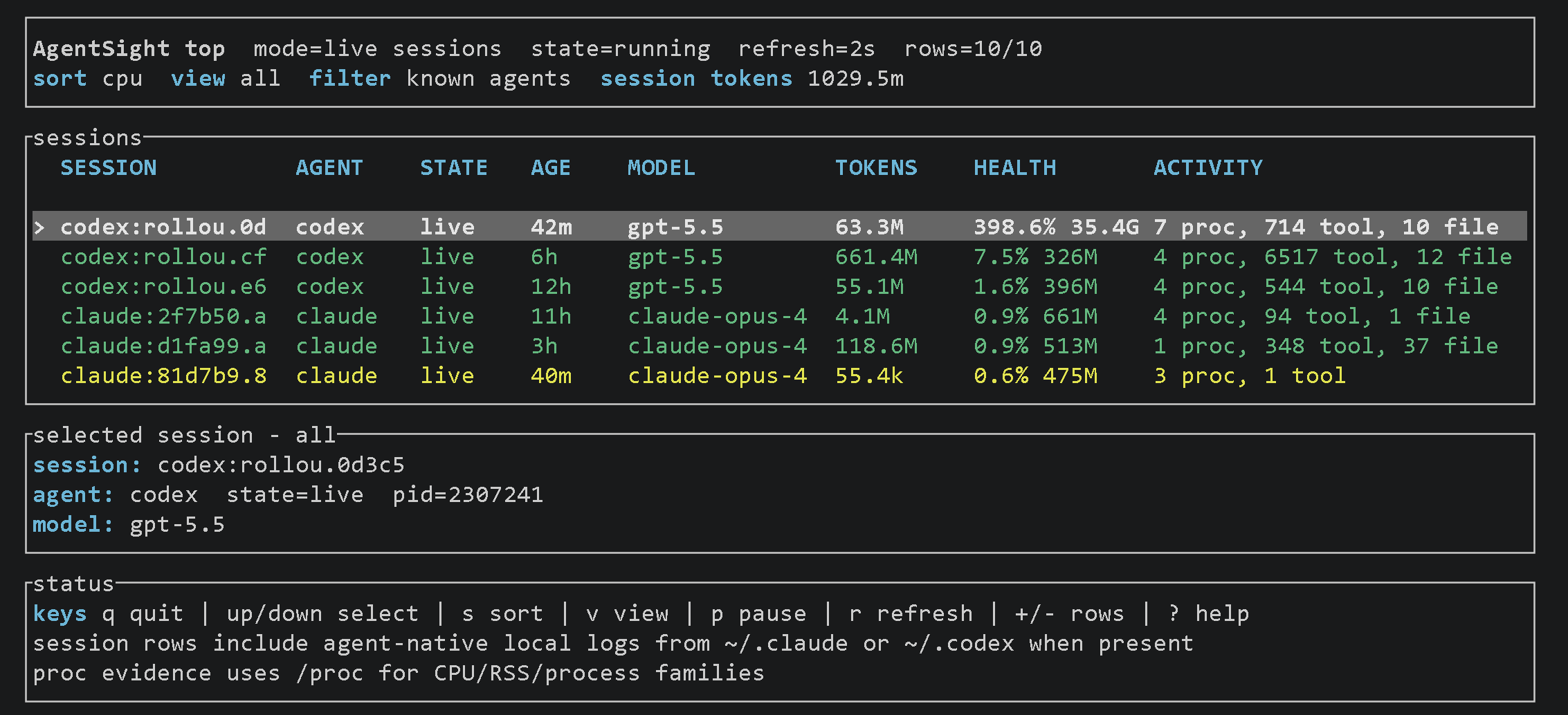
 eunomia-bpf 686 · yesterday
System-level observability for AI agents via eBPF and TLS tracing: correlates prompts and model calls with the processes, files and network the agent actually touched — no SDK, no proxy.
 profullstack 283 · today
btop-grade terminal dashboards in TypeScript: a one-import API over a typed-array framebuffer with differential rendering, Braille graphs and truecolor — zero runtime deps, Bun/Node/Deno.

 FailproofAI 3.2k · today
Observability plus policy enforcement for agent harnesses: records every run across 12 harnesses (Claude Code, Codex, Cursor, Hermes…) and blocks dangerous tool calls with 39 built-in policies.
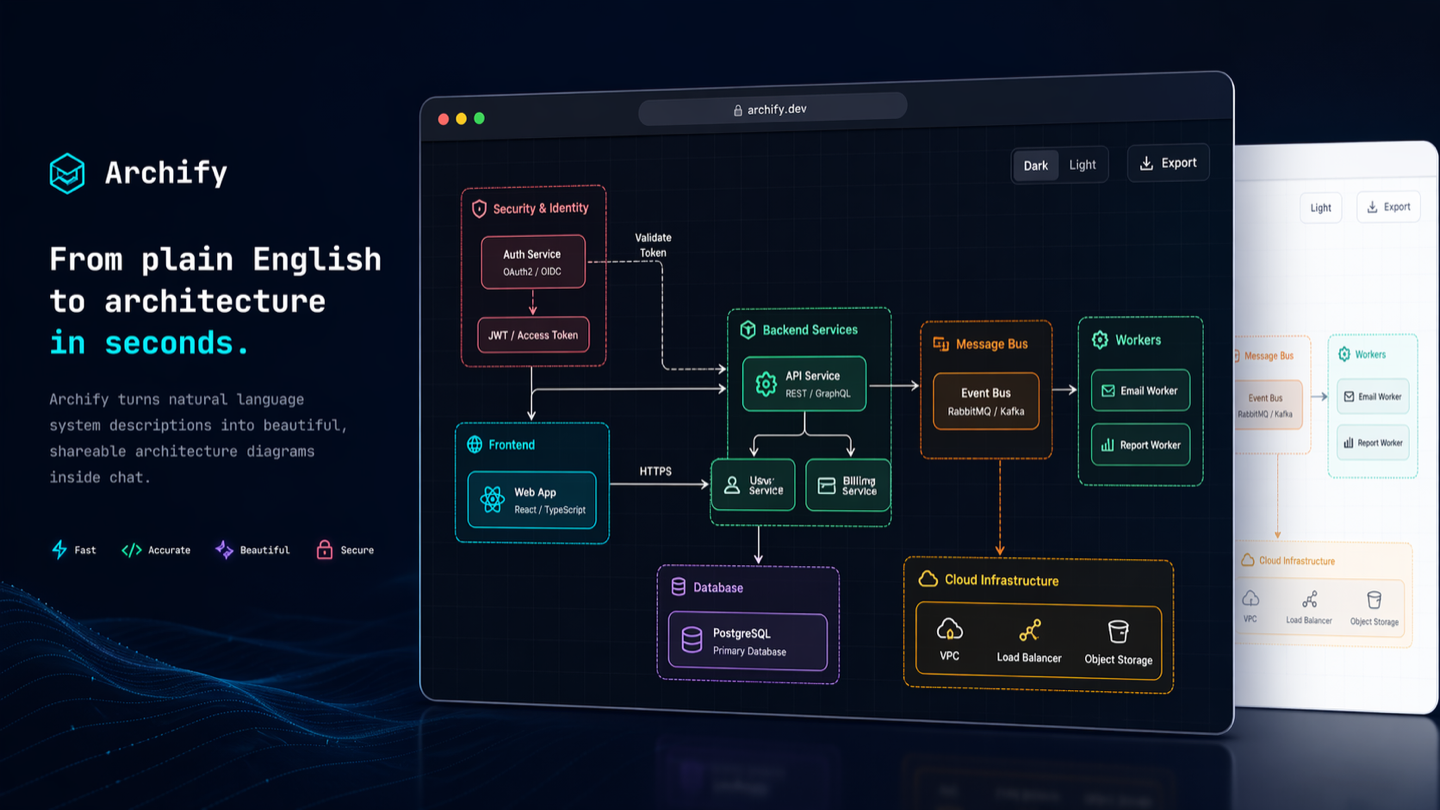
 tt-a1i 61.7k · today
Agent skill for architecture, workflow, sequence, data-flow and lifecycle diagrams: the agent emits typed JSON IR, Archify compiles it deterministically to interactive HTML/SVG with PNG/WebM export.
 lupppig 6 · 1 months ago
YAML-defined ETL/ELT engine with a CLI and self-hosted control plane: Postgres/MySQL/Mongo/CSV/REST/PDF in, upserts with cursors, validation and quarantine, durable workers — AI transforms optional.
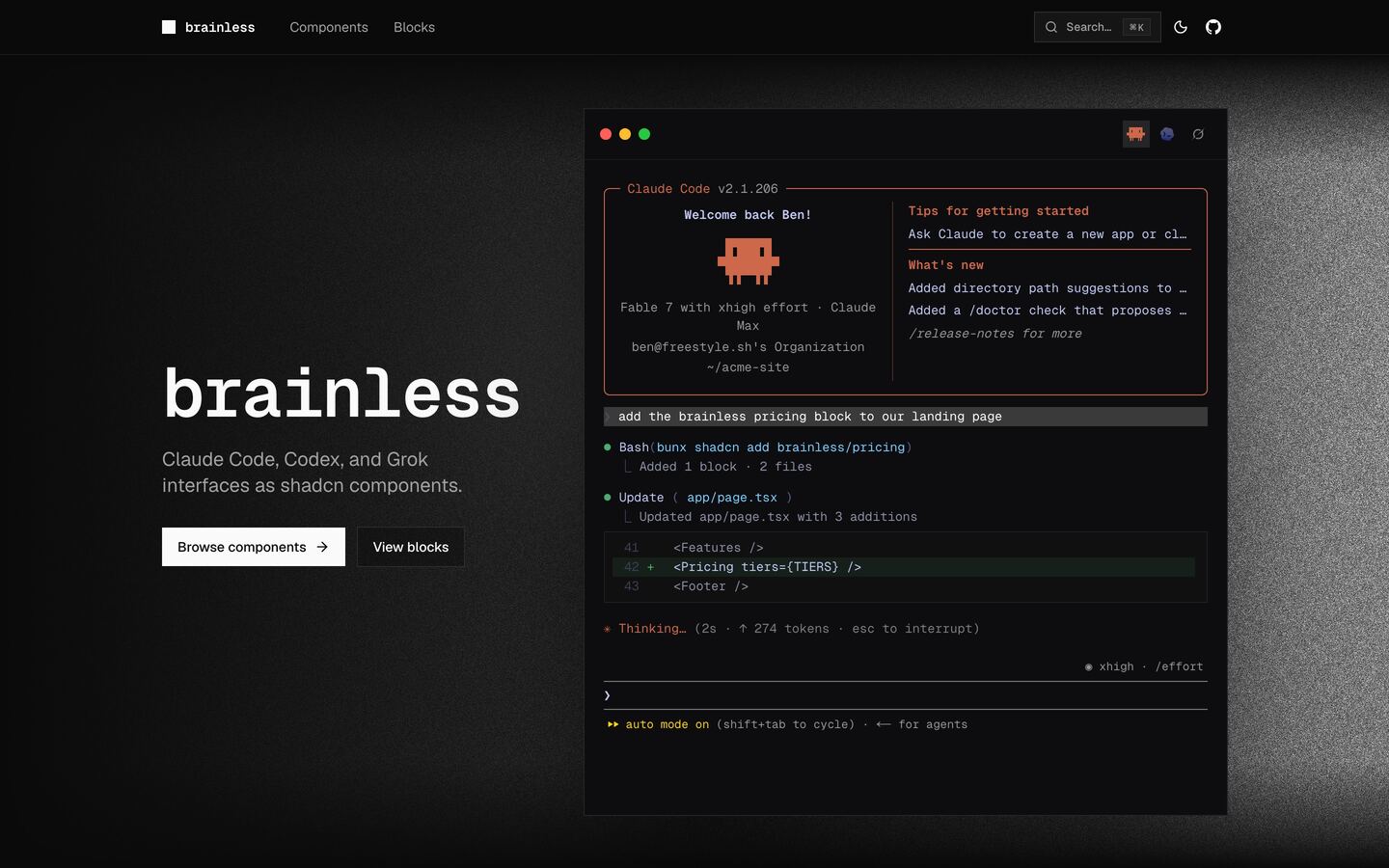
 theswerd 778 · 2 months ago
shadcn/ui registry of React components that faithfully recreate the Claude Code, Codex and Grok terminal UIs — headers, tool calls, diffs, prompts — built from real tmux captures.
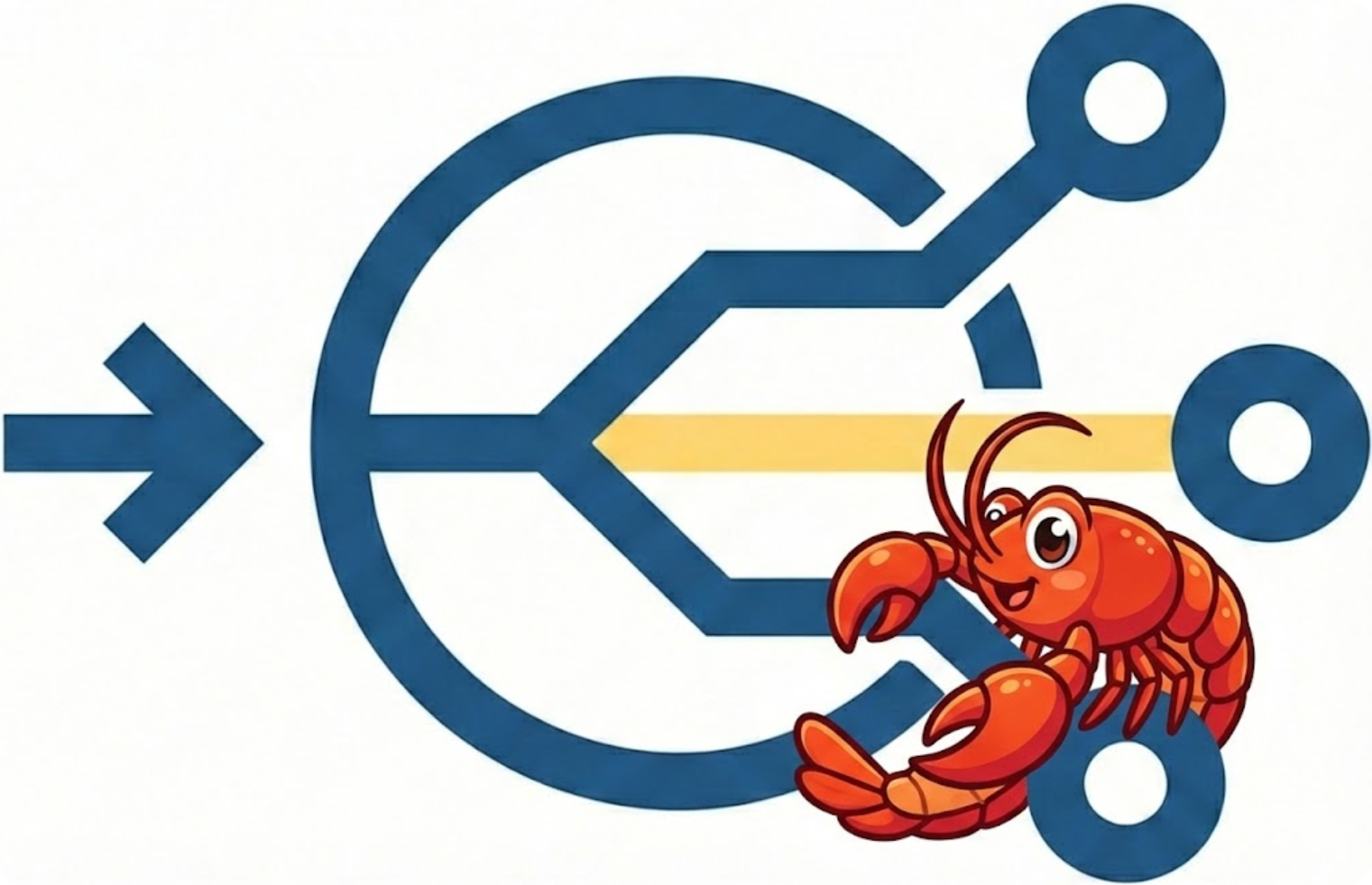
 ulab-uiuc 2.9k · 5 days ago
UIUC's LLM routing library: 16+ trainable routers (KNN, MLP, matrix factorisation, Elo, graph, BERT) pick the best model per query, with xRouteBench and a train/serve CLI.

 agentdock-ai 6 · 2 days ago
TypeScript library giving a backend one agent runtime: session-scoped runs with streaming, approvals and cancel, a tool registry, injectable stores and a factory over nine AI SDK providers.
 PunithVT 488 · yesterday
Self-hosted digital human: a photo plus 10s of voice becomes a real-time talking head — Whisper to LLM to Chatterbox TTS to MuseTalk lip-sync, streamed over WebSocket, with barge-in.
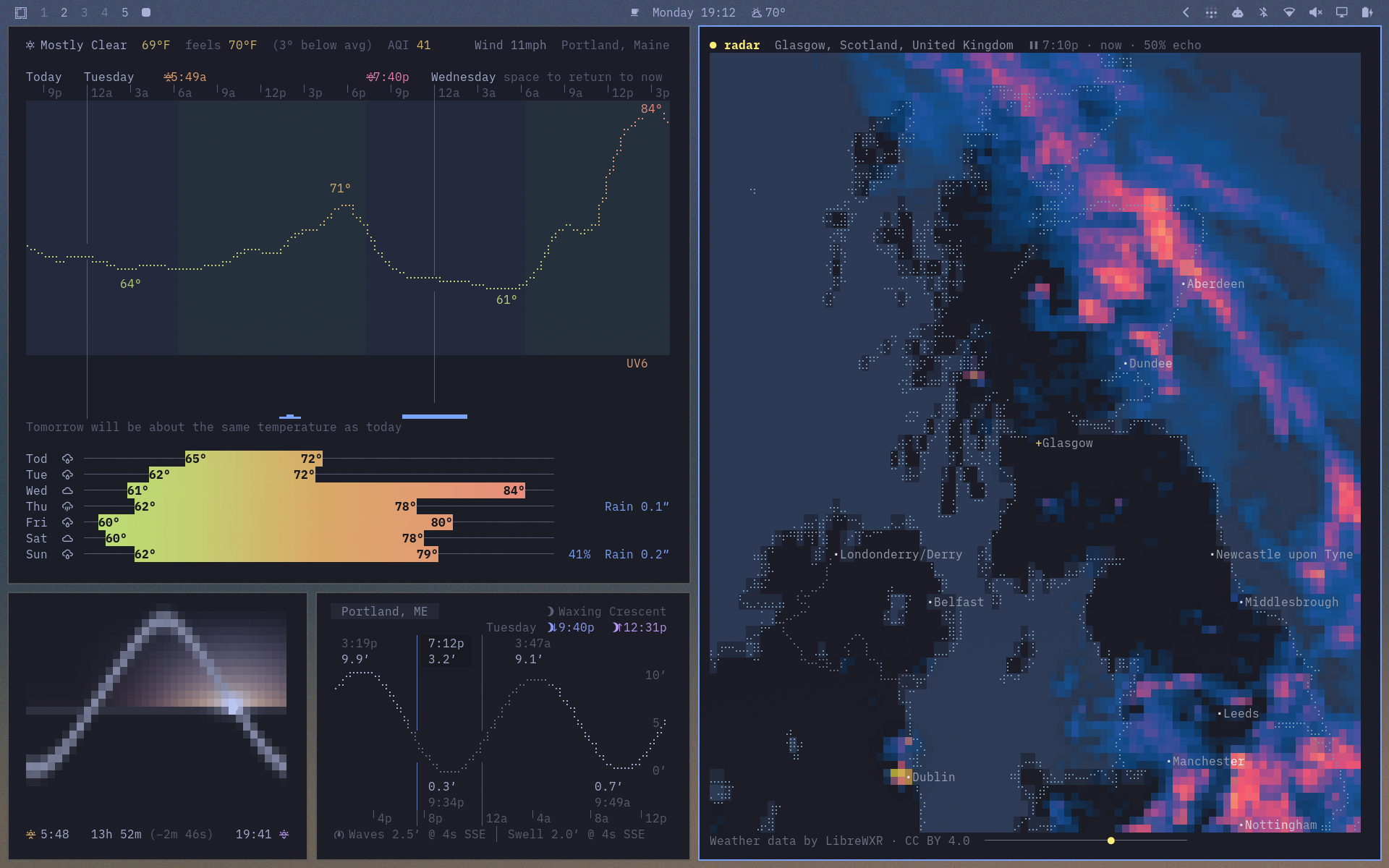
 ashuttl 474 · today
Six dependency-free terminal apps for weather, sun, moon, tides, radar and maps, drawn from free public data with no accounts or API keys — mouse-friendly TUIs that try to match your terminal theme.
One email a week: what changed in the AI stack
New repos, new typed connections, the why behind each. No spam, unsubscribe anytime.