Stop building your AI stack from 40 open tabs.
A curated map of open-source AI & agent tools. Every connection is a typed, human-reviewed relationship — with the why written down. How we curate →
480 repos · 24 topics · curated by ShipWithAI · new: xerj, WeKnora, TencentDB-Agent-Memory →
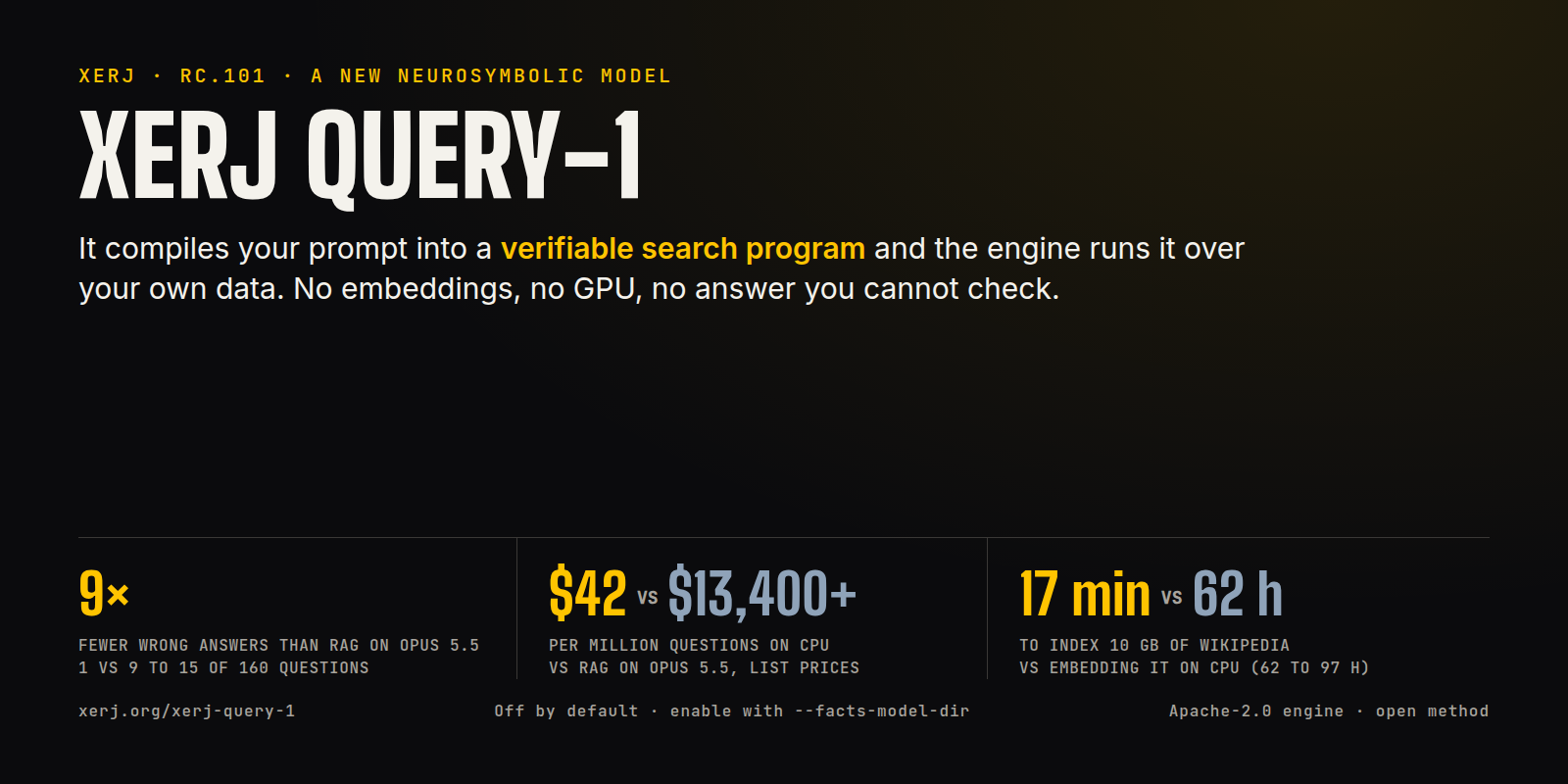
 xerj-org 19.1k · today
One Rust binary for agent search: BM25, vector and hybrid search over code, docs, logs and PDFs, an Elasticsearch-compatible API, MCP, and Query-1, which answers by running programs over facts.
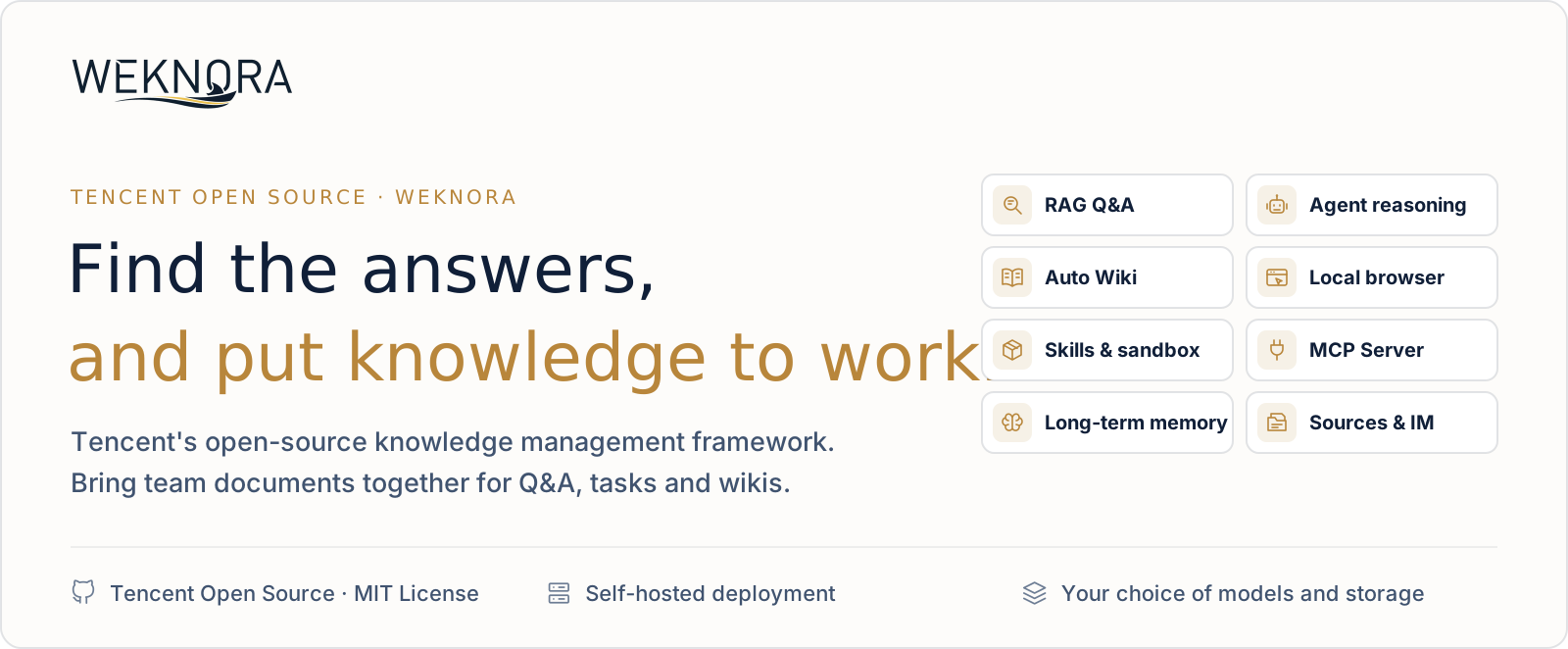
 Tencent 36.6k · 3 days ago
Tencent's enterprise knowledge platform: one set of document bases served three ways, as RAG search, a reasoning agent with sandboxed skills, and a self-maintaining LLM wiki.
 TencentCloud 30.5k · 2 days ago
Tencent's team memory hub for agents: an API proxy turns conversations, docs and code into shared chat memory, skills, an LLM wiki and a code graph, reused across agents.

 facebookresearch 223 · yesterday
Meta's benchmark for open-ended bug hunting: given a real repository and no hints, an agent must find and fix as many bugs as it can. Scored as a micro-average of bugs resolved.
 openqodex 1.1k · yesterday
Local pre-push code review for coding agents: deterministic scanners (gitleaks, semgrep) plus separate Claude Code/Codex reviewer sessions, with a push gate. No account or key of its own.

 anomalyco 224.8k · today
The open-source terminal coding agent: TUI, desktop app and server, provider-agnostic across 75+ model providers including local models, with LSP integration and plugins.

 elstongun 879 · 4 days ago
Single Rust binary that turns JSONL, CSV, SQLite or any DB export into a ranked full-text index, giving agents short cited answer cards (~450 tokens) at any dataset size.

 ifixai-ai 43.5k · 4 days ago
Independent auditor for AI agents: drops the agent into a simulation of your business, sends realistic requests, and scores operational alignment, permissions and red-team risk in ~2 minutes.

 HelixDB 2.1k · yesterday
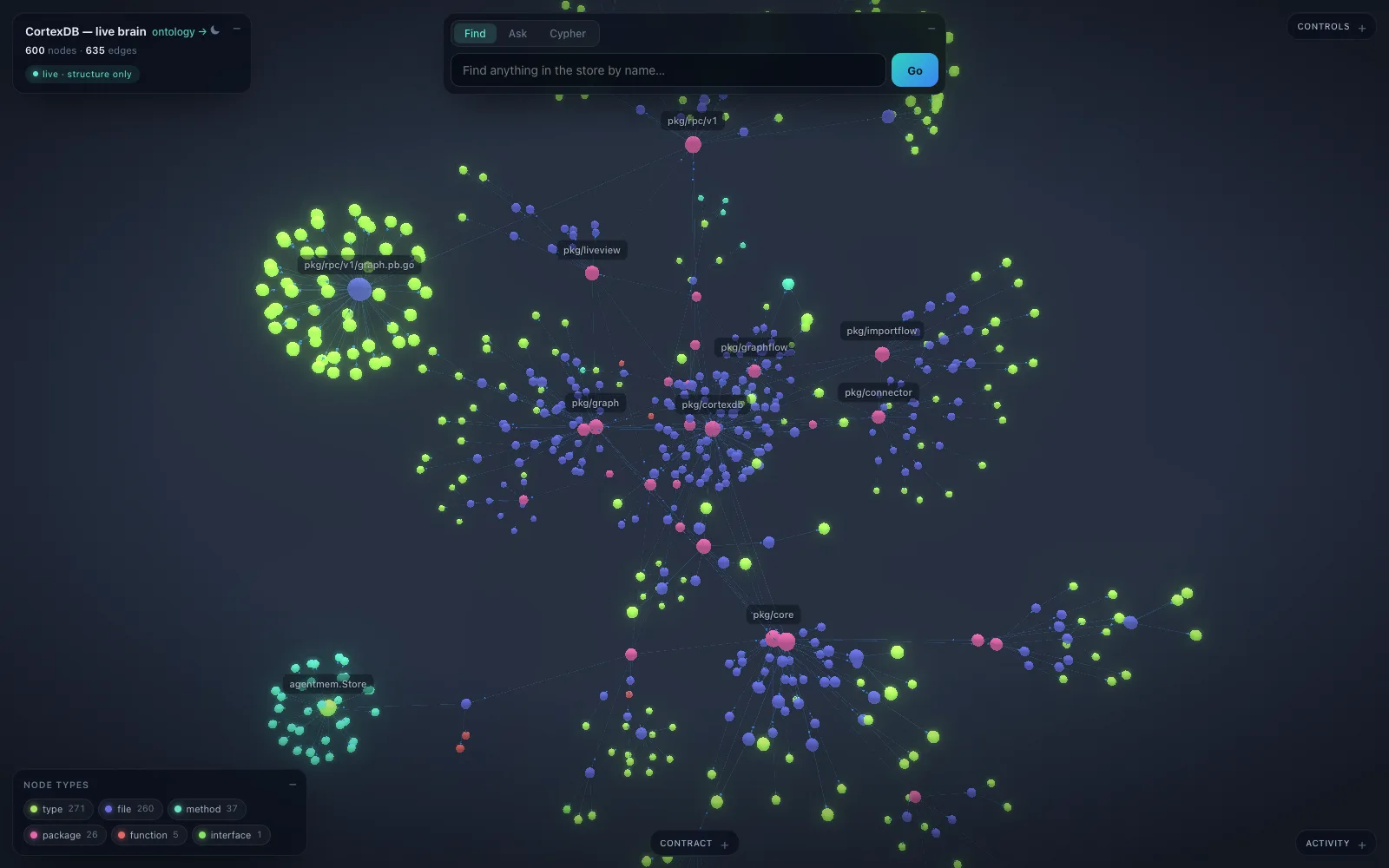
HelixDB's ontology builder: connect databases, tools and docs, let an agent draft an ontology, and load it all into HelixDB as one explorable, queryable graph with provenance.
 google-research 22.8k · 4 days ago
Google Research's recursive harnessing framework: an agent refines its own harness (prompts, tools, memory, skills) per task via Propose–Probe–Compose, with model weights fixed.

 Graphicle-AI 509 · yesterday
One Rust program giving coding agents a code graph plus memory of docs, decisions and past sessions, served over MCP to Claude Code, Codex, Cursor and VS Code.
 liliang-cn 475 · yesterday
Agent memory plus a knowledge graph with ontology constraints in one SQLite file: pure Go, no server, no embedding model required. Plugins for Claude Code, Codex, dsh and Obsidian.
 wheresryan22 25.2k · 19 days ago
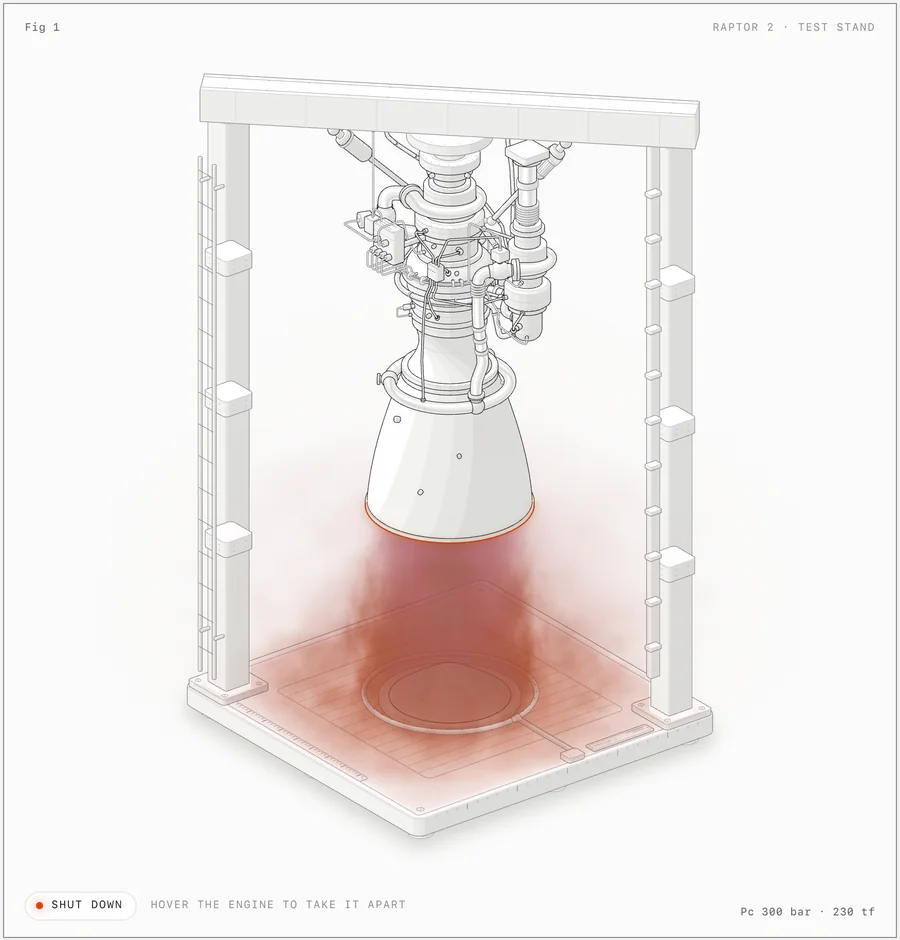
Agent skill that explains an idea by inventing a physical machine whose working is the concept, then builds it as an interactive isometric SVG, optionally with WebGL effects.
 tomtomsatnav 103 · 2 days ago
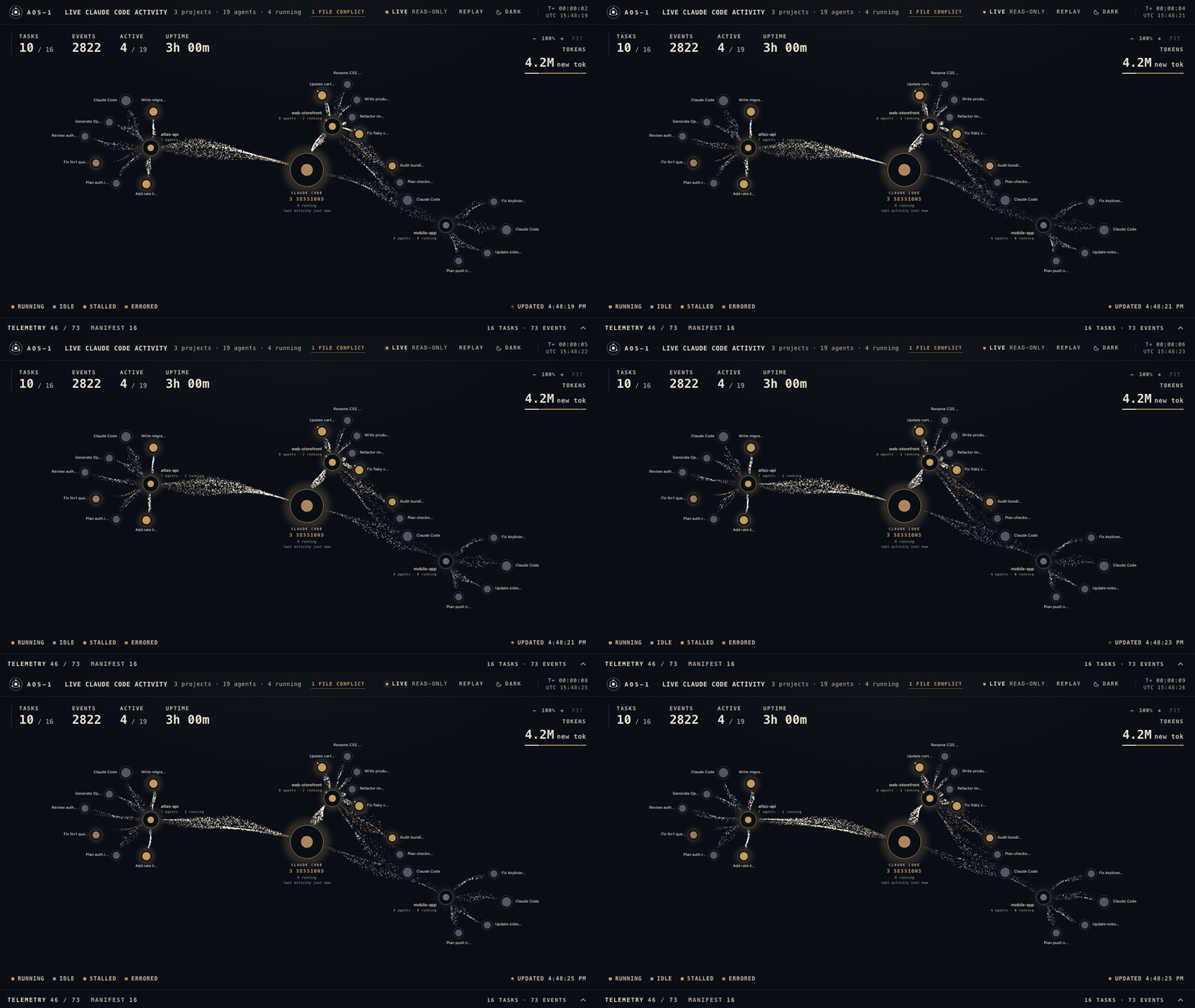
Read-only live monitor for Claude Code: a streaming graph of sessions, subagents, tokens, cost, file conflicts and alerts, as plugin, TUI and MCP server. Ships the AOS-1 spec.

 trymirai 3.2k · yesterday
Rust inference engine for on-device AI on Apple Silicon (Metal, unified memory) with Swift, Python and TS bindings, OpenAI-compatible server and a TypeSafe System One decision-model API.
 awlevin 1.3k · 1 months ago
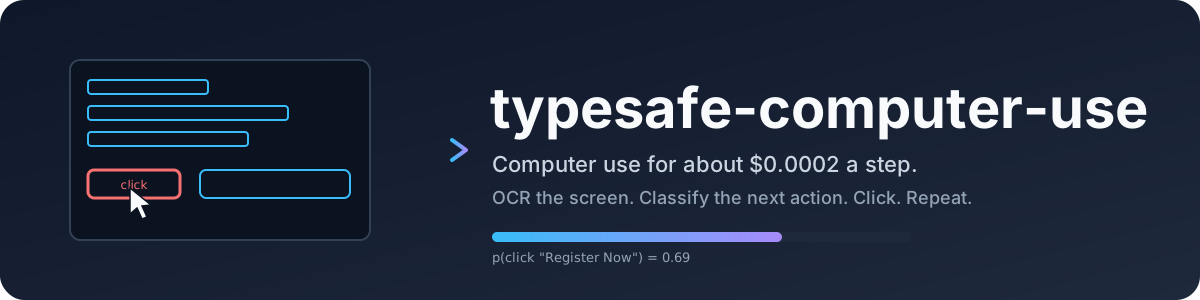
macOS computer-use loop at ~$0.0002/step: OCR + accessibility tree read the screen, a TypeSafe classifier picks the next action, code clicks; an LLM writes only free text.

 Niko1221 40.6k · yesterday
Hybrid GPU/CPU MoE engine that runs Qwen3.8-Flash-Next and DeepSeek V4.1 on consumer cards: hot experts cached in VRAM, rest computed in RAM, MTP drafting, local OpenAI/Anthropic API.
 morluto 434.3k · yesterday
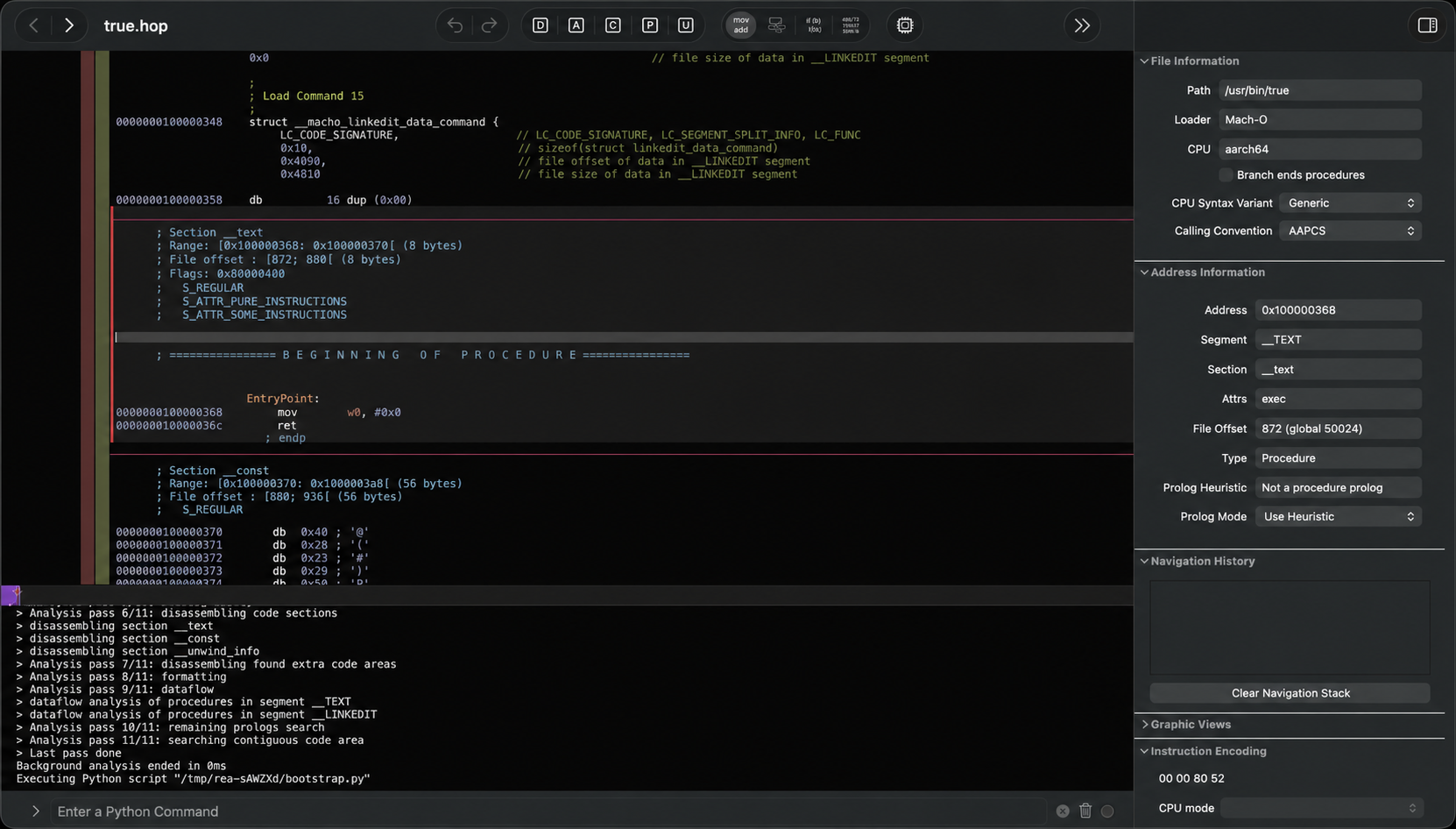
Reverse Engineer Anything: one MCP server plus CLI giving coding agents evidence-backed analysis of native binaries, JS/Electron apps, .NET assemblies and websites via Hopper, Ghidra or IDA.

 realZachi 1.3k · 1 months ago
Postgres extension for plain-language WHERE clauses: jev(row,'the customer is angry') filters, ranks and classifies rows via TypeSafe's Jev decision model. No embeddings, no vector column.
 aerovato 500 · yesterday
Context engine for coding agents: each session consults, then updates, a Markdown brain of specs, decisions, standards and lessons — private, team-shared via Git, and per-user. No embeddings.
 mvschwarz 8.7k · yesterday
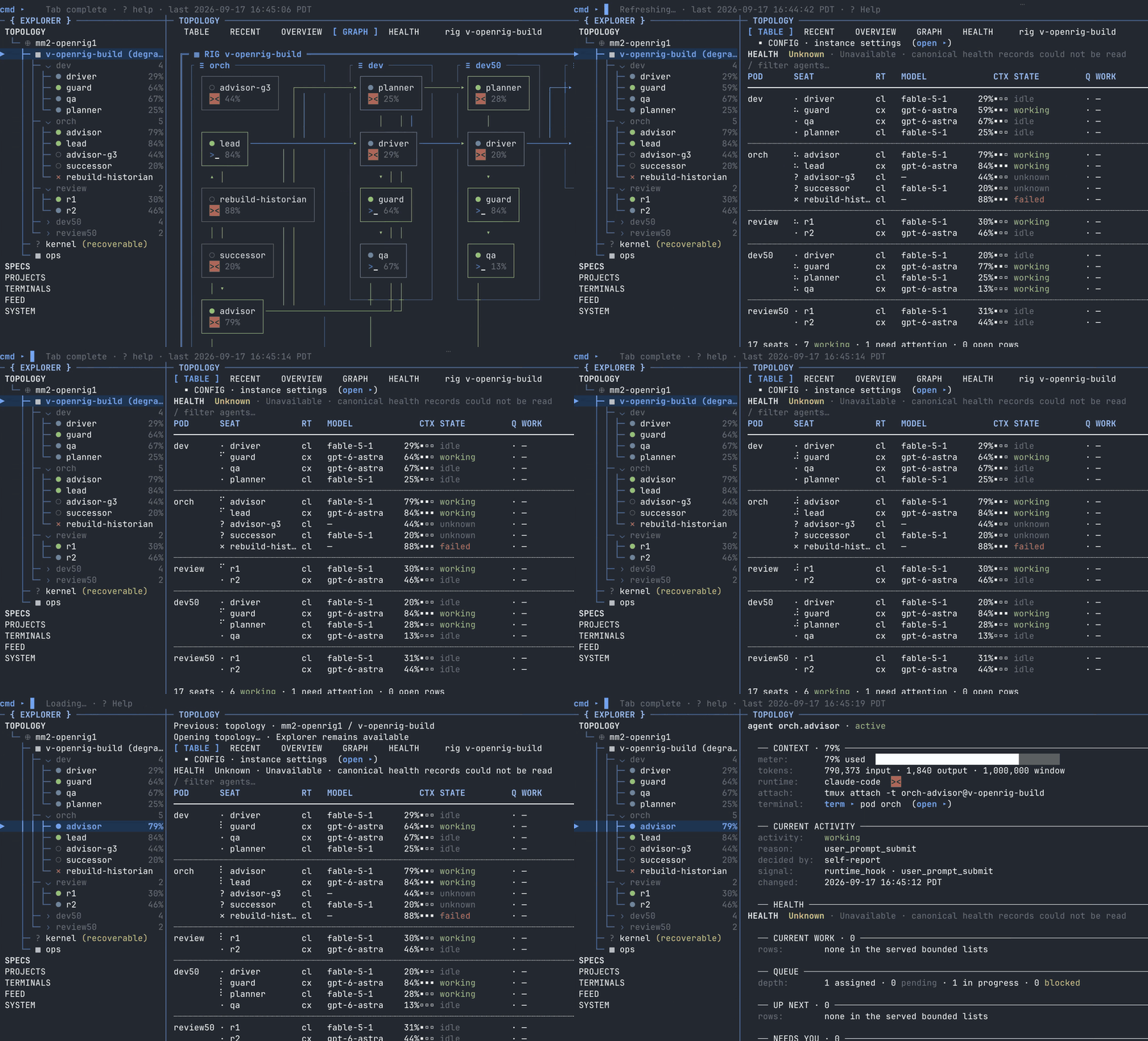
Define a team of Claude Code, Codex and Pi agents in YAML and boot it with one command: persistent tmux-backed seats with roles, shared context and owned work, steered via a lead agent.
 CopilotKit 6.4k · yesterday
CopilotKit template for always-on AI coworkers ('Dots'): each gets a role, tools and its own computer, works in chat, calls and Slack, and saves approved drafts into editable Spaces.
 TencentCloud 11.7k · yesterday
Tencent Cloud's self-hosted, multi-user AI assistant: per-user expert agents, AgentTeams, memory, RAG and connectors, served as one process to a web dashboard, CLI and 8+ IM channels.
 project-minigraf 225 · yesterday
Embedded single-file graph database in Rust with Datalog queries and bi-temporal time travel — 'SQLite for connected data with history' — running native, WASM, mobile and in the browser.
 dosco 3.2k · 5 days ago
Go compiler + runtime exposing databases, warehouses, files and code as one governed GraphQL + MCP graph for agents — catalog-first discovery, allow-lists, built-in agent, standing watches.

 tester-army 13.3k · yesterday
Agentic e2e testing for web and mobile: describe a goal, an agent drives the app, locators assert the result. Verified agent steps replay with zero model calls until the UI changes.
 mksglu 33.6k · yesterday
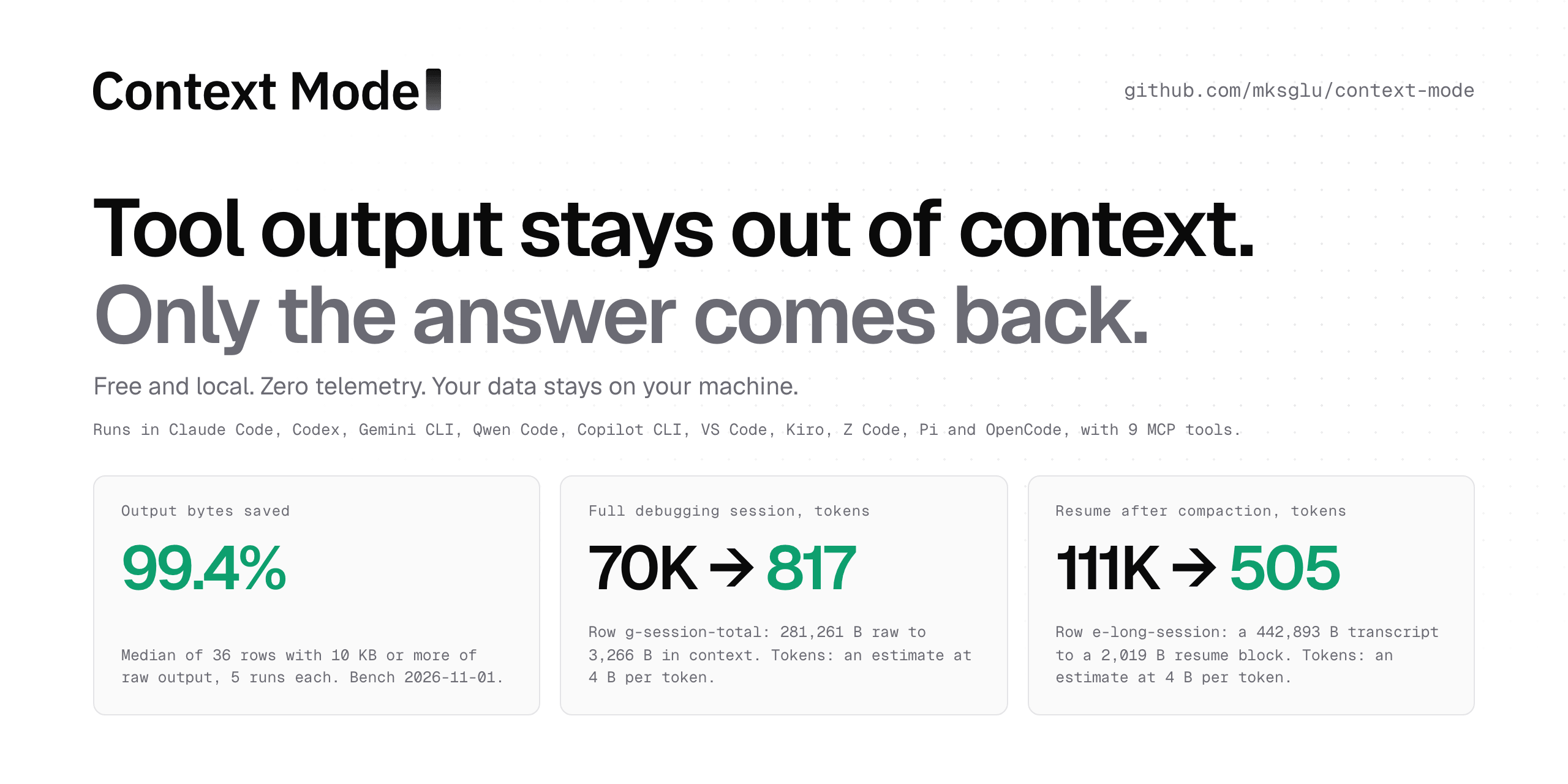
Local plugin for 10 coding agents that runs tool calls in a sandbox, indexes full output in SQLite FTS5 and returns only what the agent asks for — ~99% fewer bytes in context, zero telemetry.
 uber 2.1k · 6 days ago
Uber's Agentic AI Detection and Response: inventory AI tools on endpoints, capture Claude Code/Cursor/Codex telemetry, and flag risky sessions with a two-tier detector; ships ADR-Bench (300+ tasks).
 lexmount 22.7k · yesterday
Rust headless browser for AI agents on Servo/Stylo components: fetch pages as Markdown or a semantic tree, automate via CDP, WebDriver or BiDi — about 13% of Chrome's memory per task.
 raphaelmansuy 136 · 5 days ago
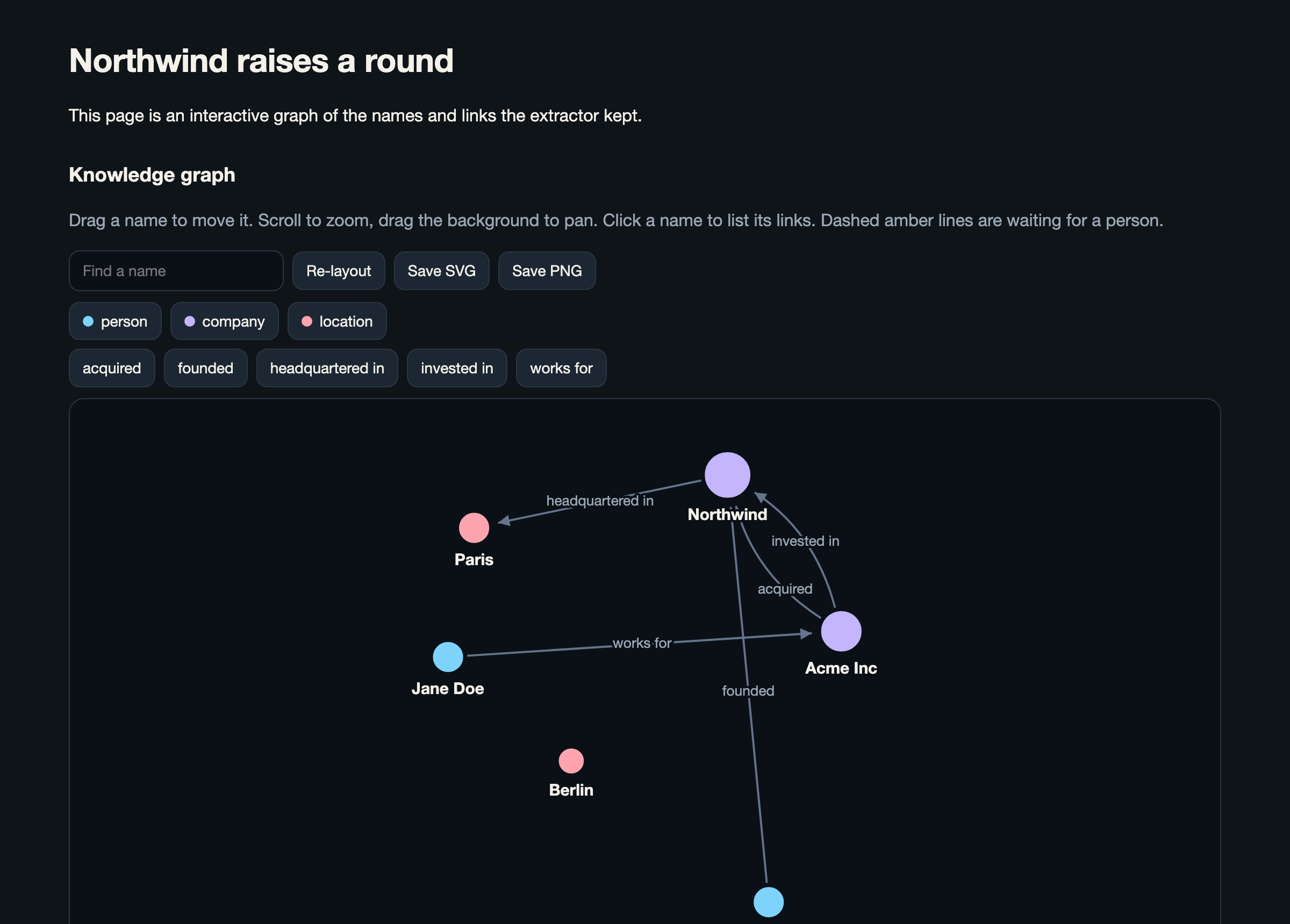
Markdown to knowledge graph with an ontology you write: a small local decision model answers closed yes/no questions per candidate, and your cutoff keeps, queues for review or drops each link.

 datalab-to 1.3k · 15 days ago
Datalab's 9B vision model that extracts JSON matching your schema from PDFs and images in one pass — schema-constrained decoding, multi-page values, vLLM or HF inference, Schema Studio.

 thu-nics 770 · 9 days ago
Cache-to-Cache (ICLR'26): LLMs talk by projecting and fusing each other's KV-caches instead of generating text — higher accuracy than text relay at ~2x lower latency. Fuser weights on HF.
 NVIDIA 24.4k · 2 days ago
NVIDIA's security scanner for agent skills: 71 patterns across 17 categories — prompt injection, exfiltration, supply chain, MCP tool poisoning — static plus optional LLM pass, SARIF output.
 FalkorDB 10.5k · yesterday
Low-latency, multi-tenant property graph database that runs queries as sparse-matrix linear algebra (GraphBLAS); OpenCypher over the Redis protocol, built for GraphRAG and agent memory.

 strands-agents 9.1k · yesterday
Strands Agents: open-source Python and TypeScript SDK for building and running agent harnesses in your process — model-agnostic, with lifecycle controls, hooks, MCP, multi-agent and tracing.
 strands-labs 763 · 2 days ago
Strands' small decision model (2B, Qwen3.5-based): pick between options, answer yes/no or rate on a scale with calibrated confidence. CLI and /v1/systemone server on CUDA, MPS, MLX or CPU.
One email a week: what changed in the AI stack
New repos, new typed connections, the why behind each. No spam, unsubscribe anytime.